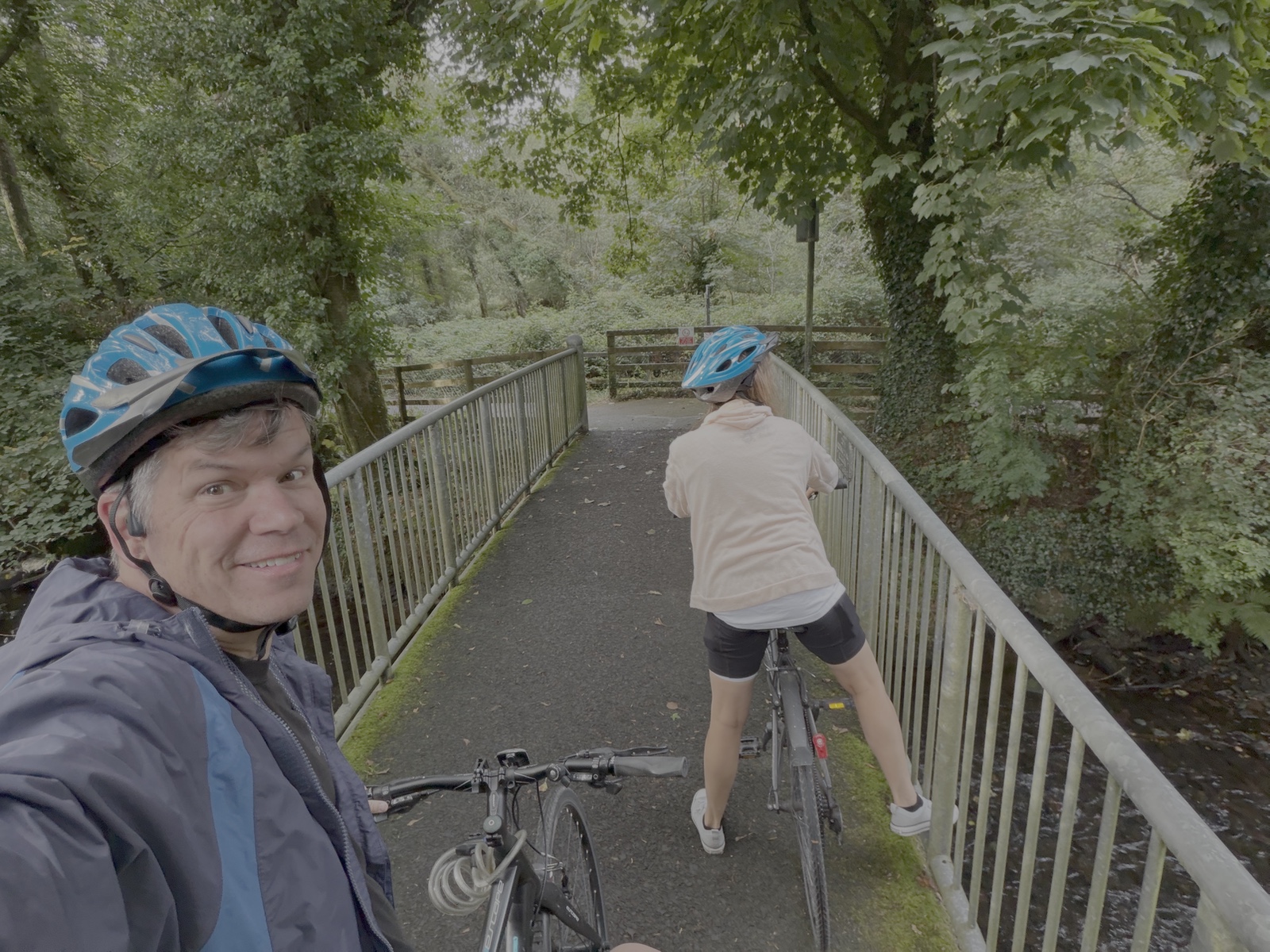
On Tuesday, August 18, 2026, Linette and I went for a bike ride on the paths behind our Home Exchange that went through Killarney National Park.
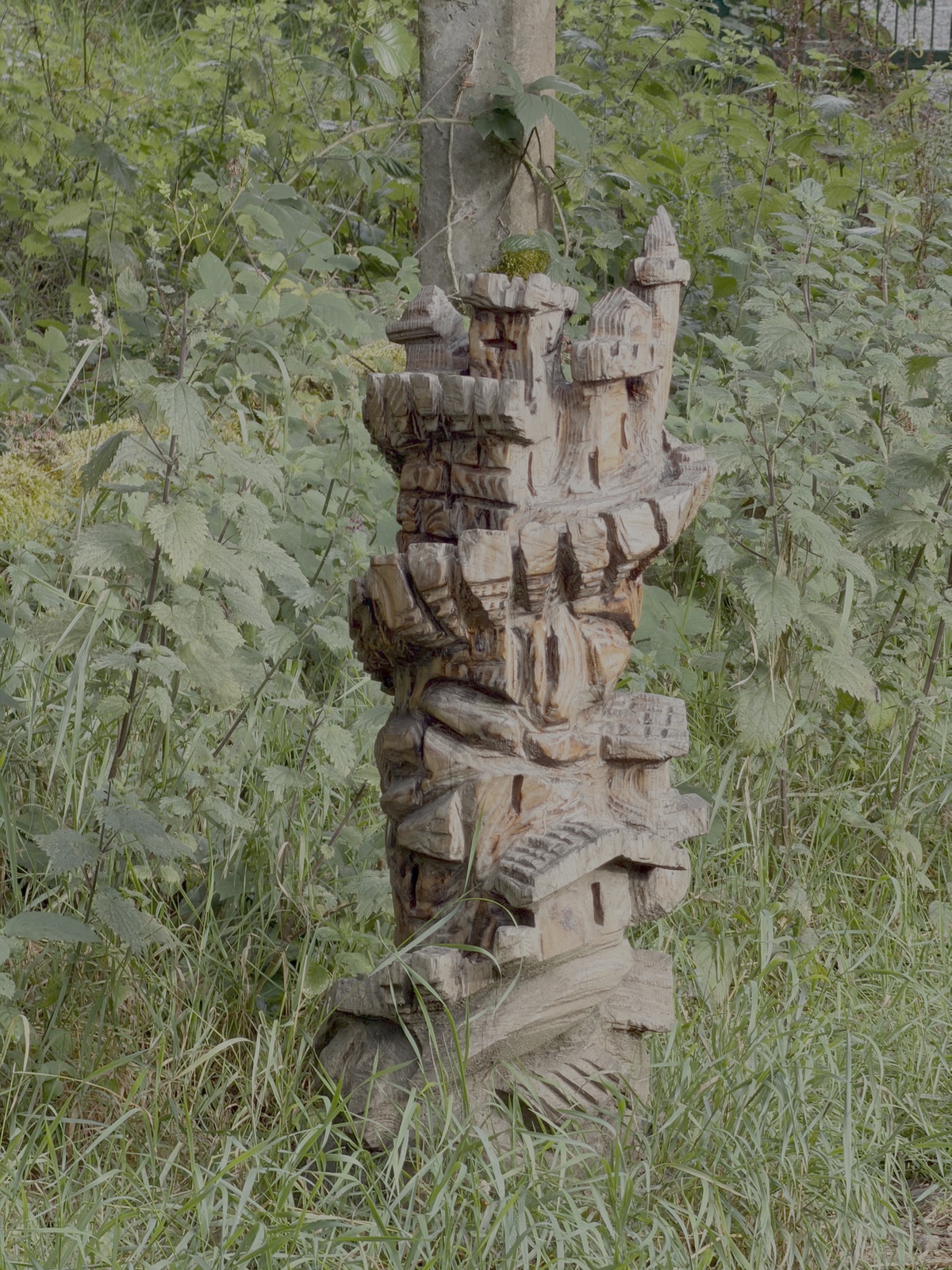
I loved the carvings someone did with some tree stumps there.
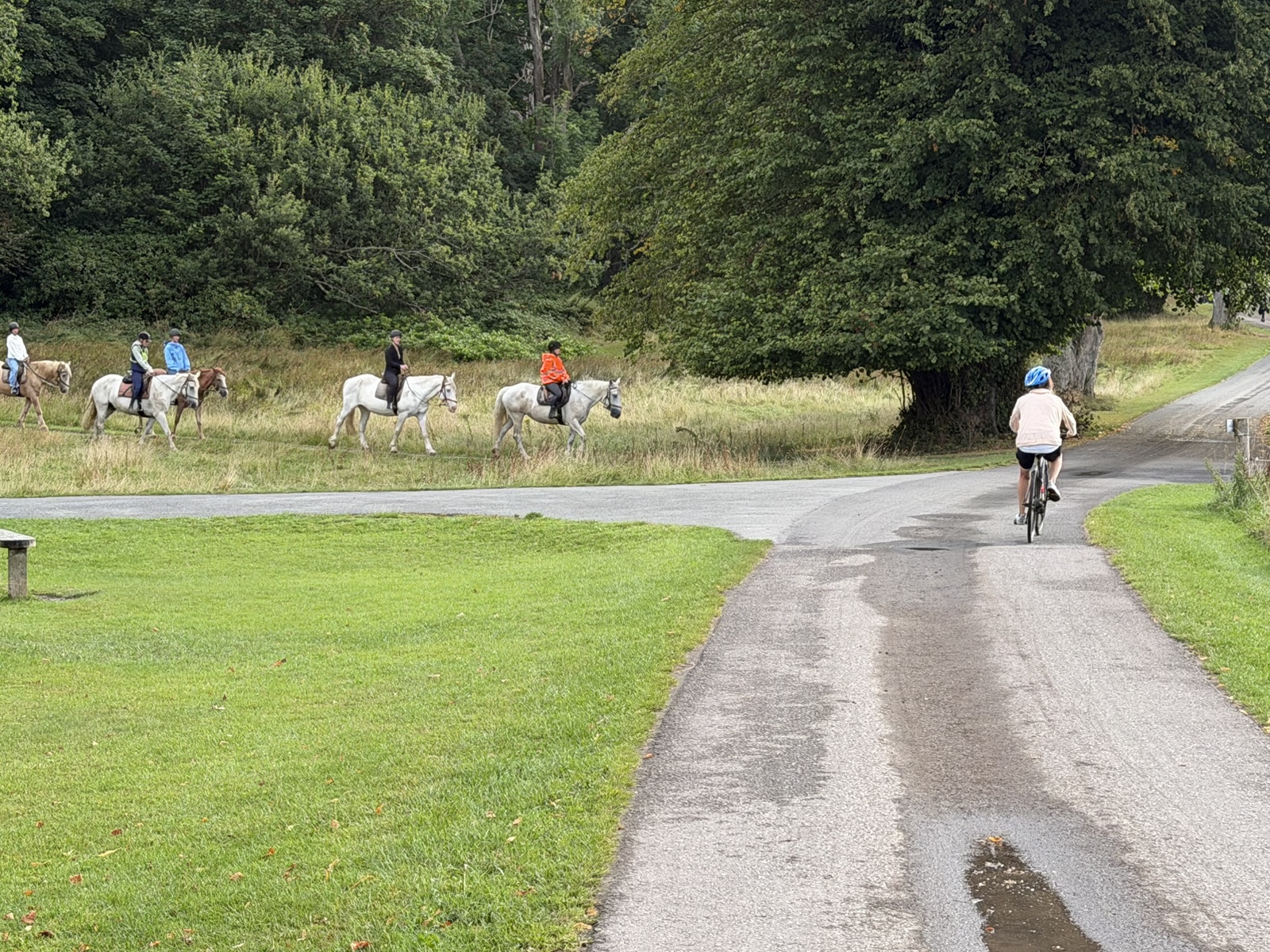
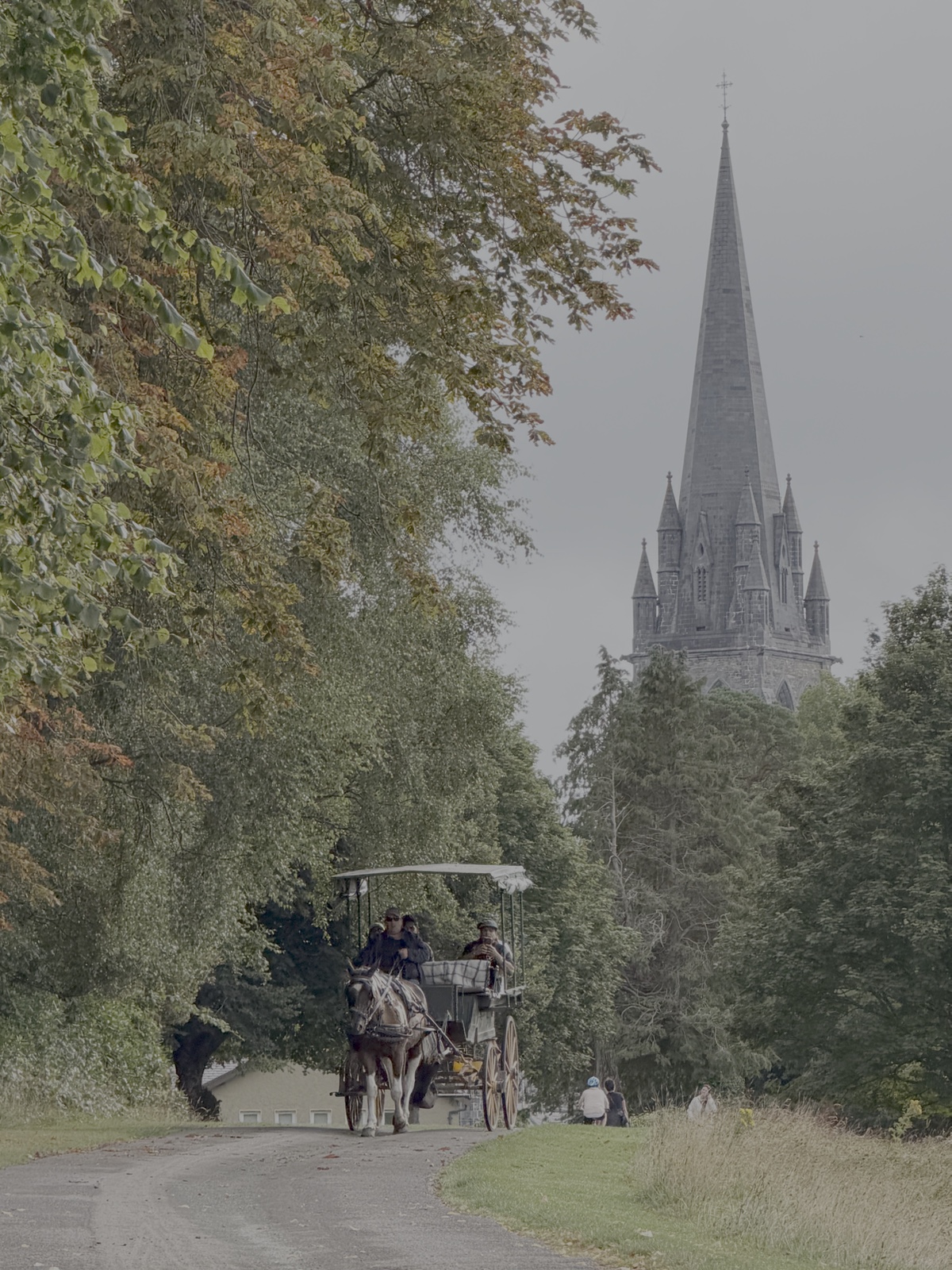
We passed people on horses and horse-drawn carriages ("Jaunting Carts").
The church near there was beautiful, too.
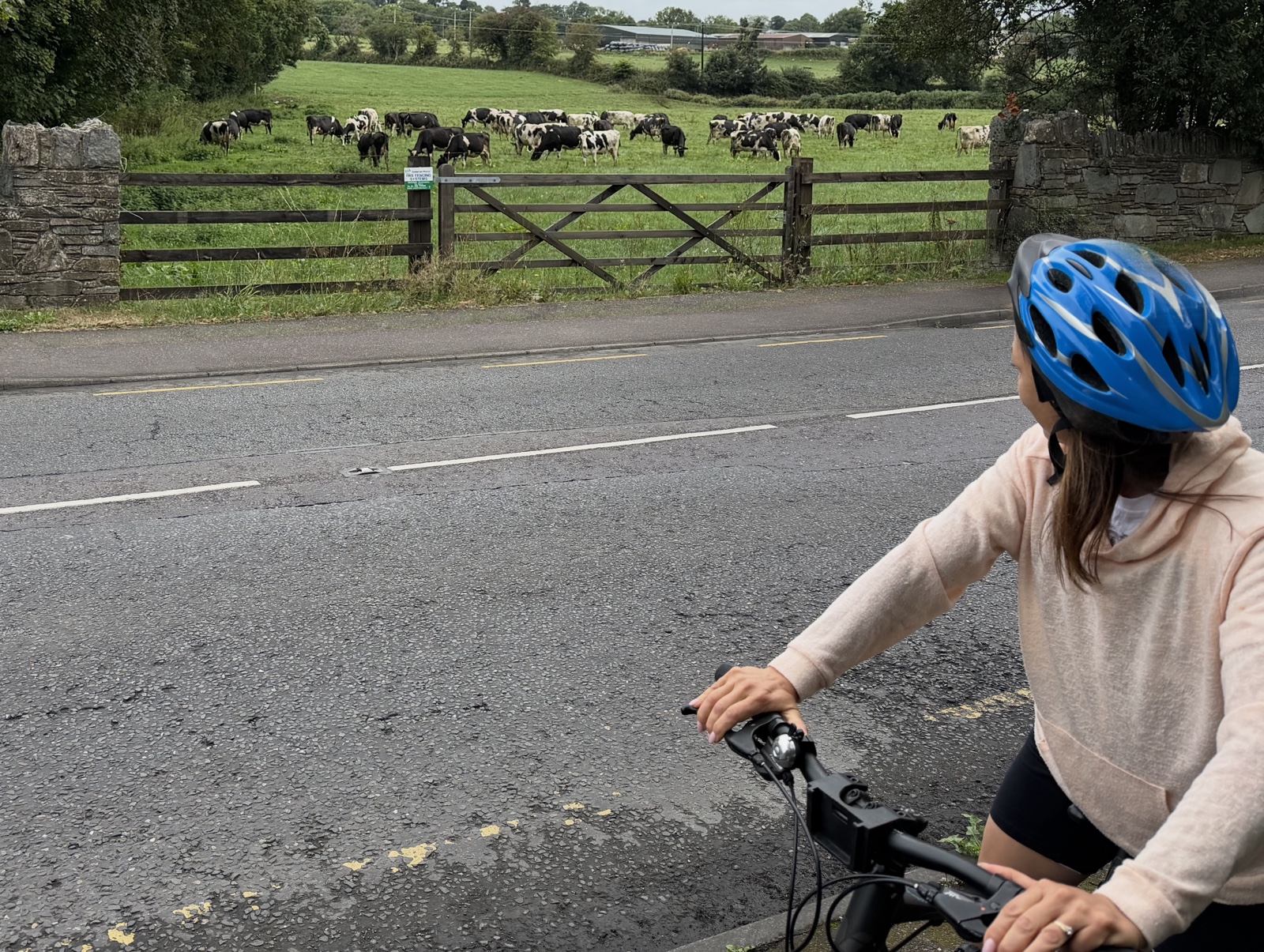
And we passed a herd of cattle along the main Ring of Kerry road. Linette grew up on a dairy farm, so this may have been nostalgic.
Our main outing that day was on kind of a smaller "inner ring" between Killarney National Park and the Ring of Kerry.
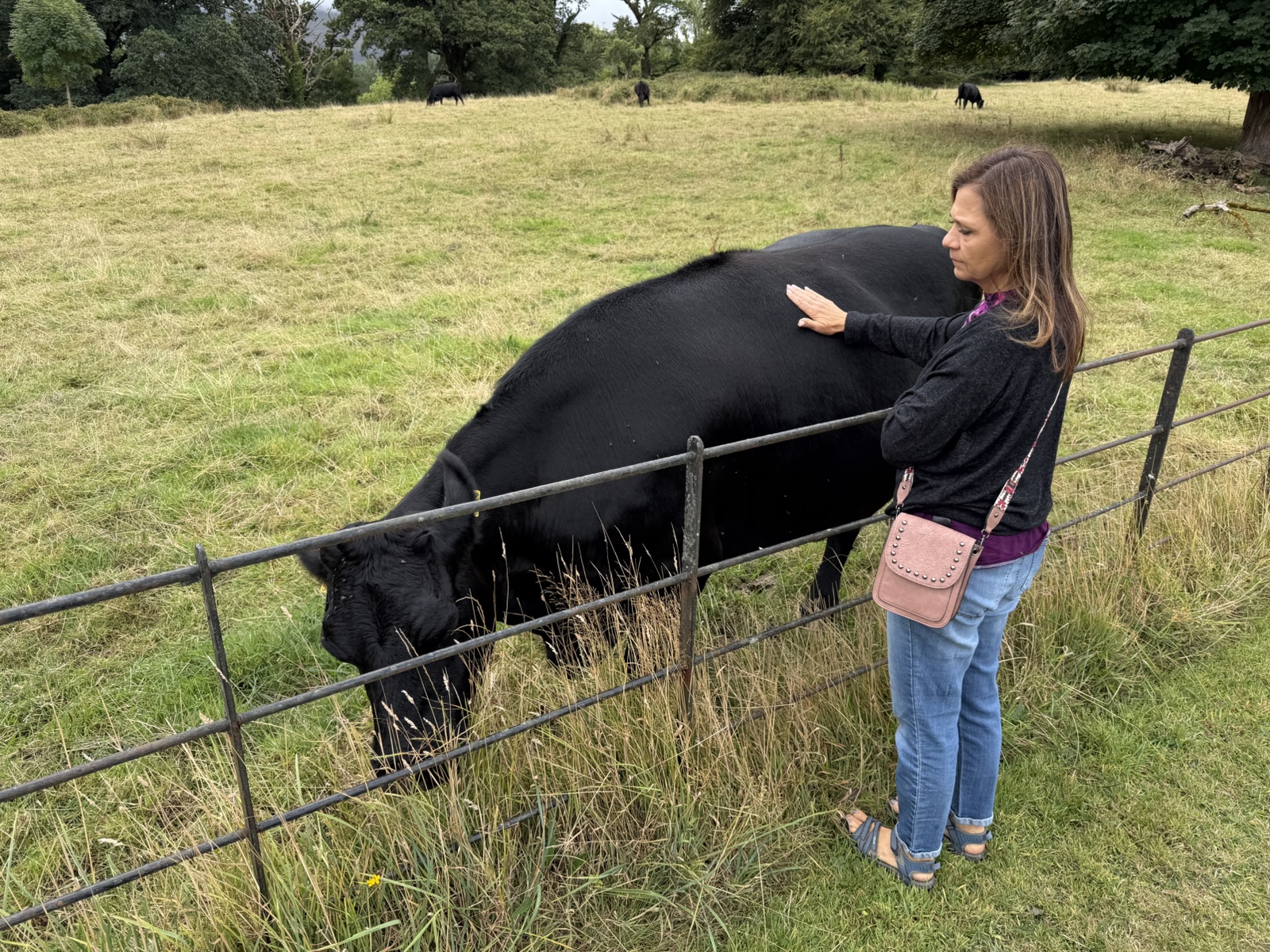
Our first stop was at Muckross Abbey. As we walked from the parking area, we saw some cows.
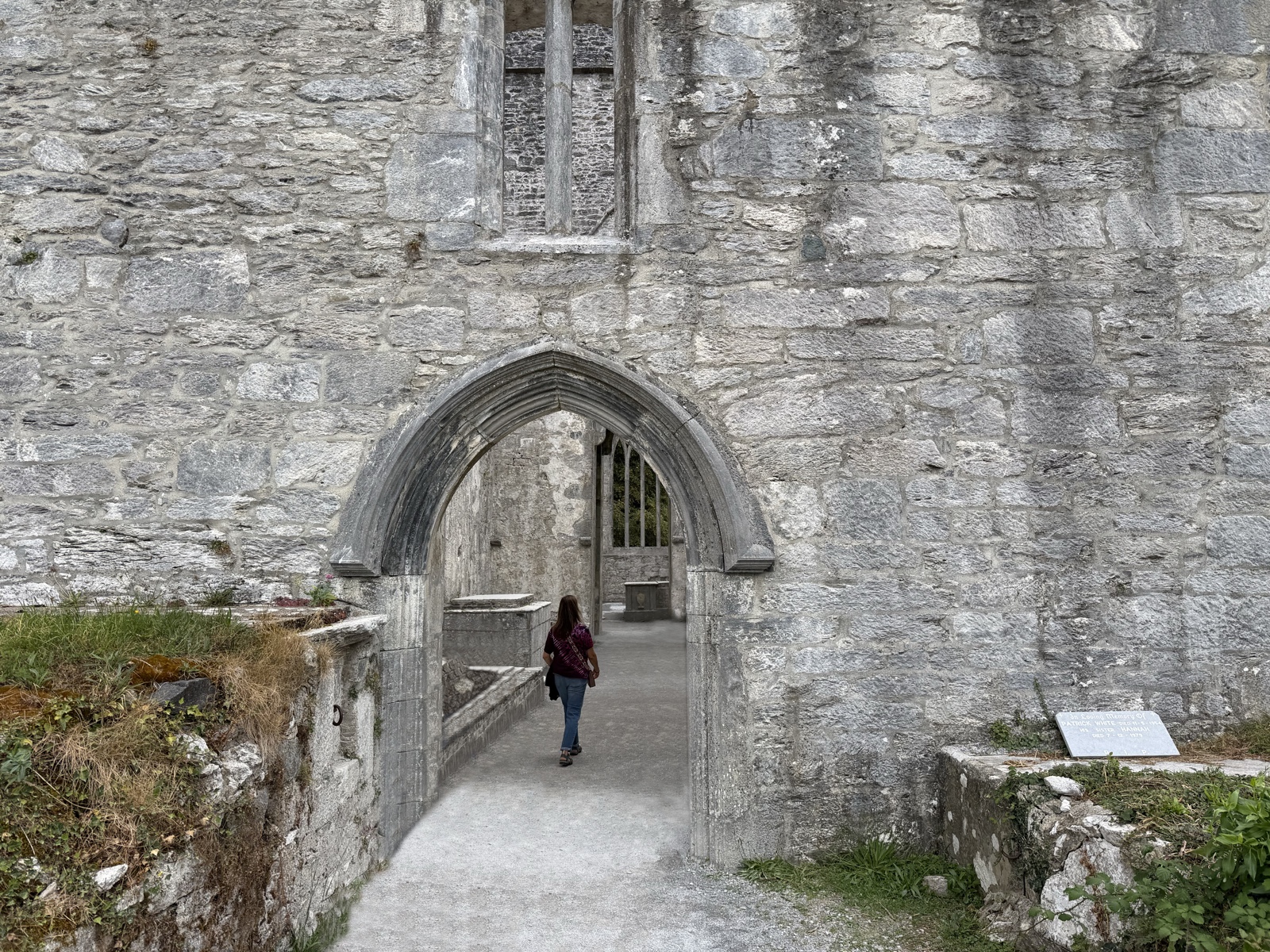
Muckross Abbey is a ruined Franciscan Friary, built around 1448. It was attacked in the 1500s under Elizabeth I, and again in 1652 by Cromwell, at which point the roof was removed so that it would fall into ruin.
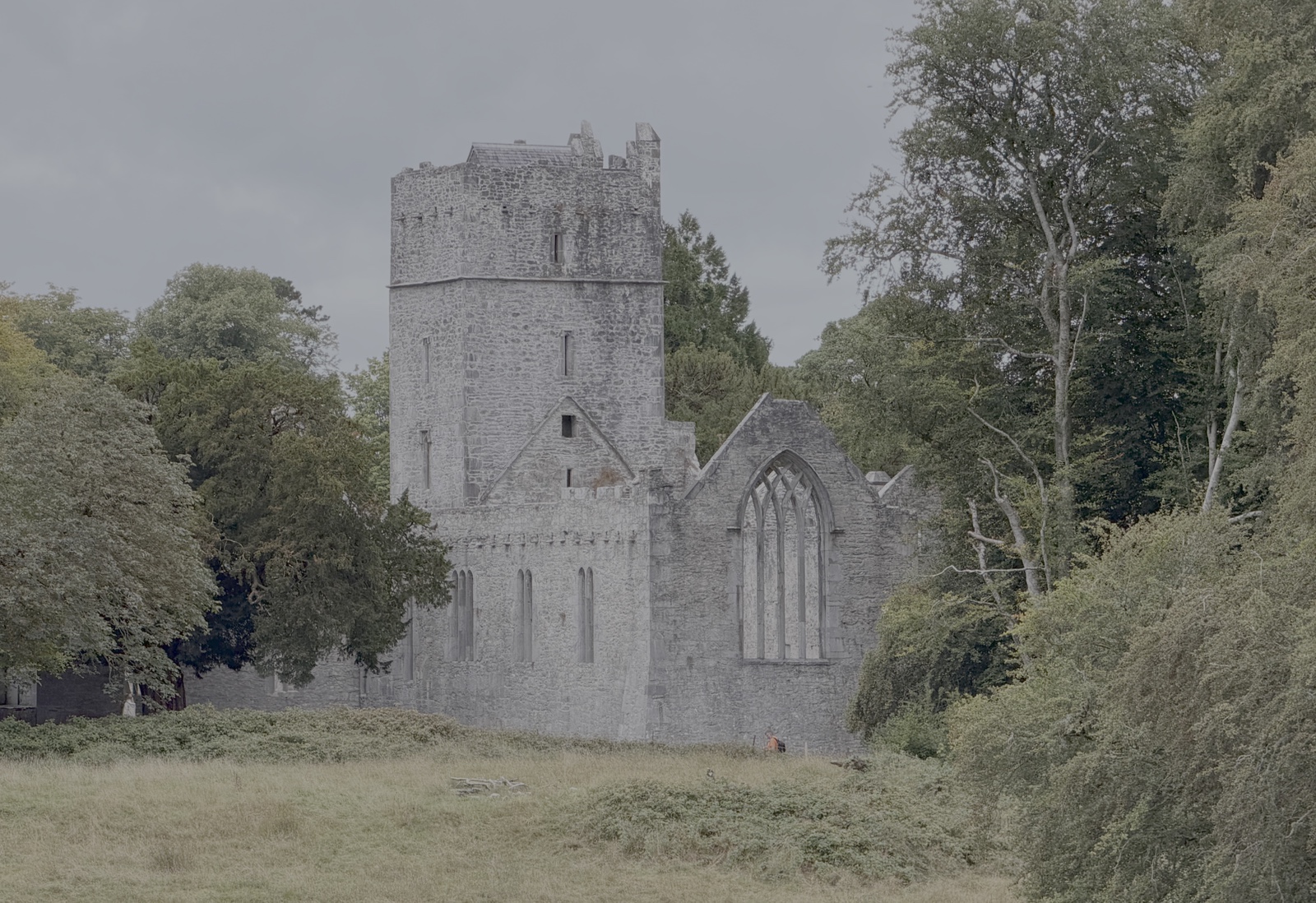
It still in pretty good shape, though.
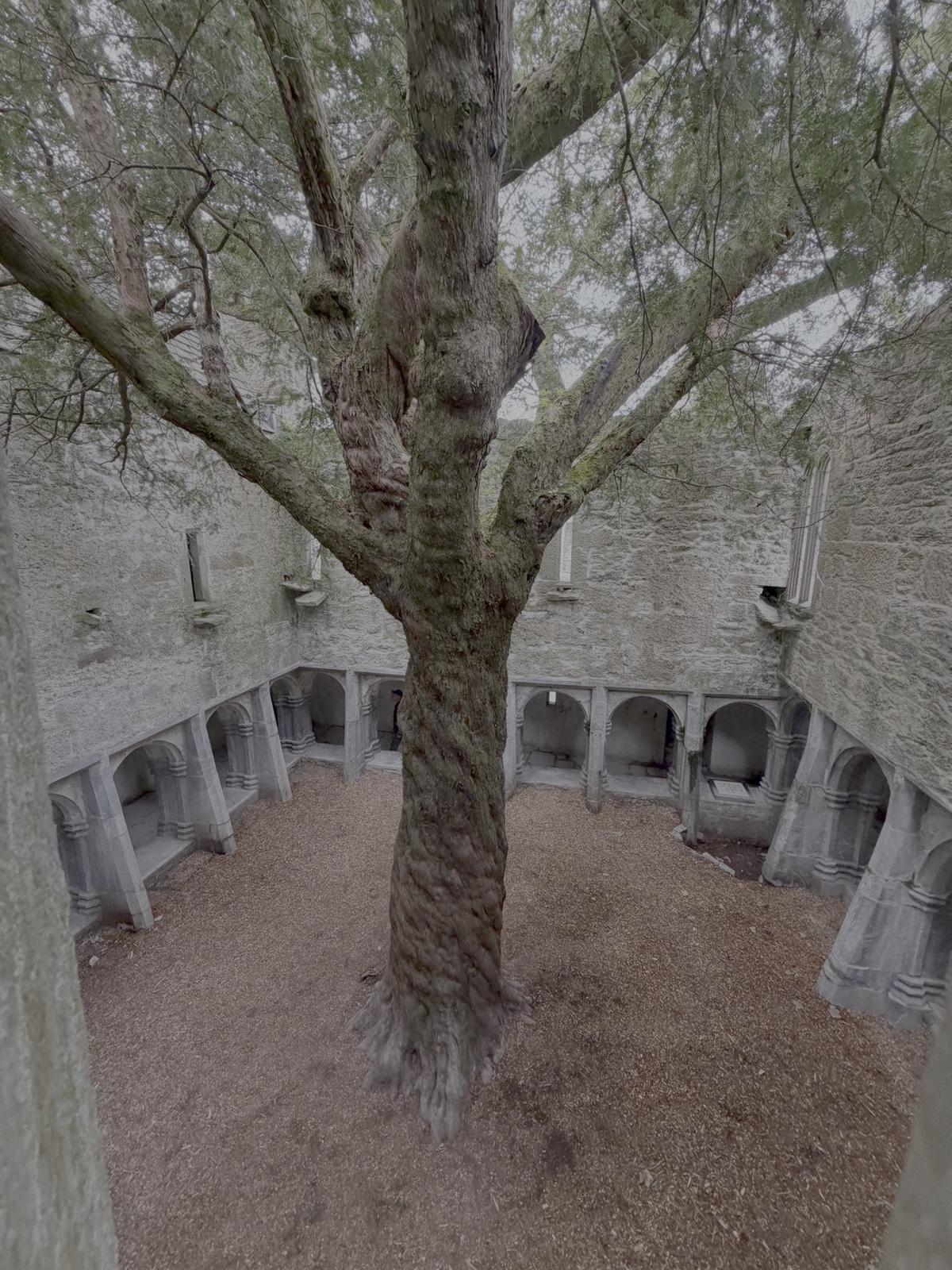
There is a big yew tree growing in the middle of the courtyard. Yew trees are evergreen and can live for hundreds—or even thousands—of years, so they are powerful symbols of resurrection, eternal life and triumph over death. They are therefore often found in church yards and burial areas. I liked how the trunk looked twisty.
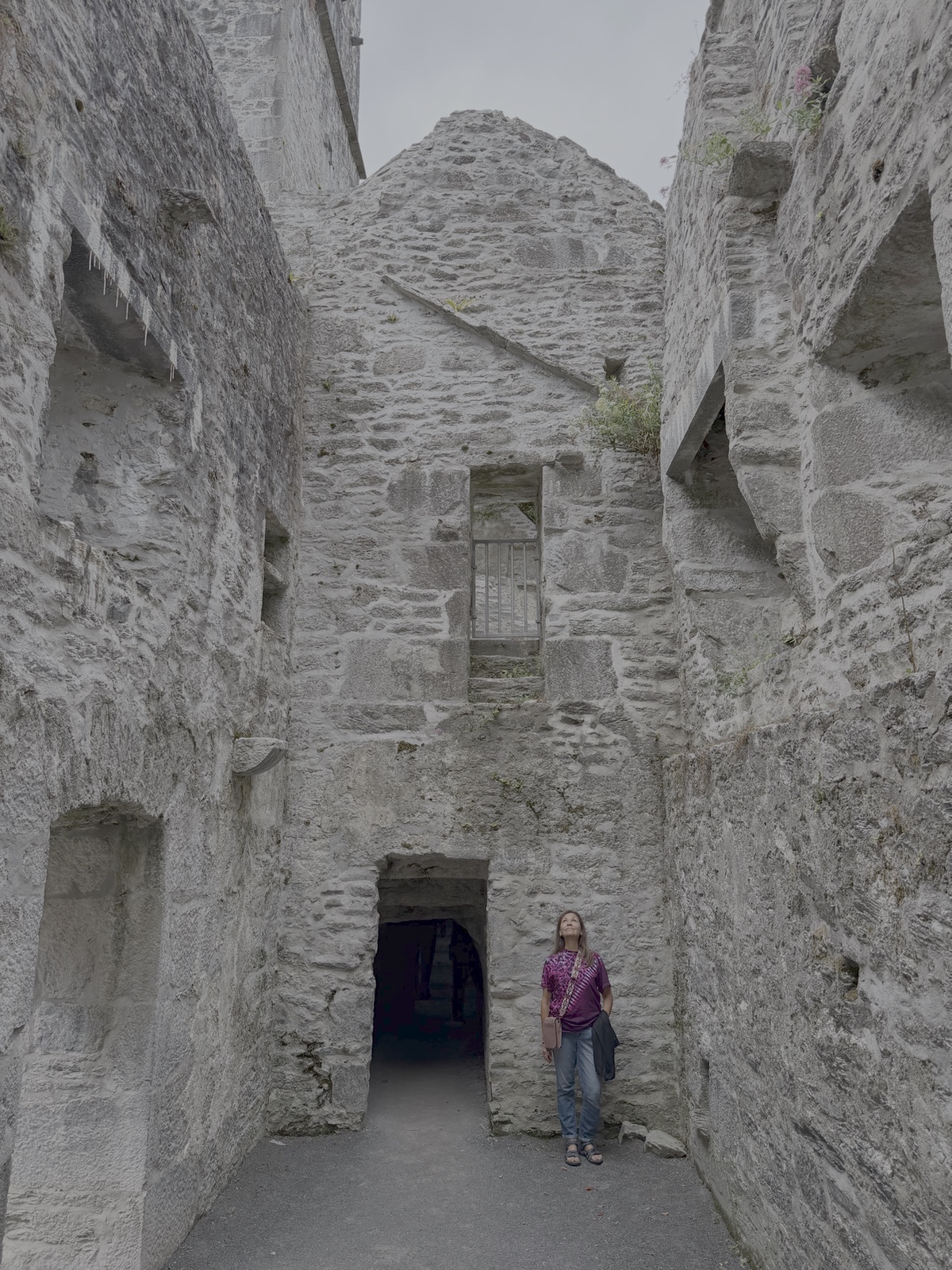
It was fun to explore the downstairs and upstairs areas.
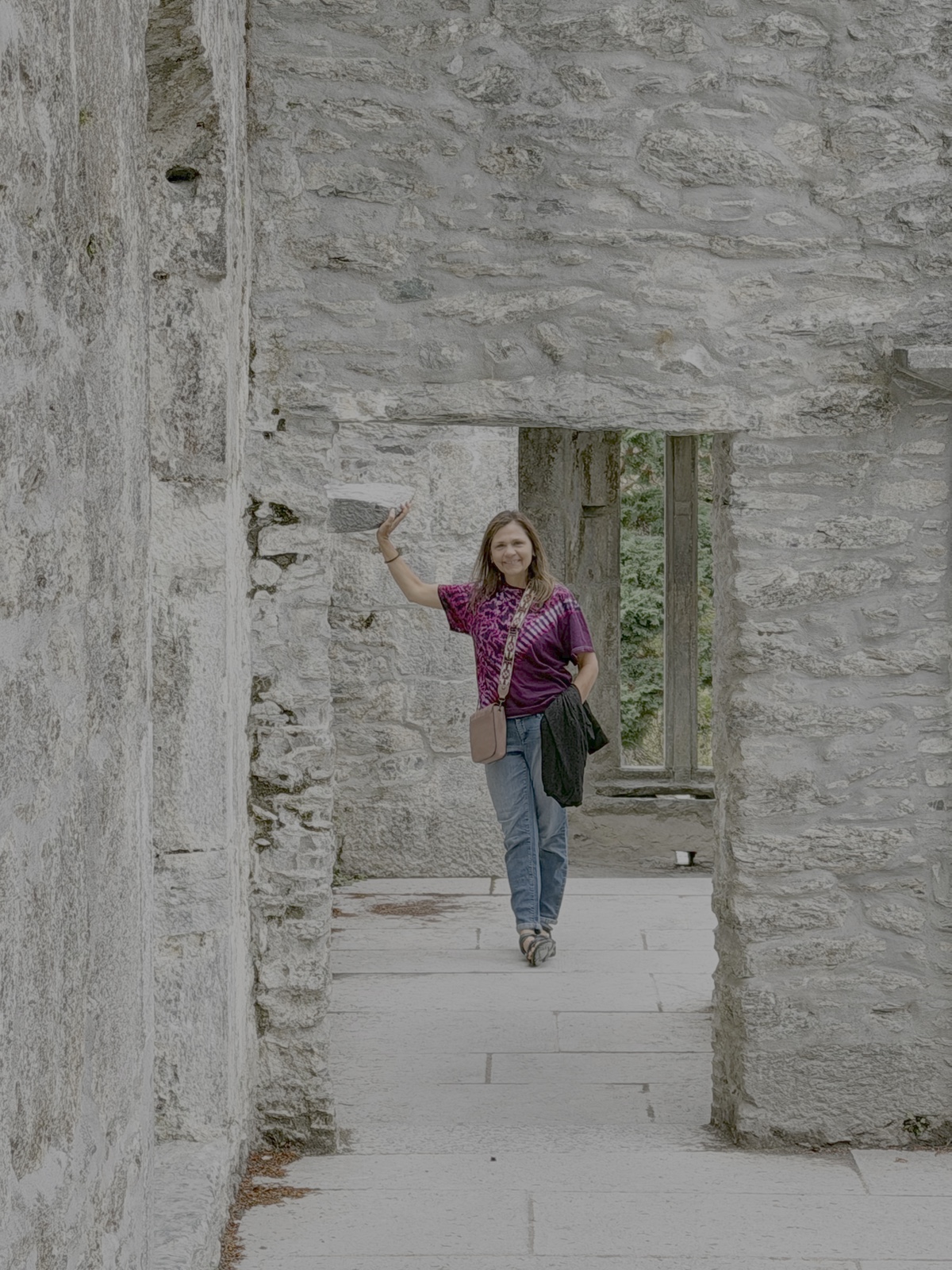
A bell tower was added shortly after the abbey was built in the late 1400s. (Imagine a bell up there).
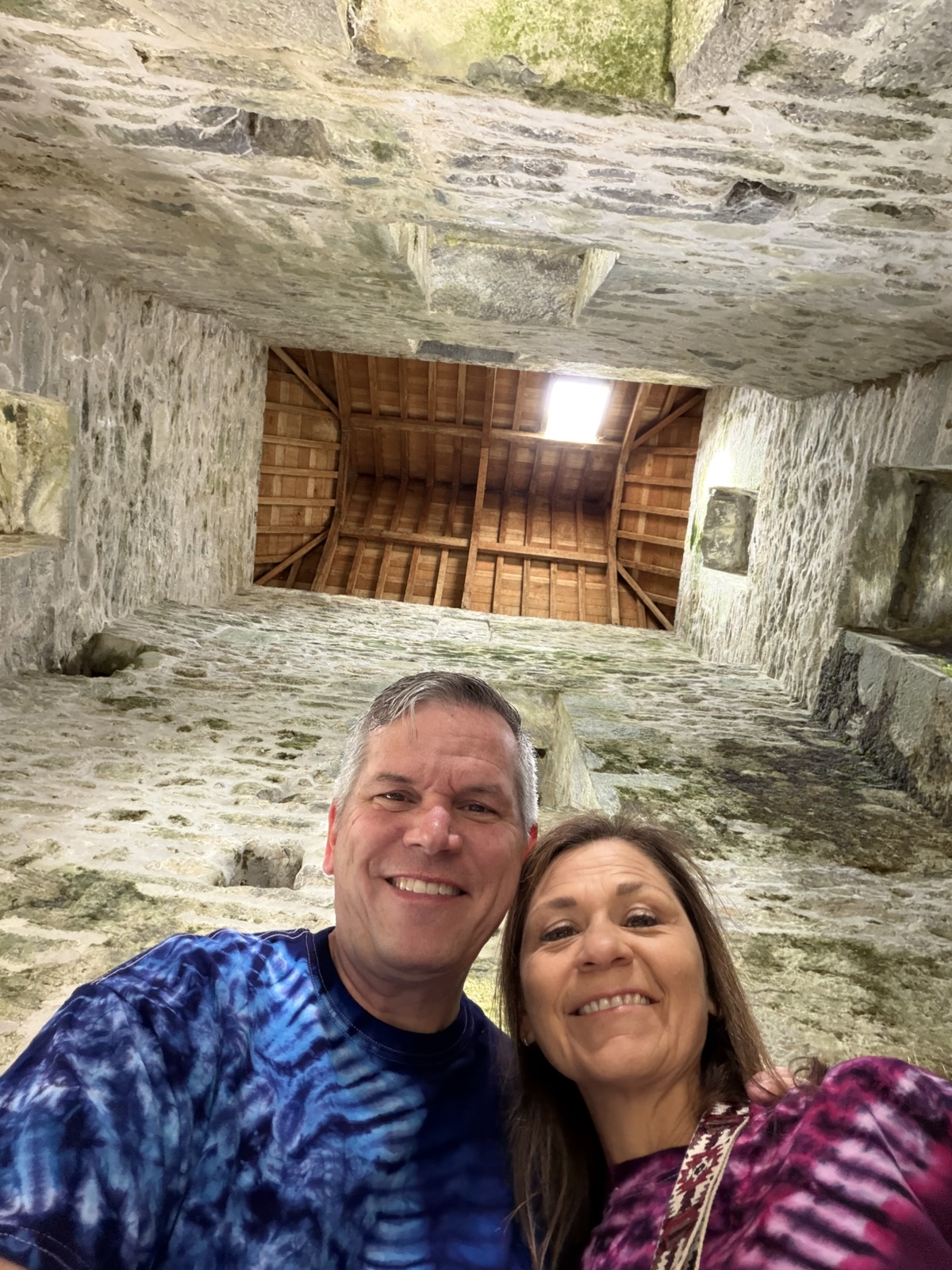
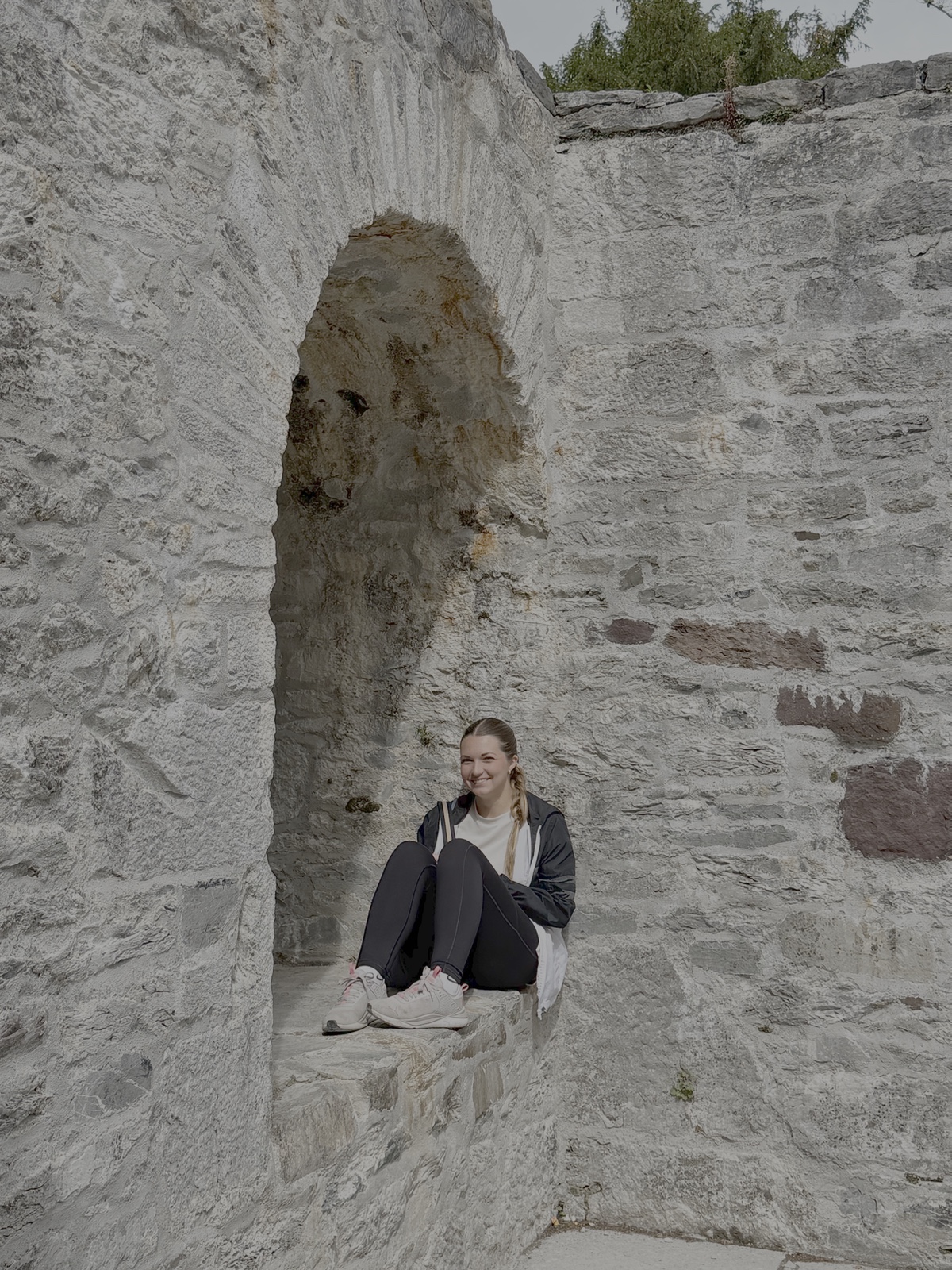
As we wandered around, I noticed that Katelyn had found a nice little spot to wait for us to be done.
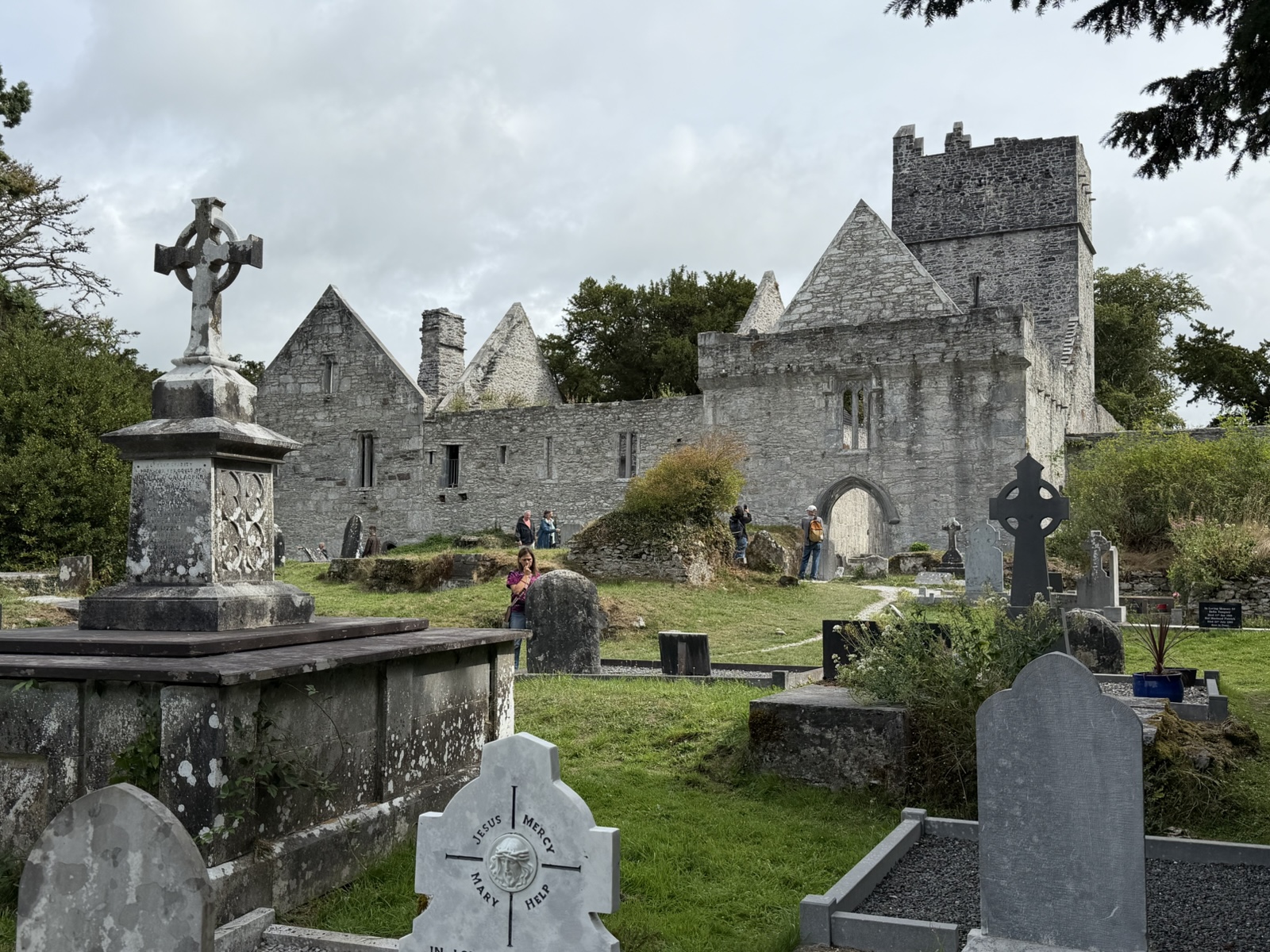
There was a cemetery outside the abbey that appears to still be actively used to this day.
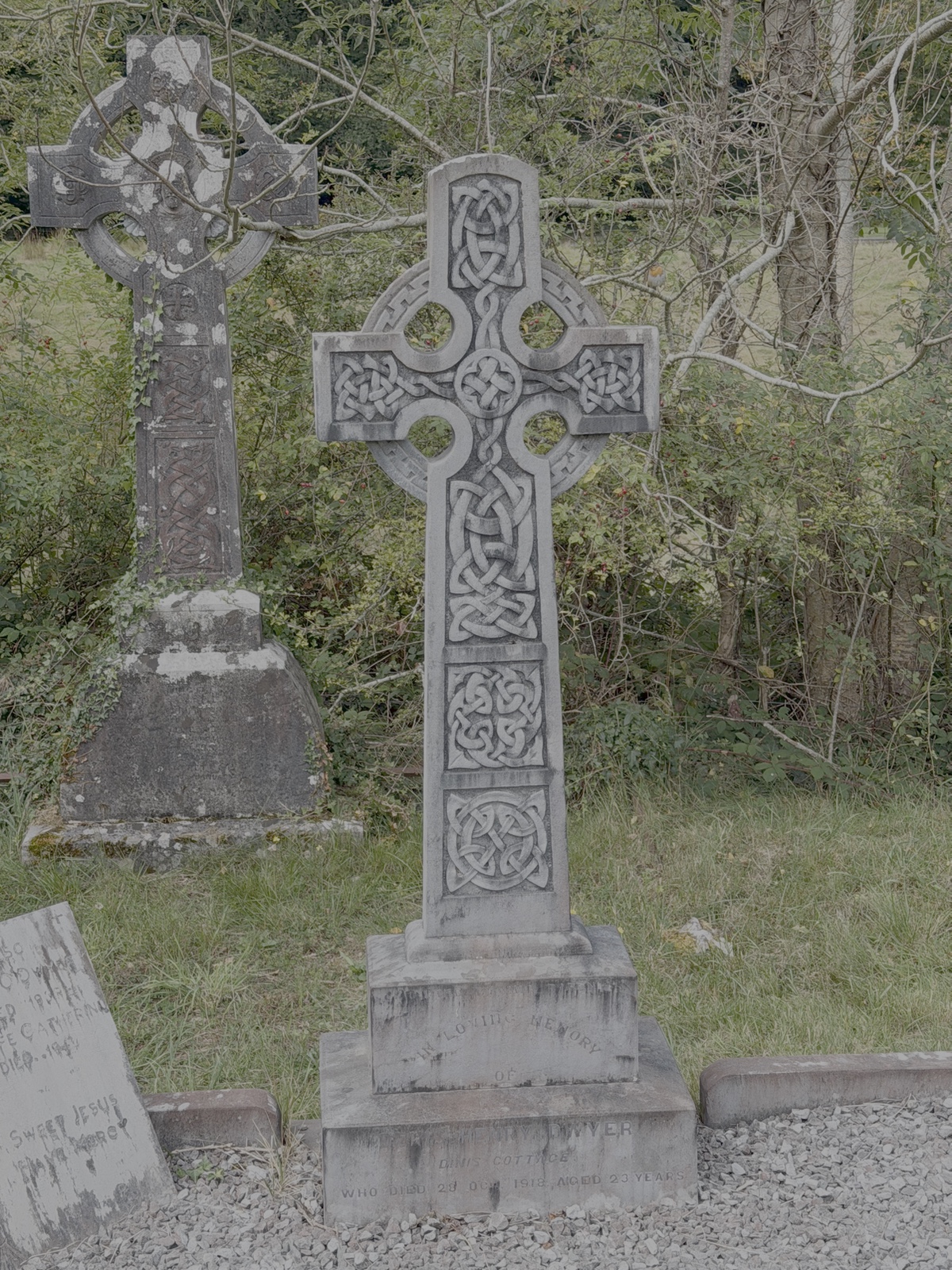
I love this example of the Irish cross, with its circle that represents eternity, along with a "Celtic knot" woven throughout its design.
Linette and I wore our sort-of-matching tie dye that day (courtesy of Patty the Hippie at the Saturday Market in Eugene, Oregon).
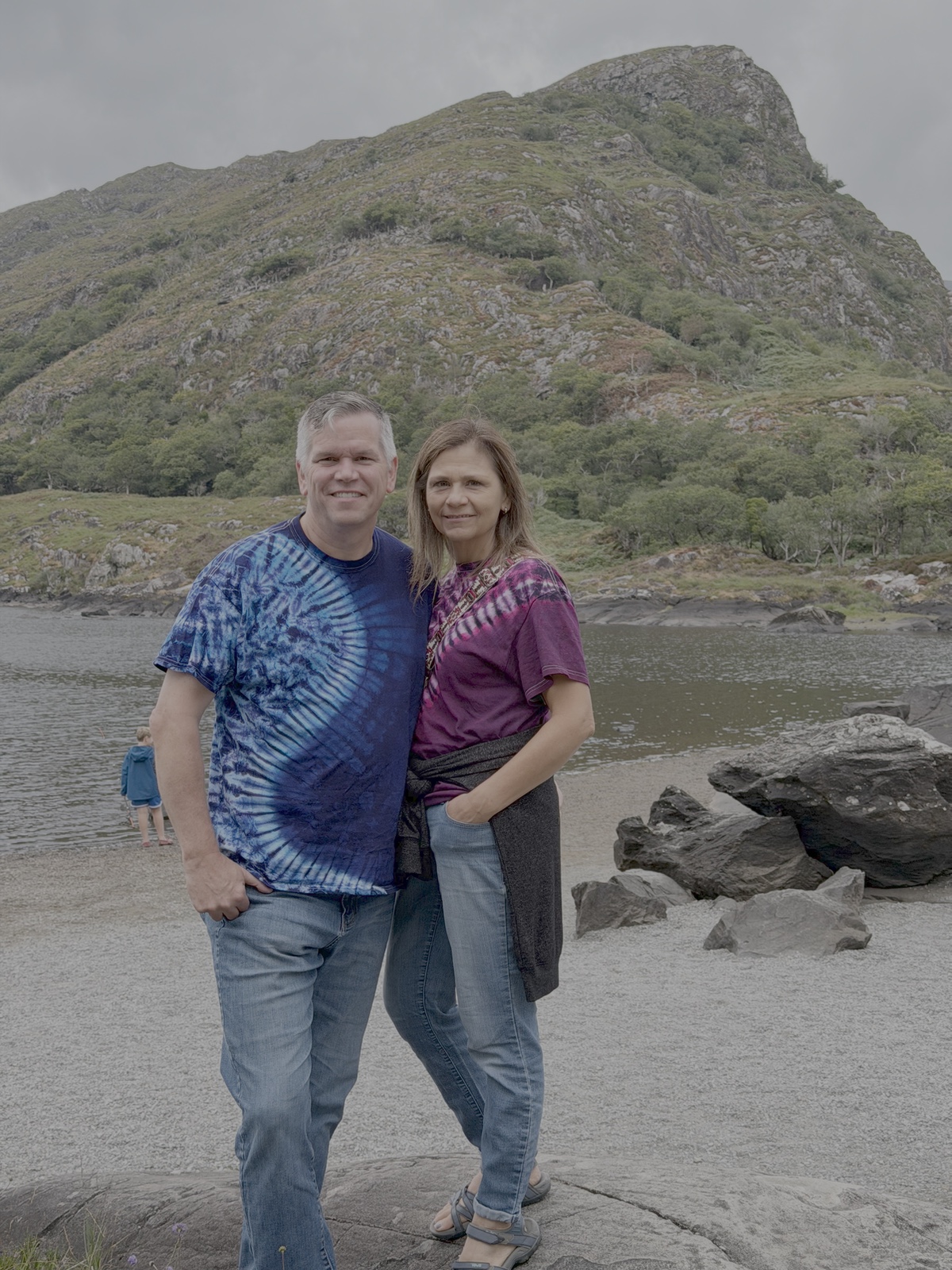
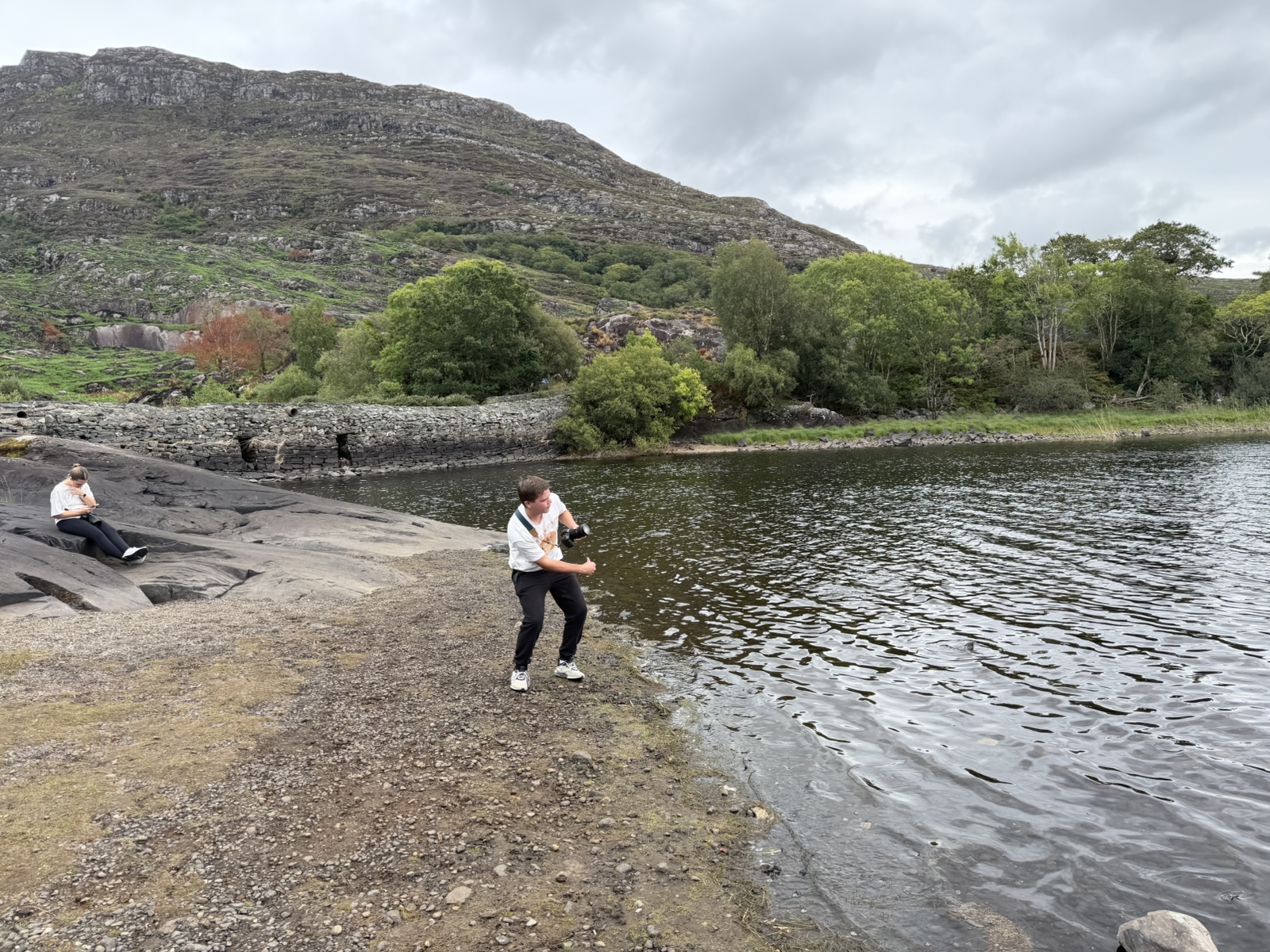
We skipped rocks in Lough Leane, the main lake of Killarney National Park (pronounced "Lock Lane", where "lough" means "lake", as in "Lough Ness Monster").
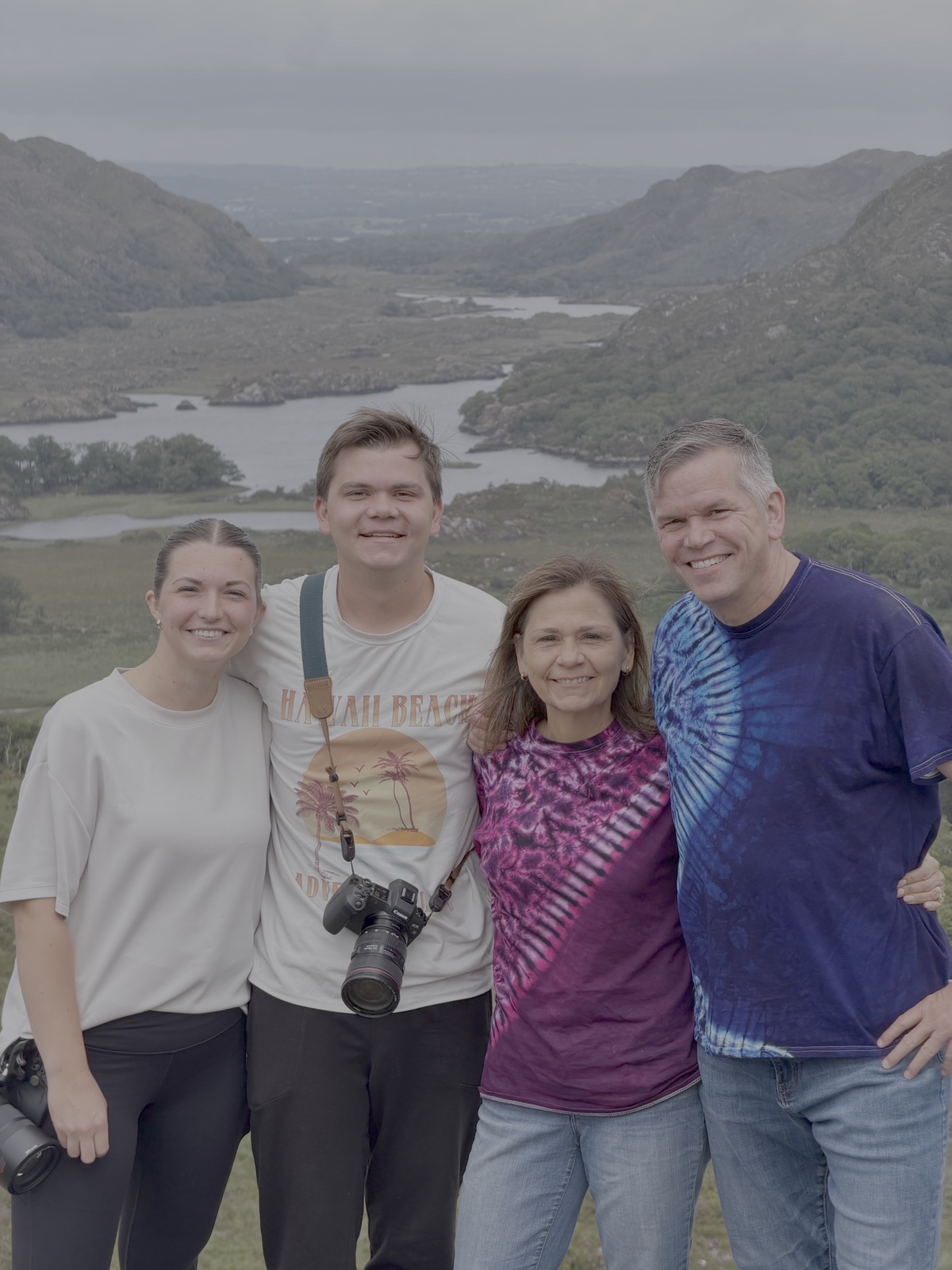
We drove up to Ladies' View, thus called because Queen Victoria's ladies-in-waiting stopped there in 1861 and were so captivated by the panoramic view that the scenic overlooked was named in their honor.
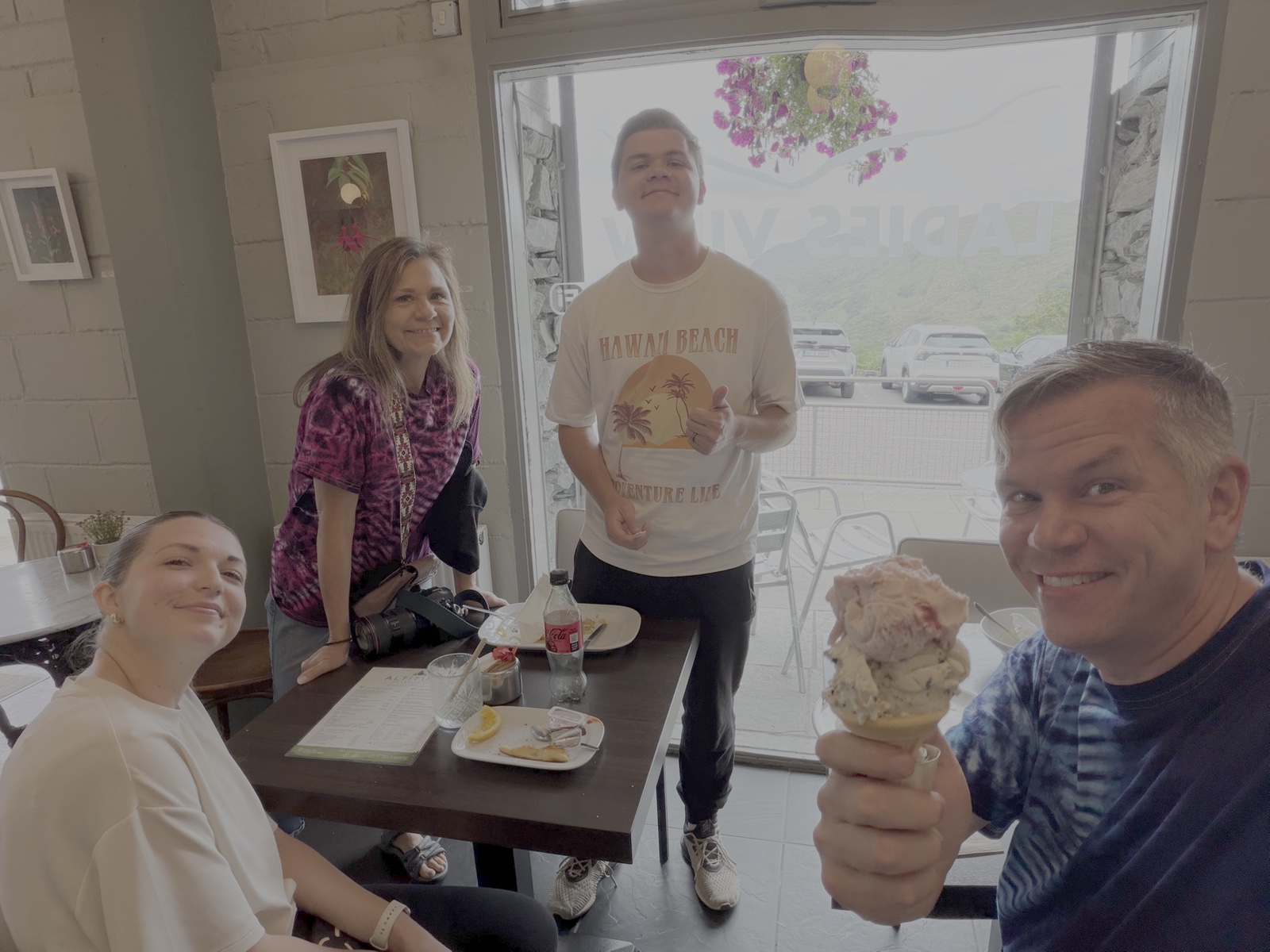
There was a cafe there where we had lunch and a bit of ice cream to top it off.
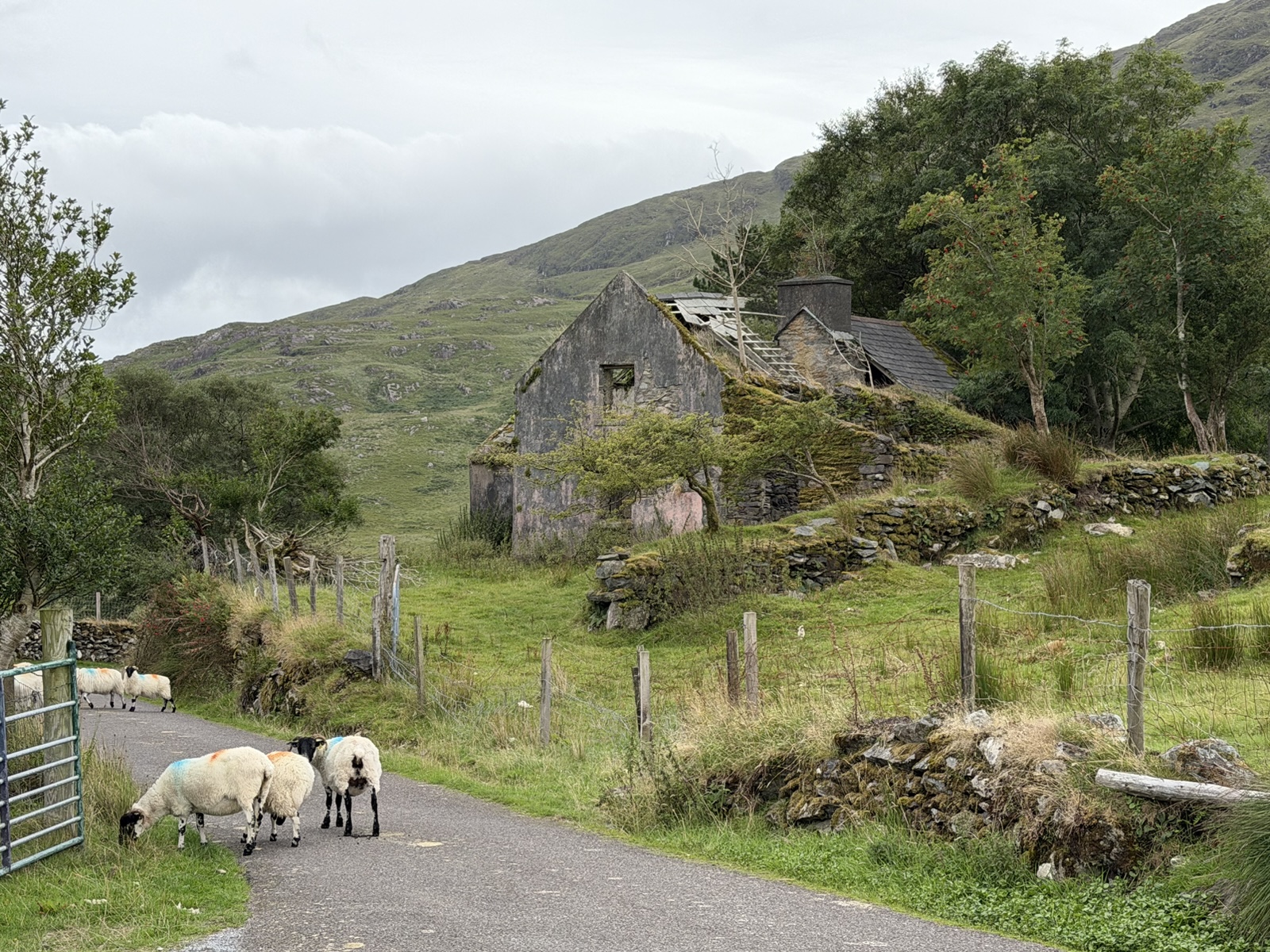
As we continued around the inner ring, we stopped at this charming spot where sheep wandered around the road near the ruins of an old farm house.
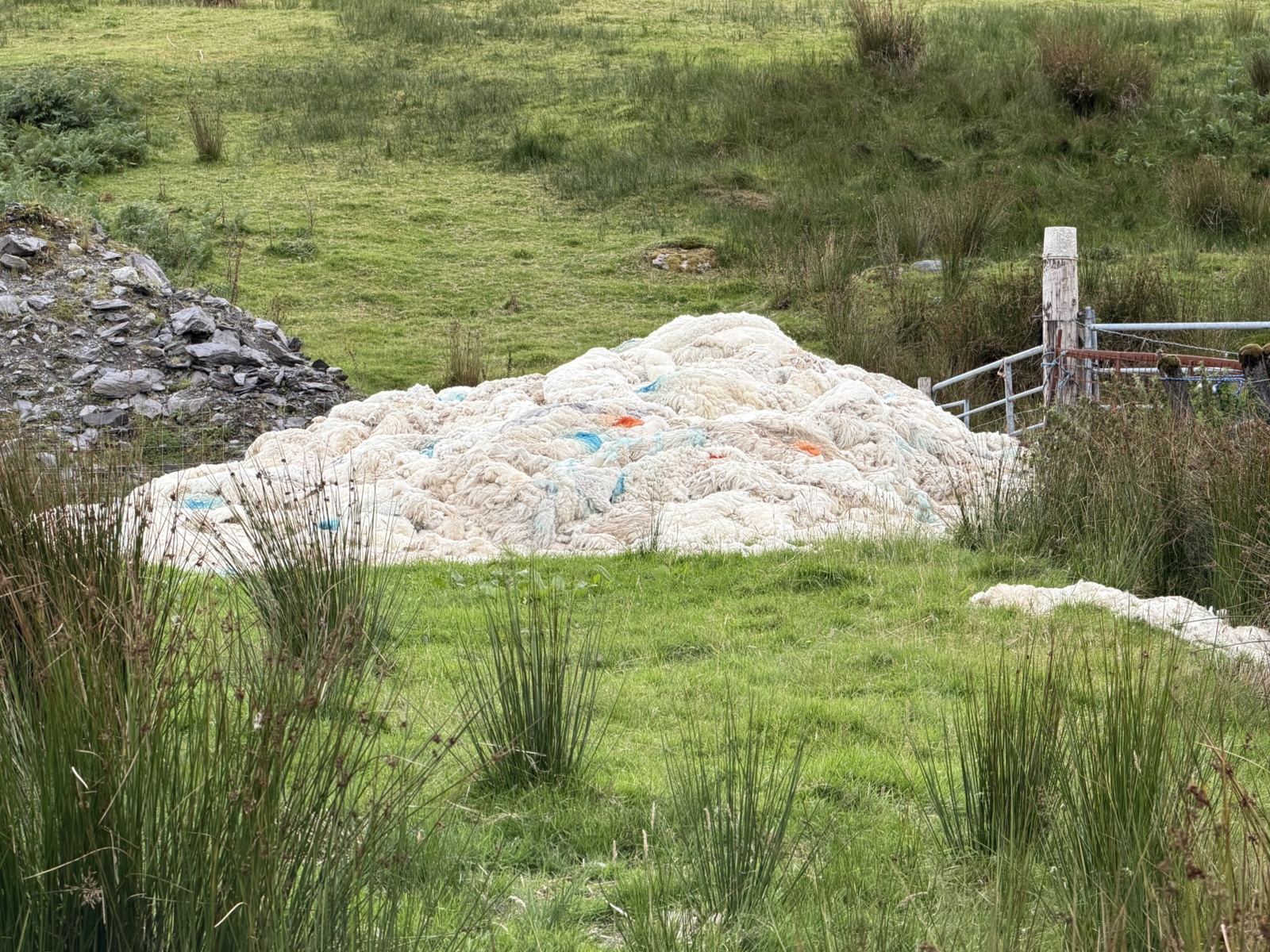
There was a pile of wool there, and you can still see the dye they used to identify their sheep.
In this 40-second video, you can see one of the sheep running away from Jared, and another sheep with a long swishy tail, which was something we hadn't seen before.
And here's a 5-second time-lapse video of what the road looked like as we continued up the mountain.
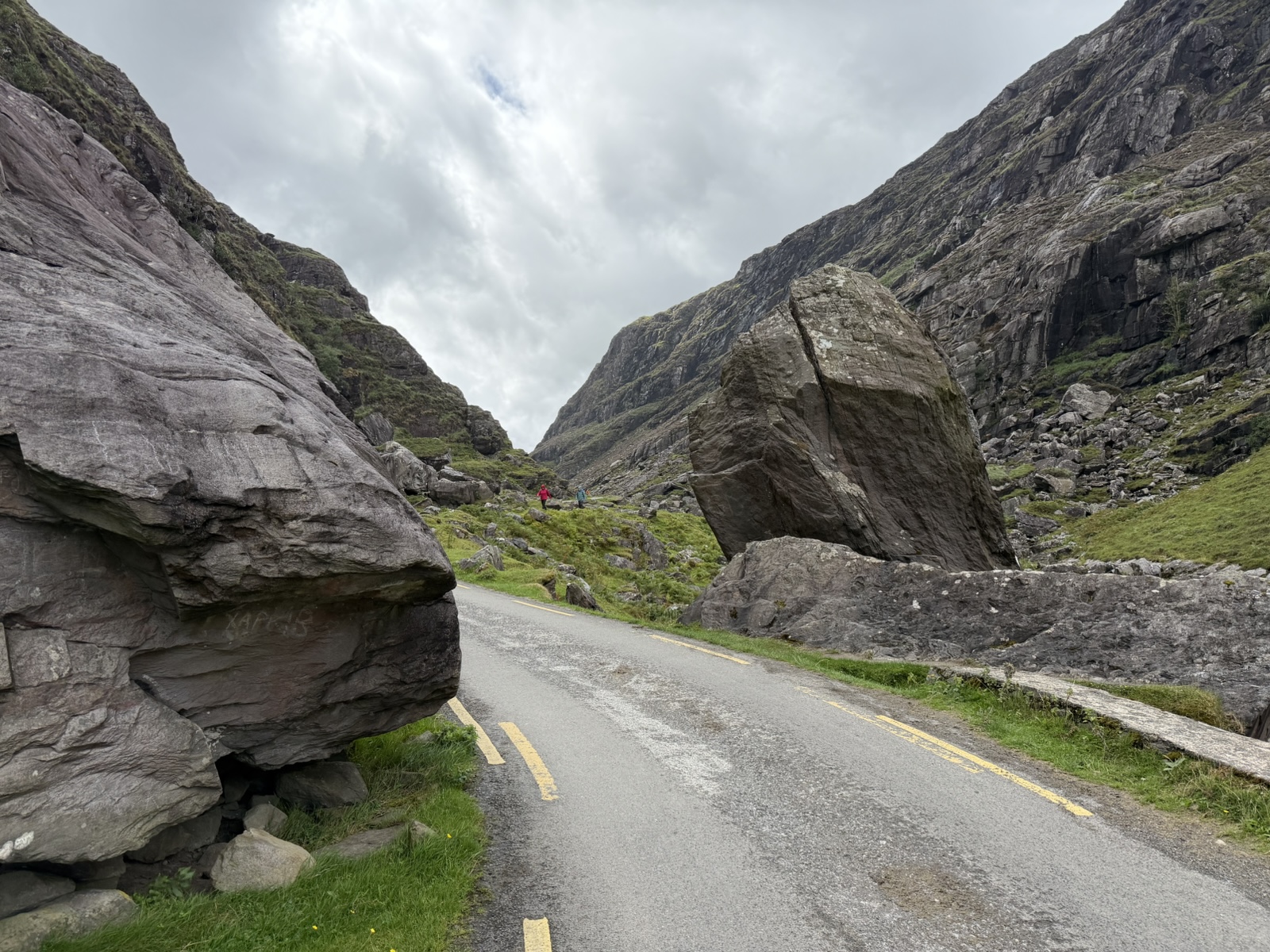
Our next stop was Ballaghbeama Gap, which offered a nice view in both directions. (A "gap" is what we might call a "pass", i.e., a high point in a road going between two mountains). The term "Ballaghbeama" is pronounced BA-lag-bee-muh, and comes from "ballagh", meaning a way, road or mountain pass; and "beama", meaning a cut, referring to a gap or cleft that looks like it was sliced right out of the rock.
According to local legend, the narrow gap looks so clean and deep that it was said to have been cut into the mountain by a huge blow from a giant's sword.
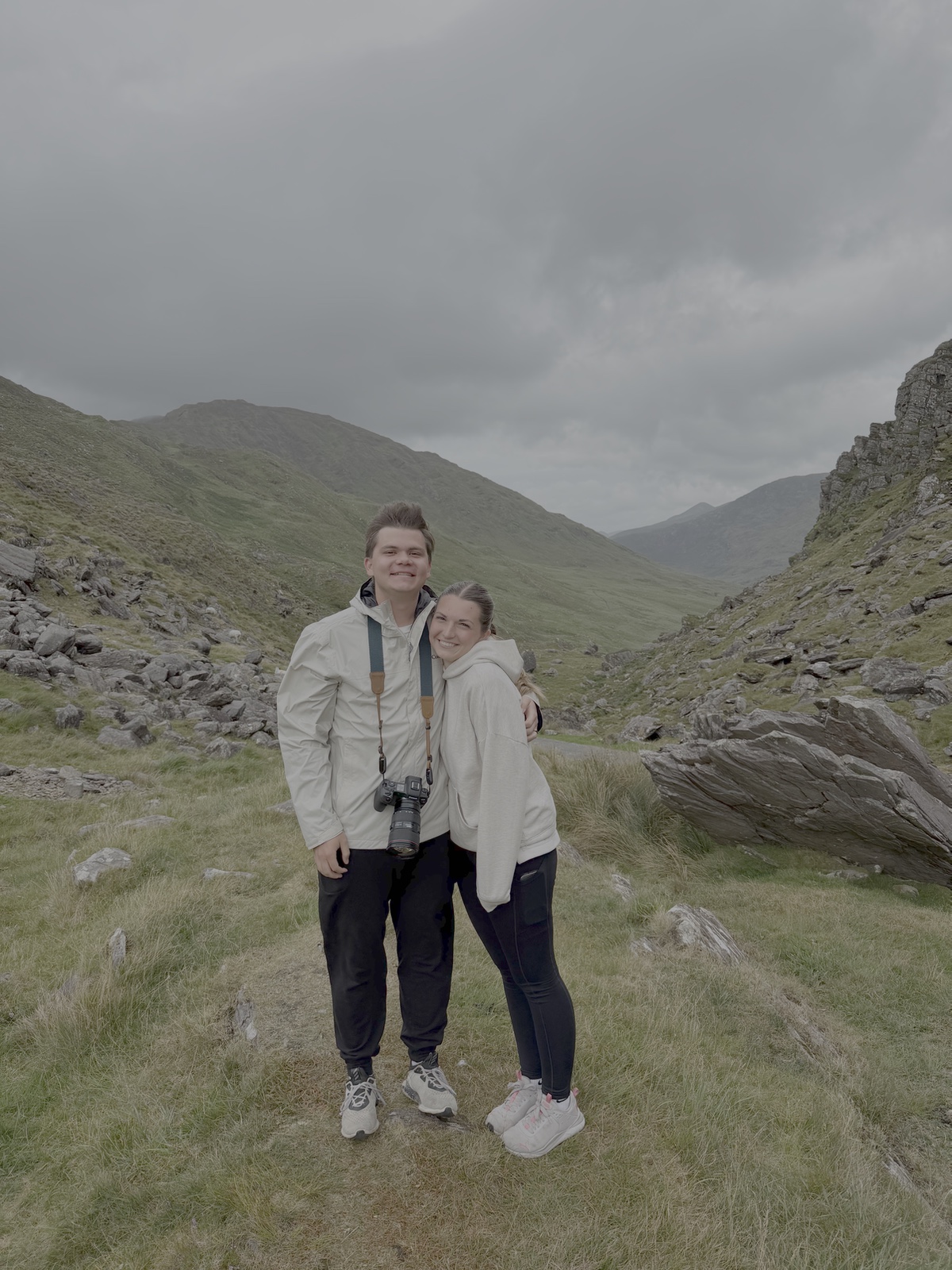
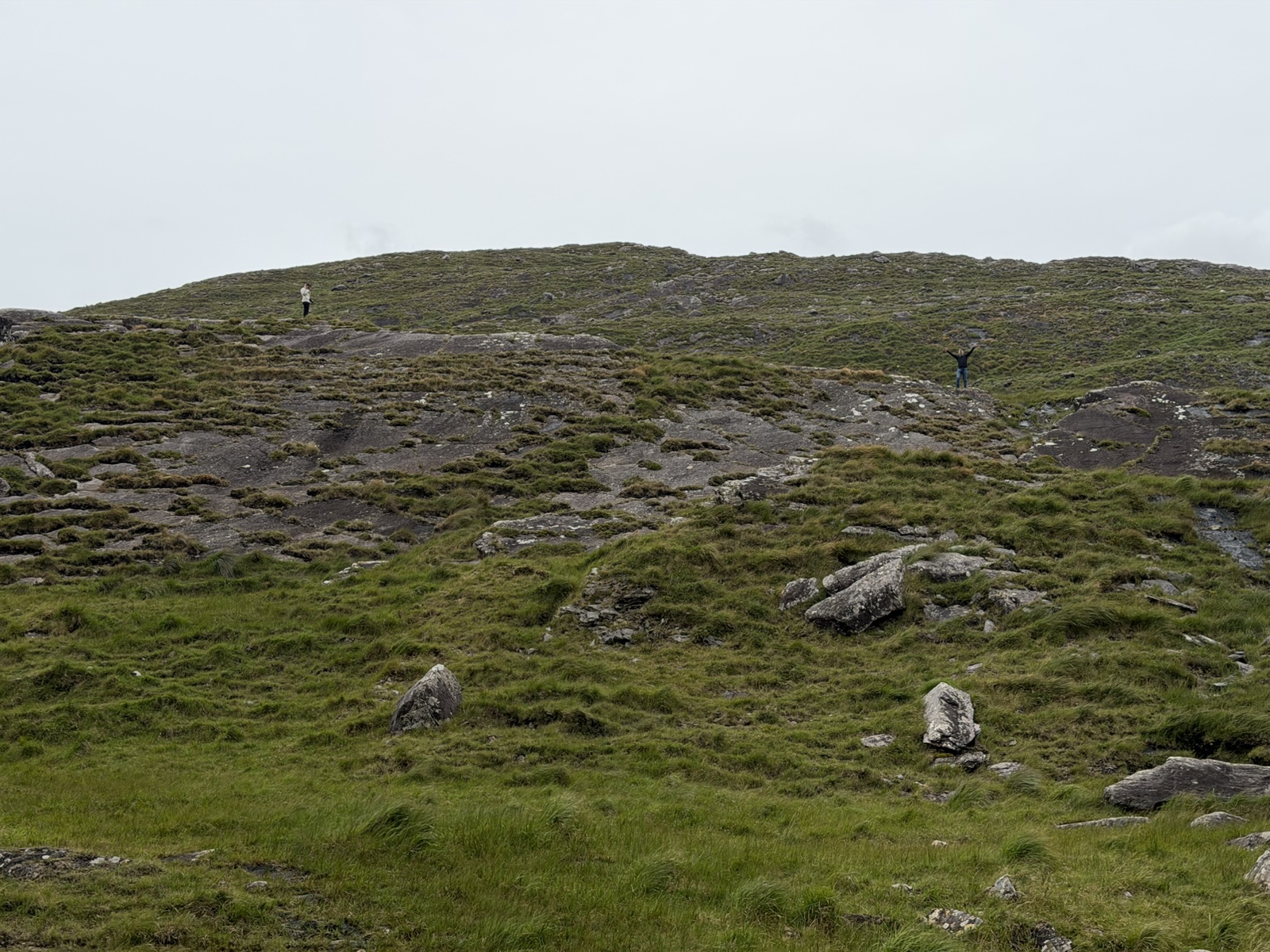
Jared and I climbed way up on the hill (see the road down there?)
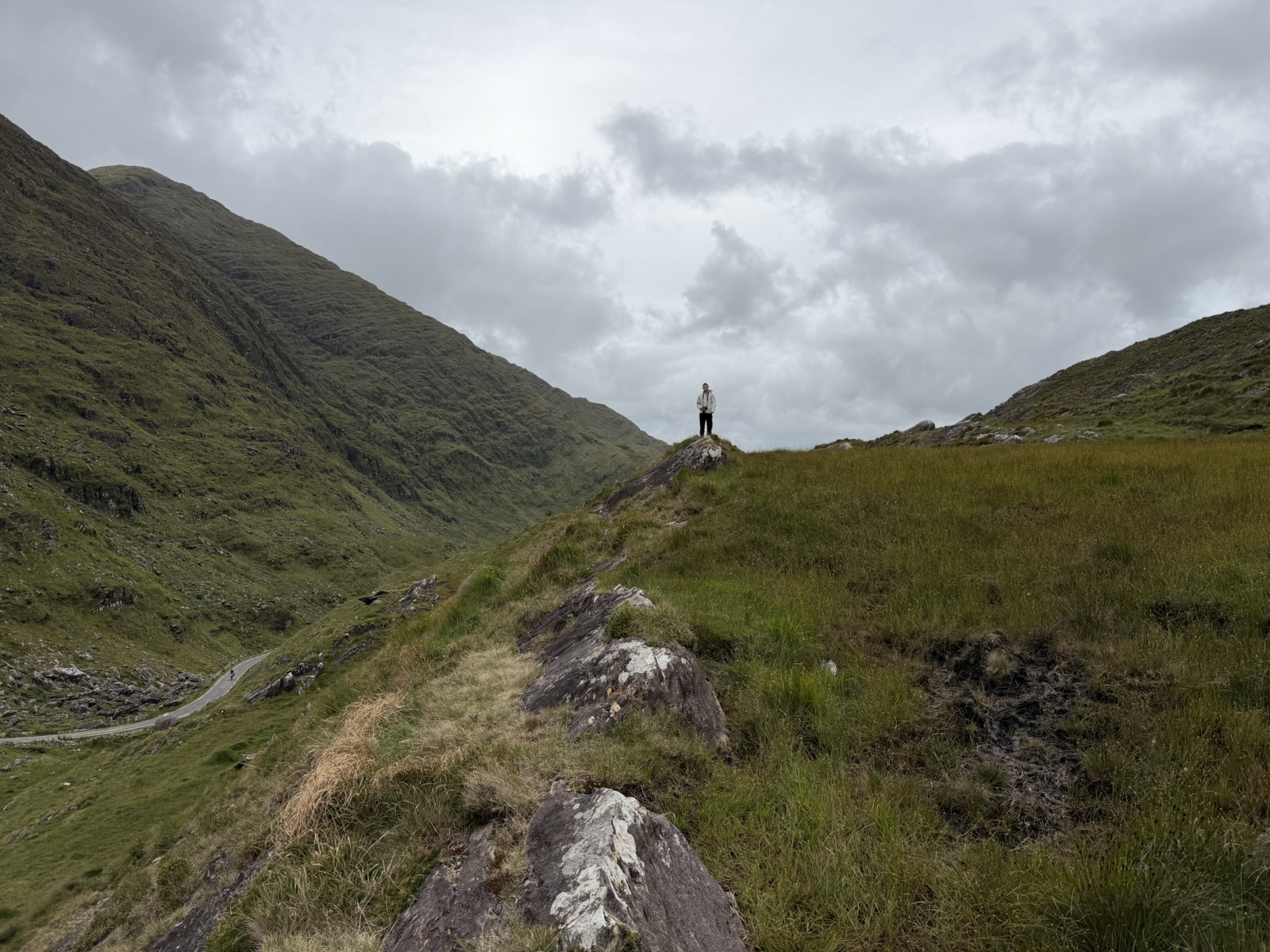
Here's a 6-second video of Jared "frolicking" on the hill.
I ran back up the hill an extra time to find Jared's phone, which had fallen out of his pocket up there. Perhaps during the frolicking.
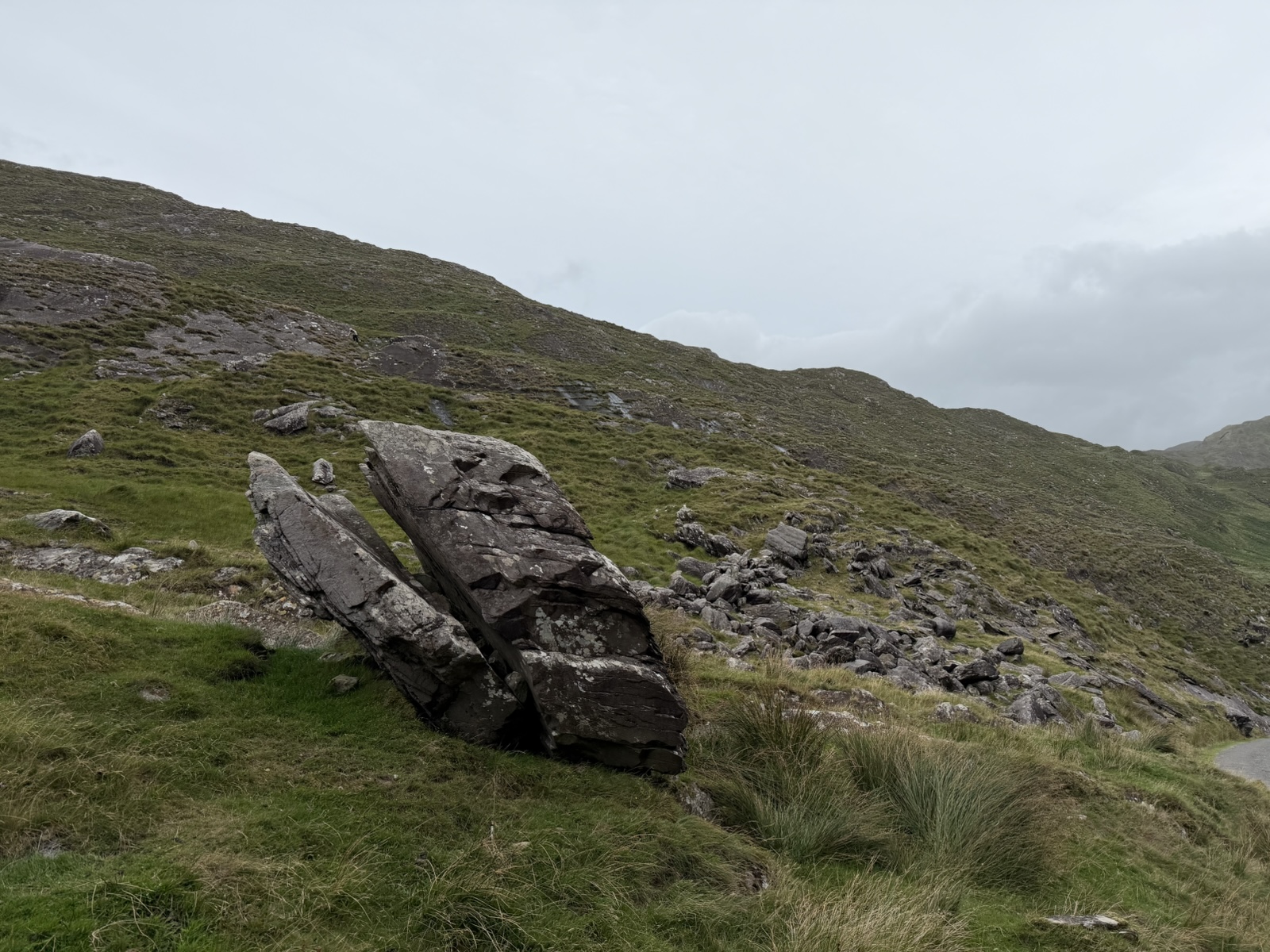
This rock looked like a big frog mouth.
The road was basically one lane wide with a slight shoulder in some places to make it possible for two vehicles to pass each other.
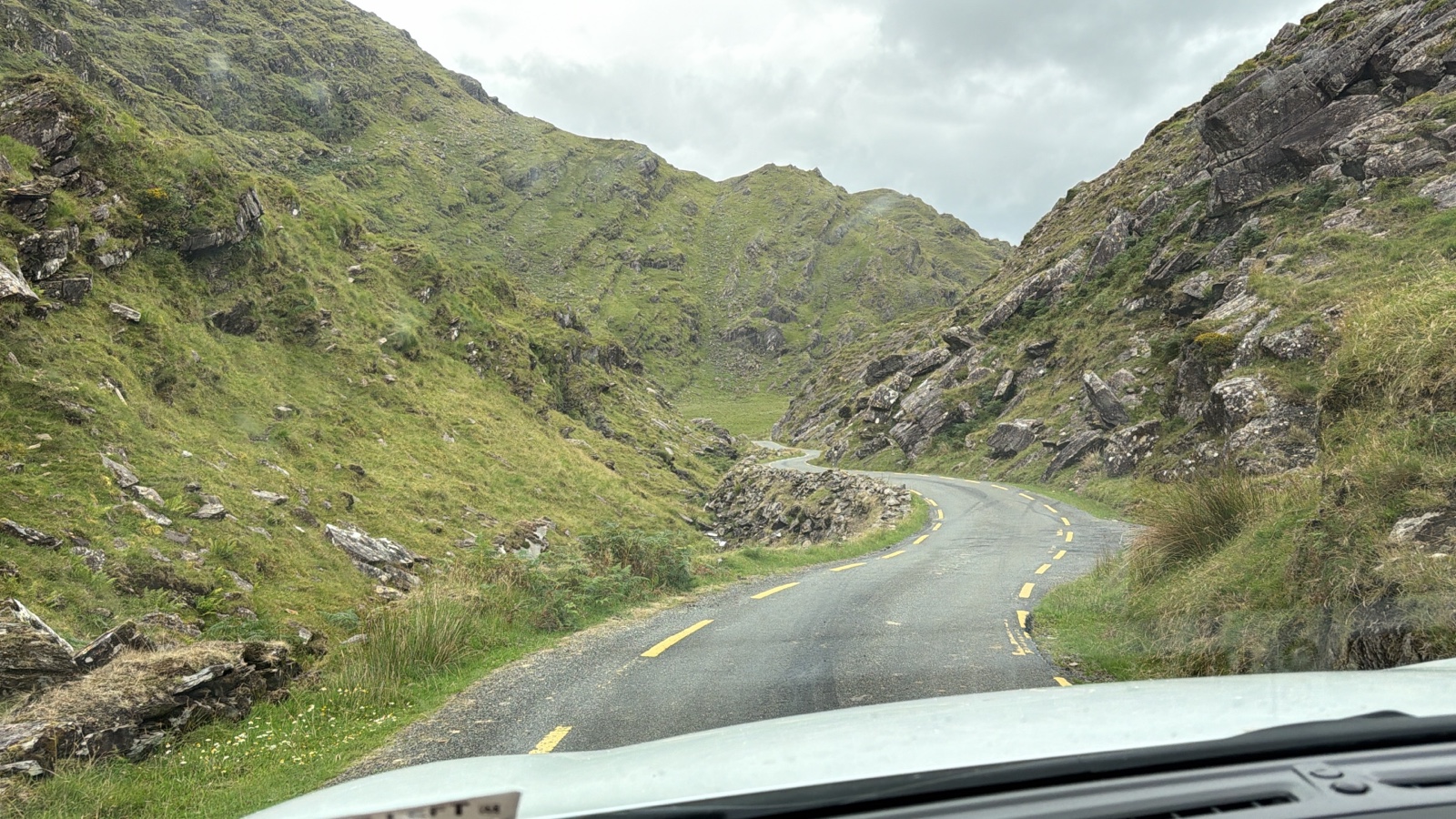
I think this is my favorite video of driving in Ireland, because it illustrates how narrow and scary the roads were, but also how gorgeous the scenery was.
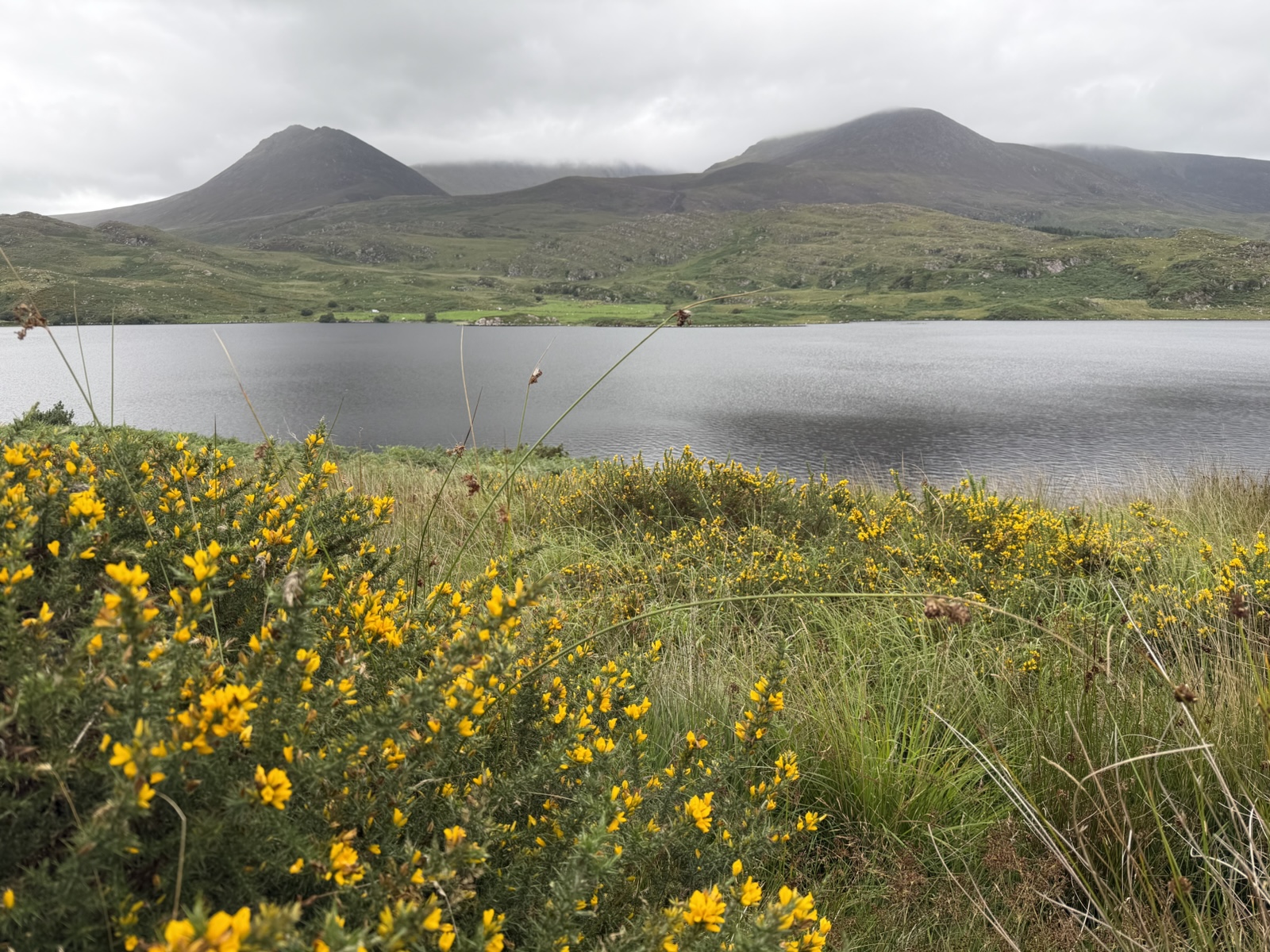
We drove by Lough Acoose.
We arrived at the parking area at the base of the road that goes up and over the Gap of Dunloe. You couldn't just drive up that road, though, and we were too worn out to hike that far, so we decided we would return the next day on bicycles to ride to the top of the Gap of Dunloe.
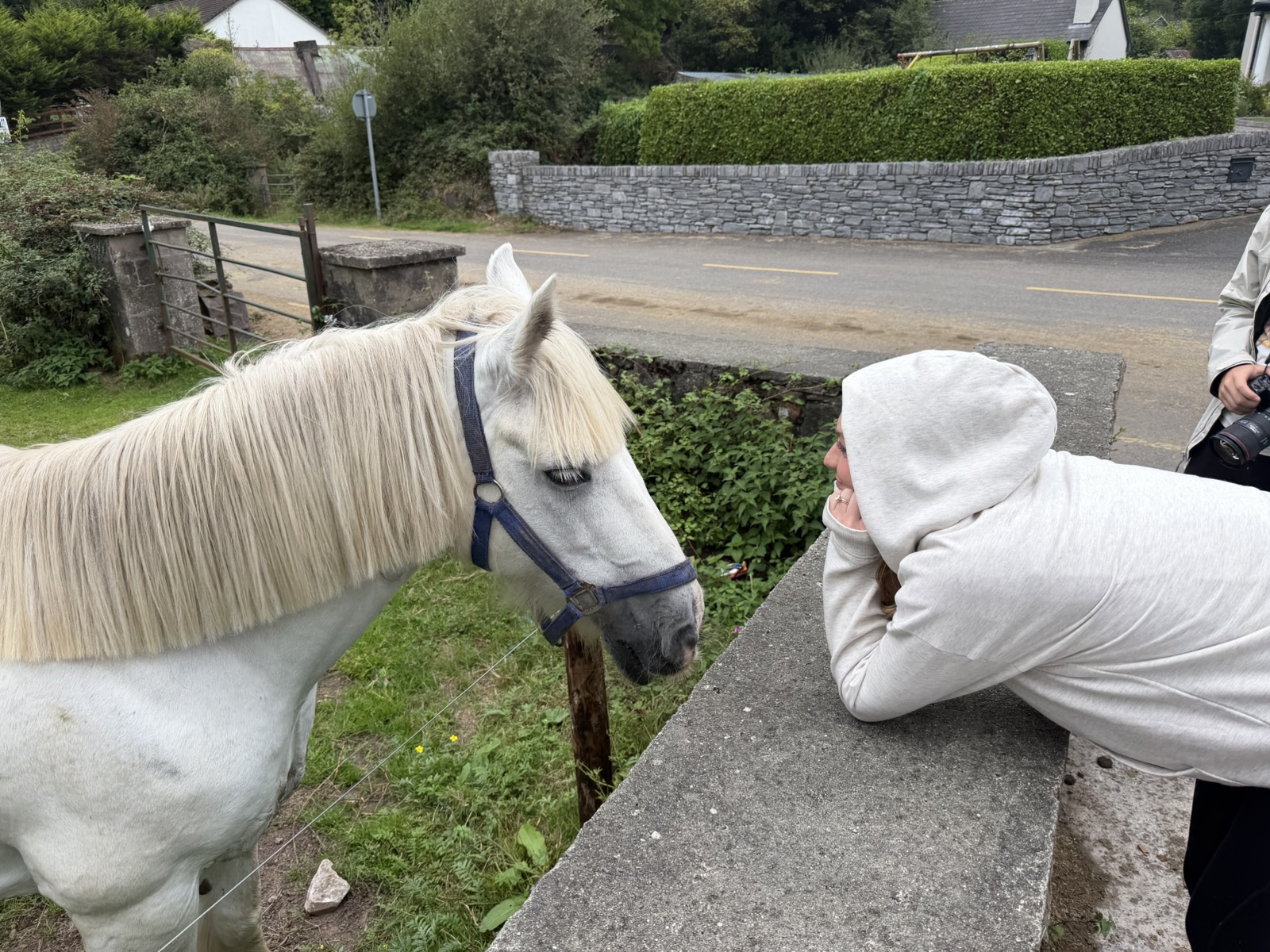
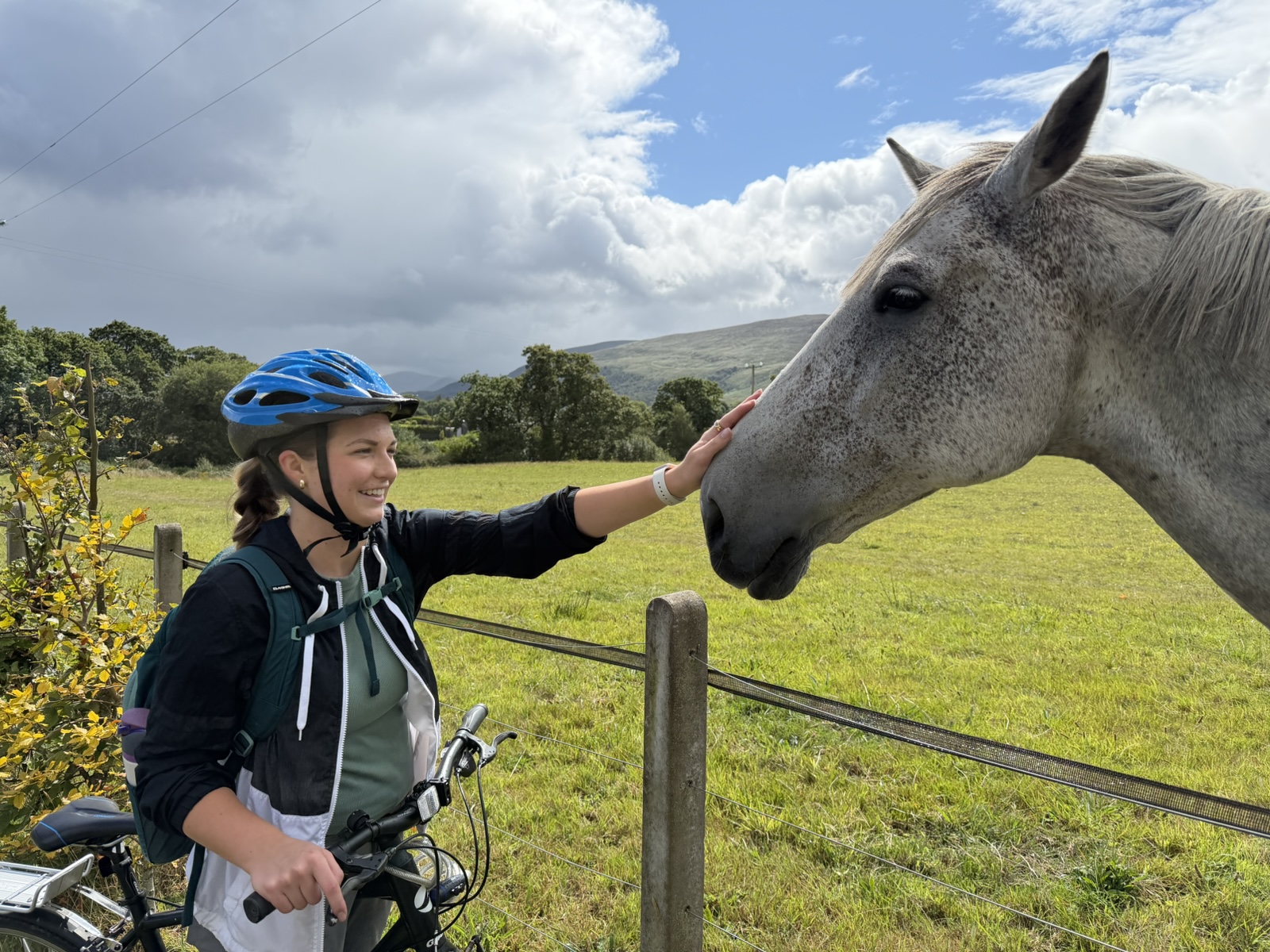
Meanwhile, Katelyn said hello to one of the many horses there that take tourists up the gap in horse-drawn "Jaunting Carts".
That night we had dinner at a little restaurant. While we waited for our food, Katelyn pulled out the tiniest game of Bananagrams ever!
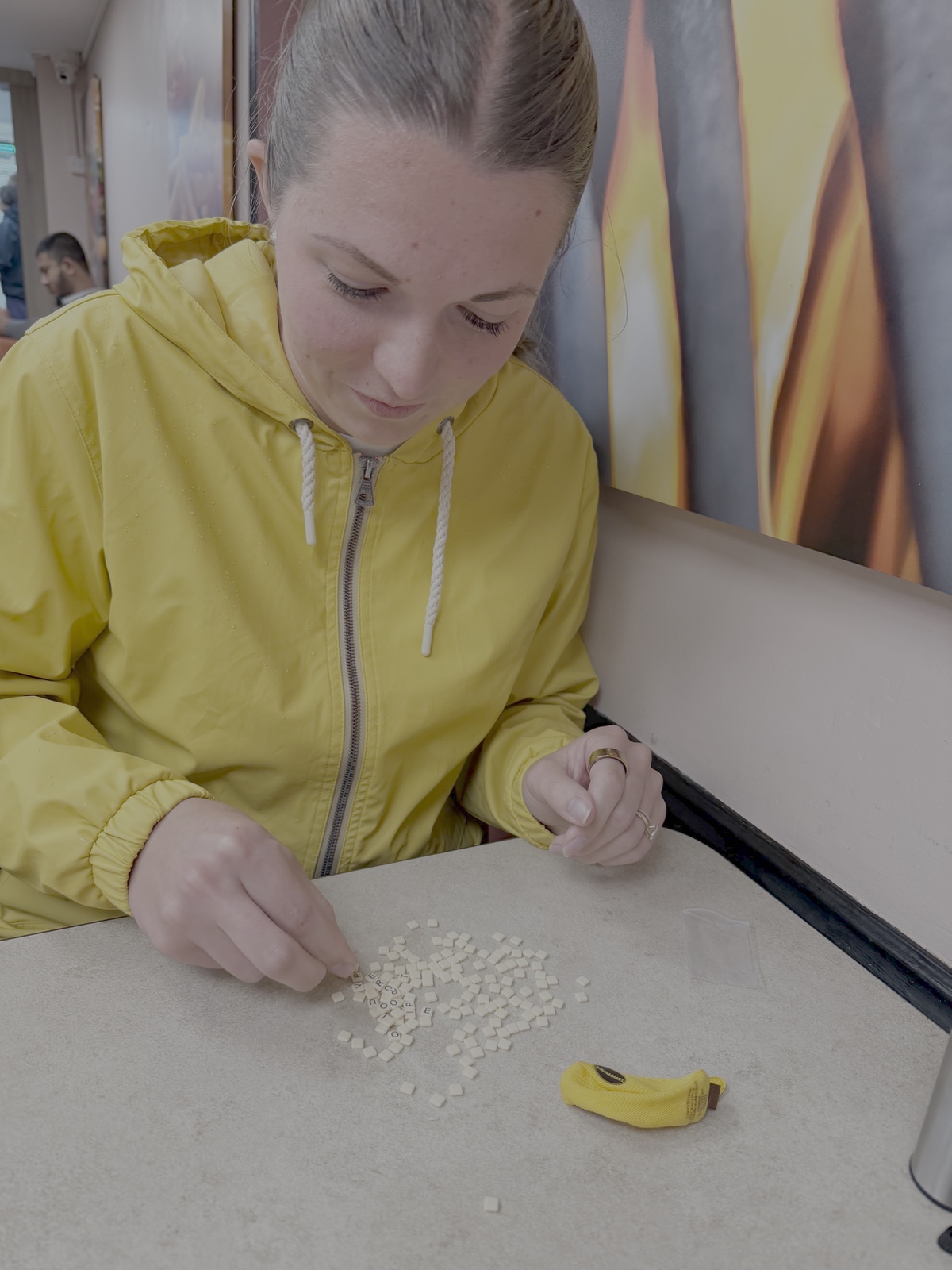
It took half the time just to try to move these teeny tiny letters around without ruining what you already had.
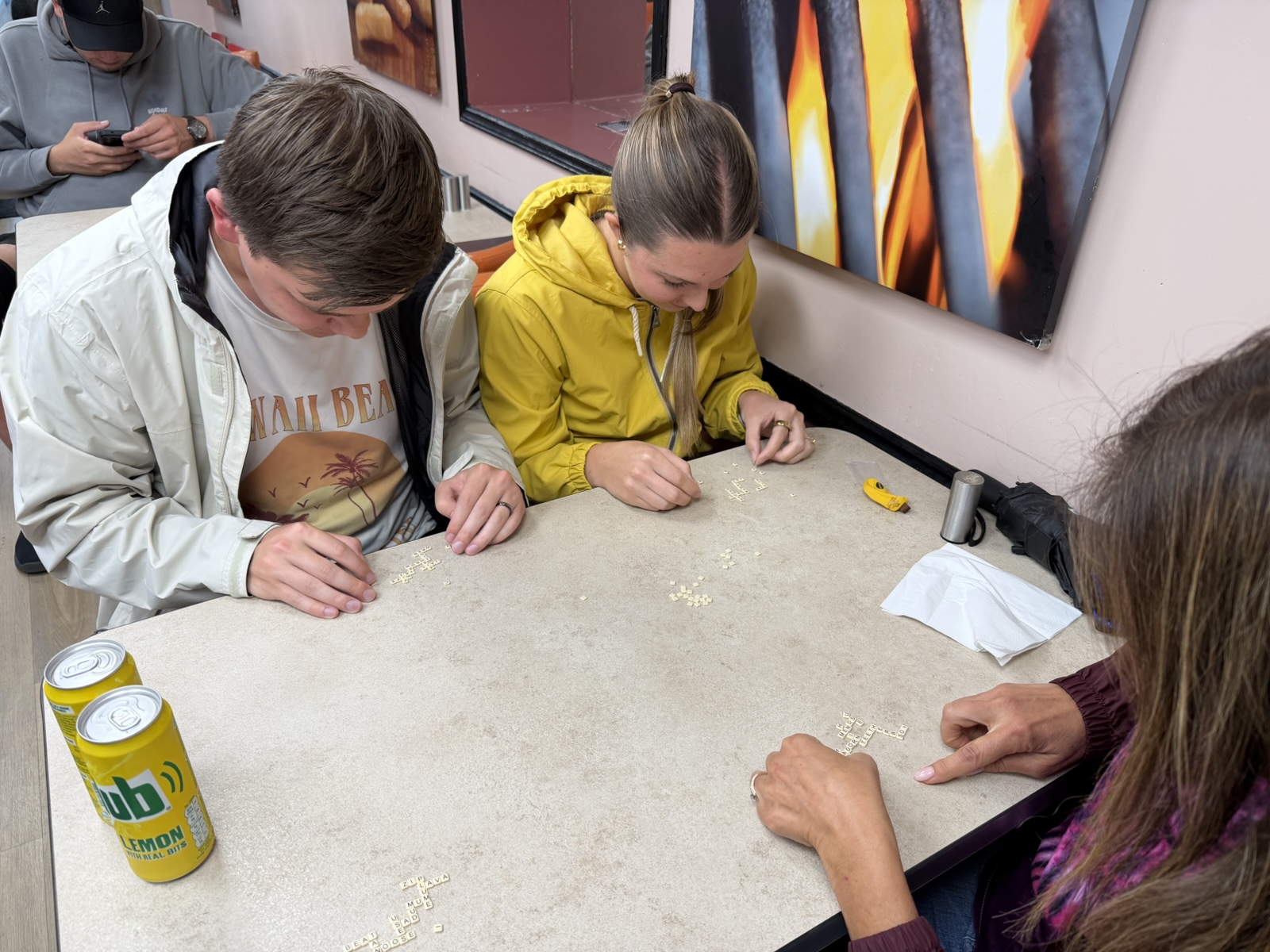
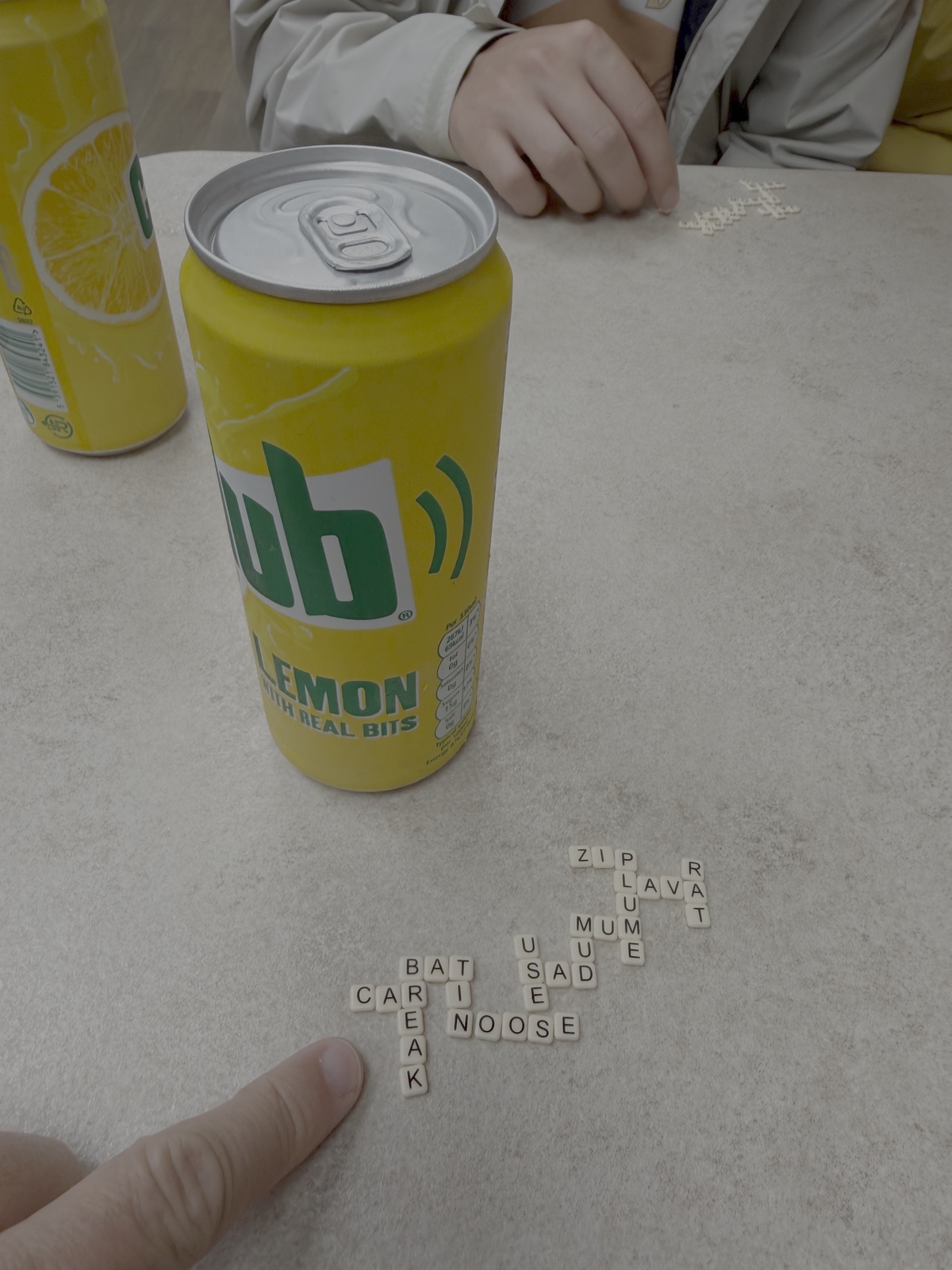
It was so funny! (We also really fell in love with Club Lemon soda, "with real bits" [pulp])
After dinner, we walked down the lively main street in Killarney, and there was live "trad" music going on at Paddy Sheehan's Pub. The band was playing in front of two big open doors, so people on the street could enjoy them as well.
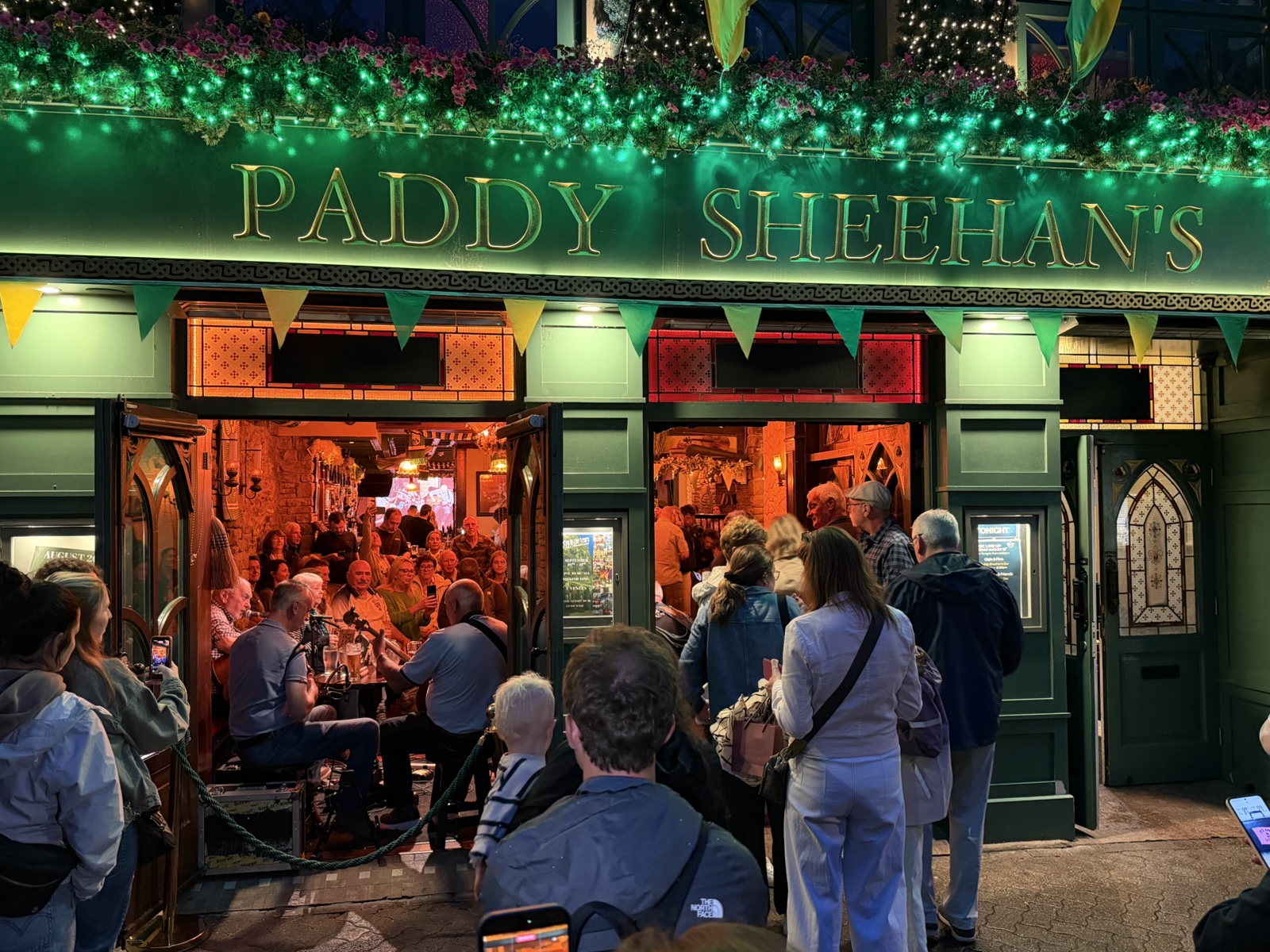
As expected, they played some of the same songs from our Irish Drinking Songs top 10 list (Whisky in the Jar; Molly Malone; etc.). An old guy stood up and did Irish dancing inside a couple of times, and a couple of other girls got up and did some as well, while the crowd inside cheered for them.
Here is a 3-minute video that gives you a pretty good sense of the jovial atmosphere as people gathered inside the pub and out to enjoy the "trad music" (traditional Irish music).
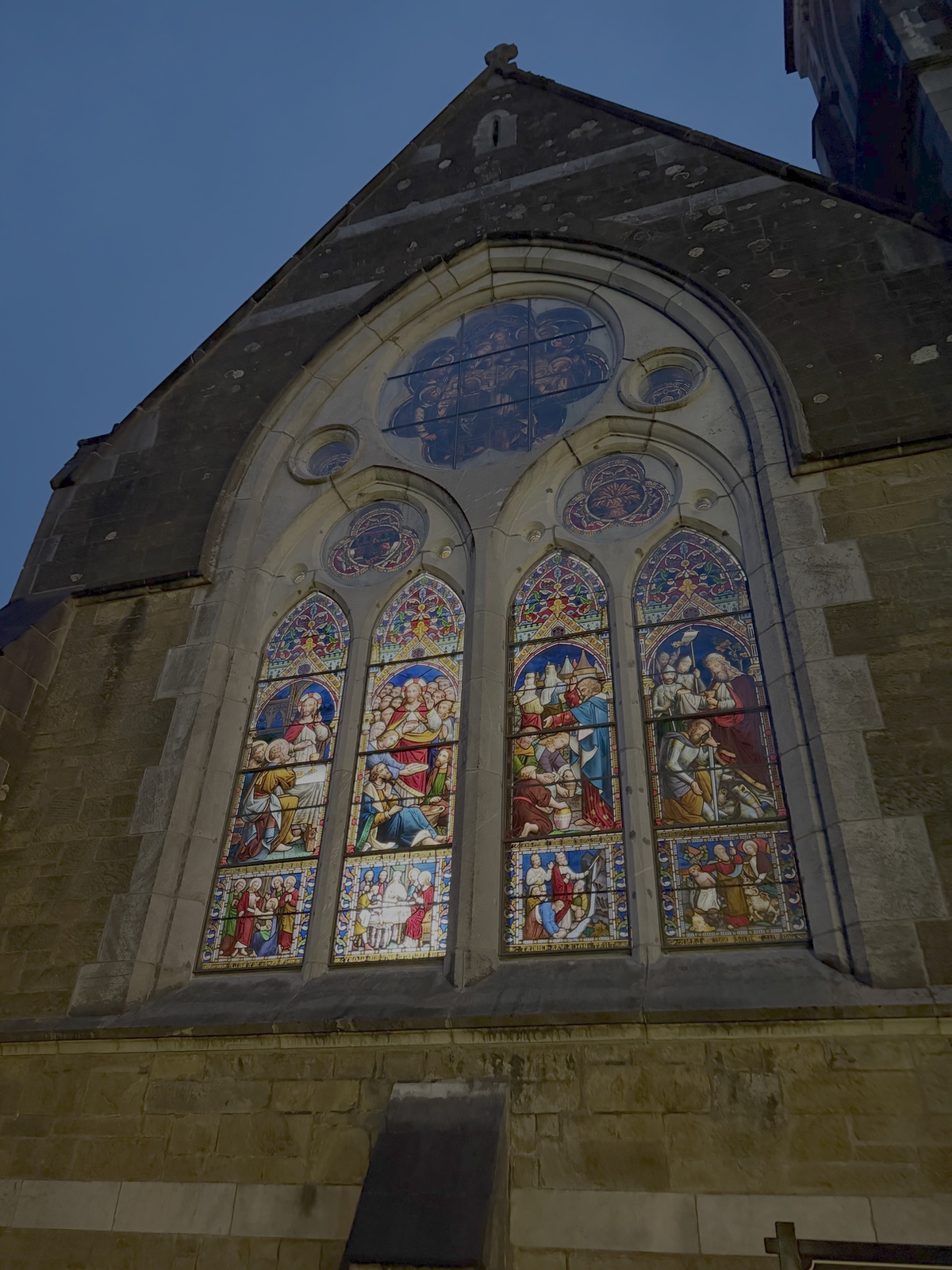
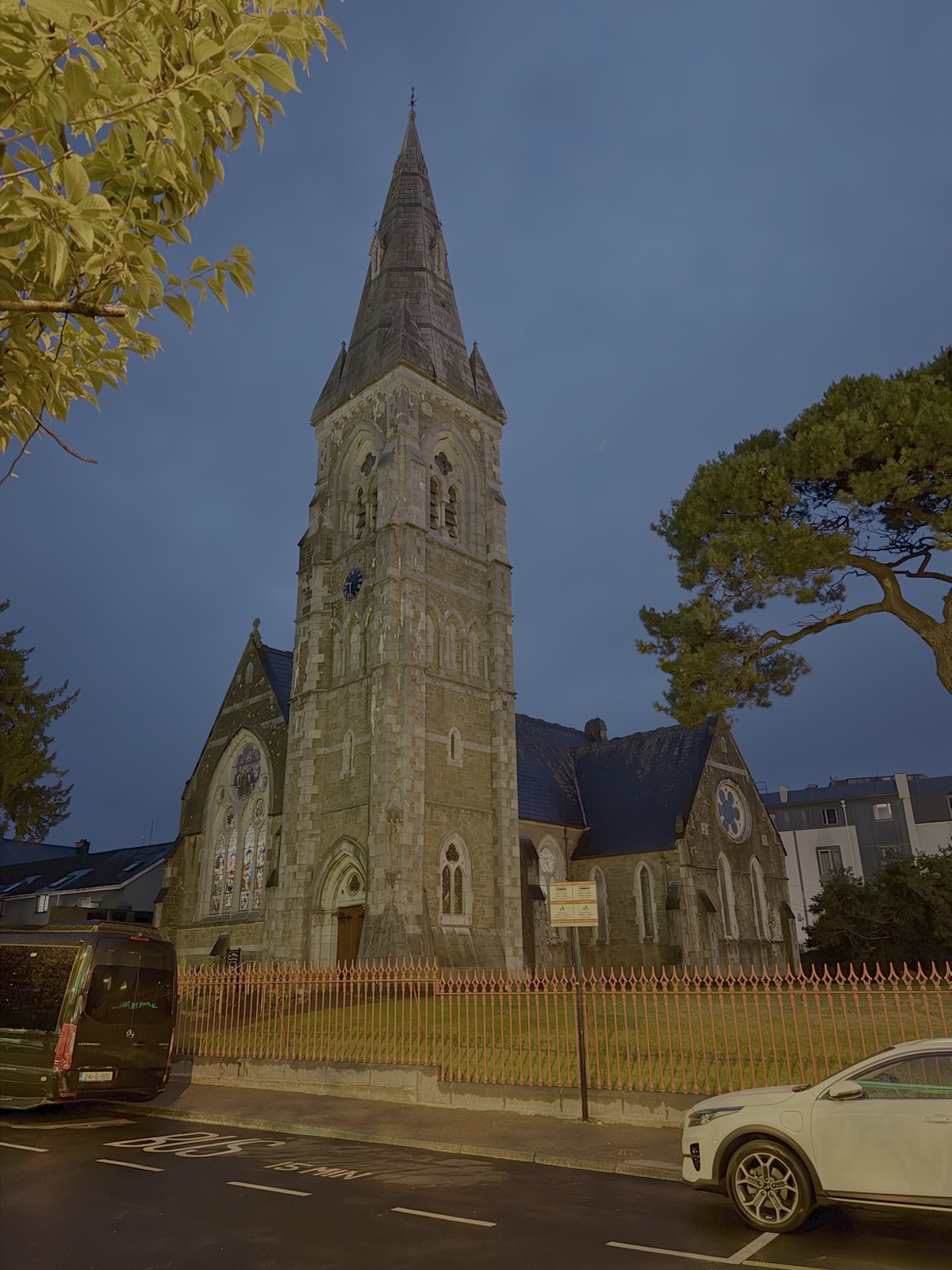
We walked around the outside of St. Mary's Church of Ireland, which had some cool stained glass.
The next morning (August 19, 2026), I tried out the "banjitar". It has a body and strings like a banjo, but it tuned like a guitar. So I could play guitar chords on it comfortably while getting the twangy sound of a banjo. That was kind of fun. I also played a few songs on the guitar.
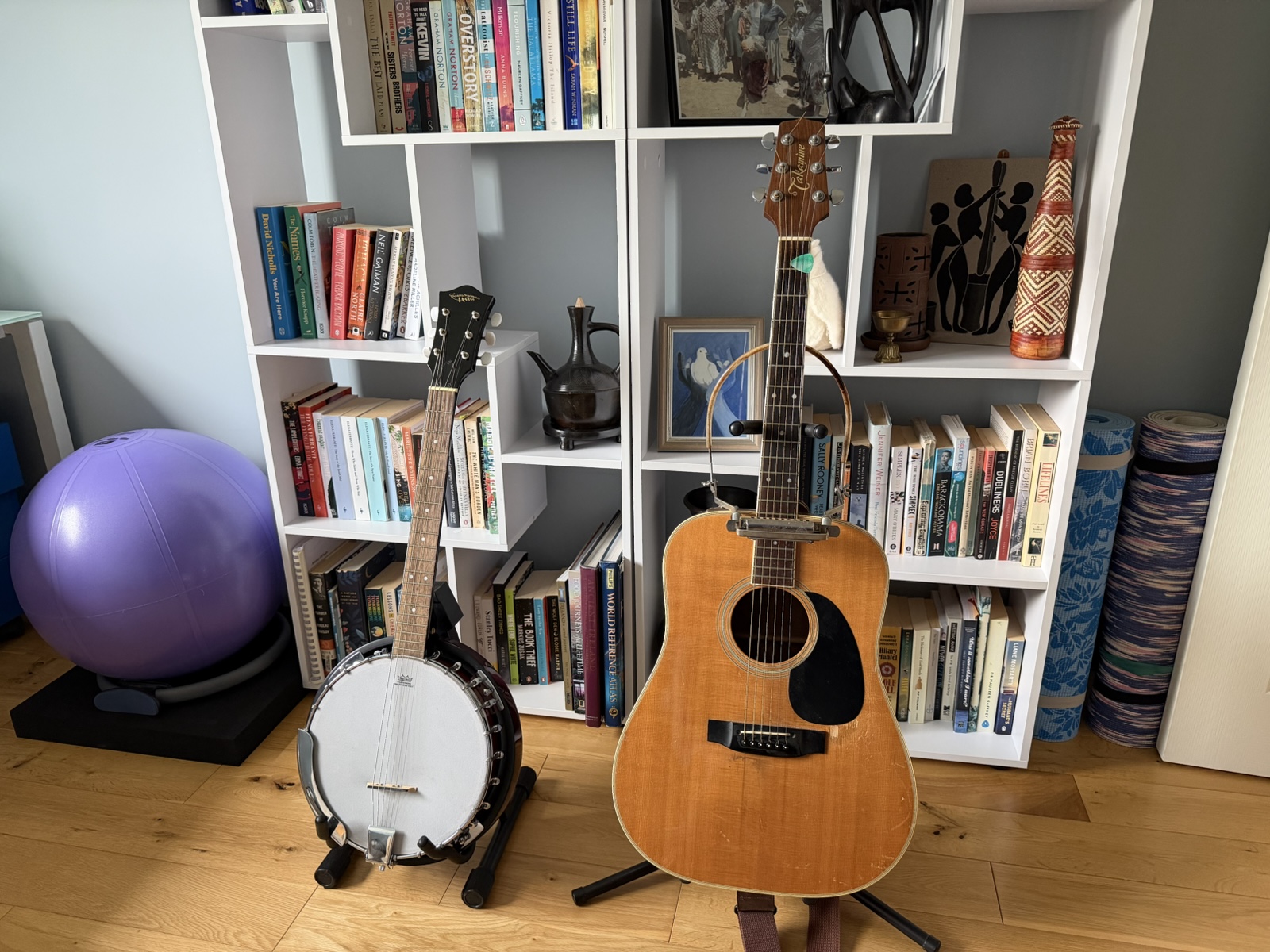
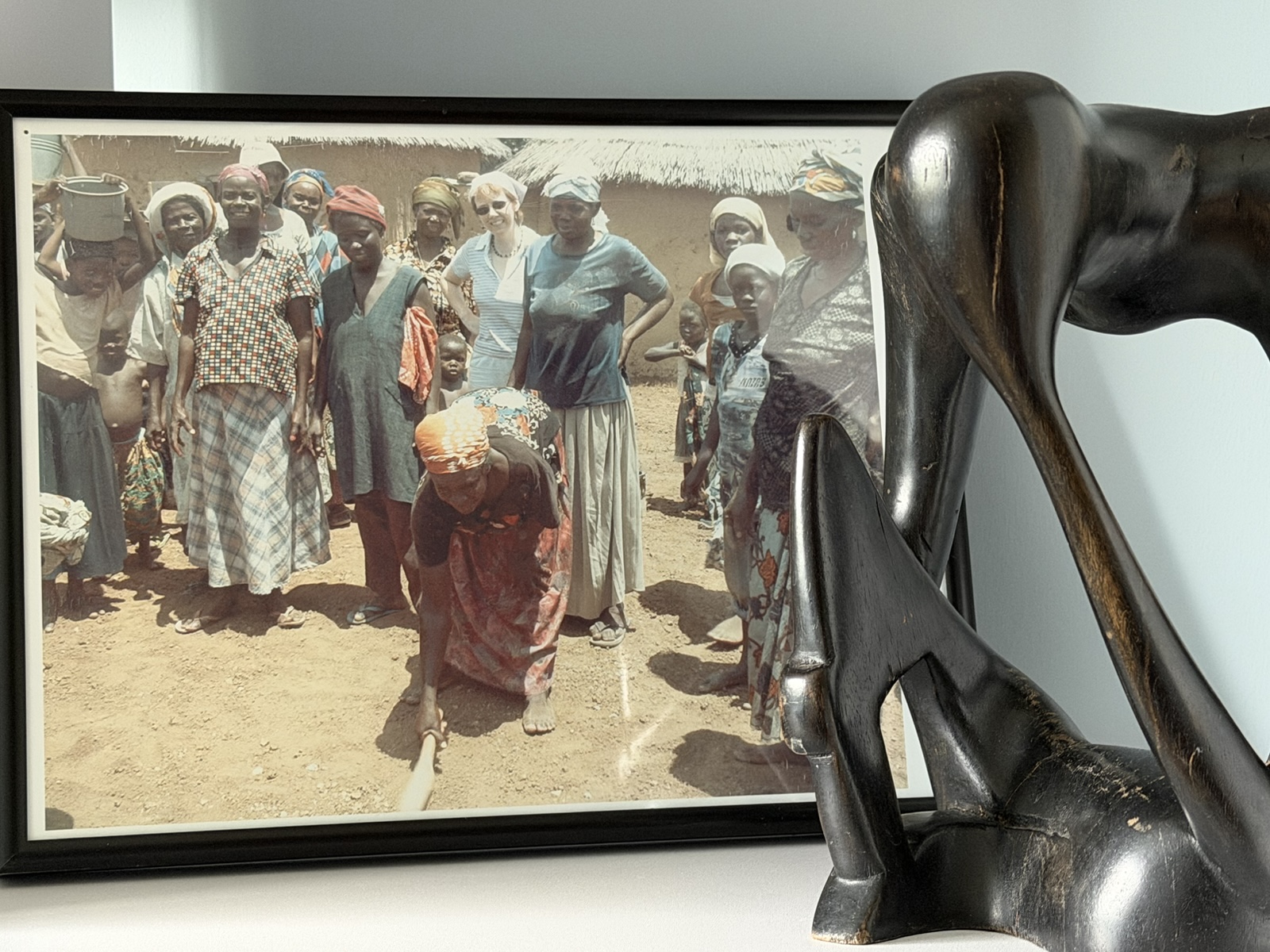
Our hosts were delightful people. We had a WhatsApp video call with them twice before our trip, and it was fun to get to know them. She was from Ireland and he was from Canada, and apparently they met while they were both doing humanitarian work in Africa. So there were quite a few nice African decorations around the house.
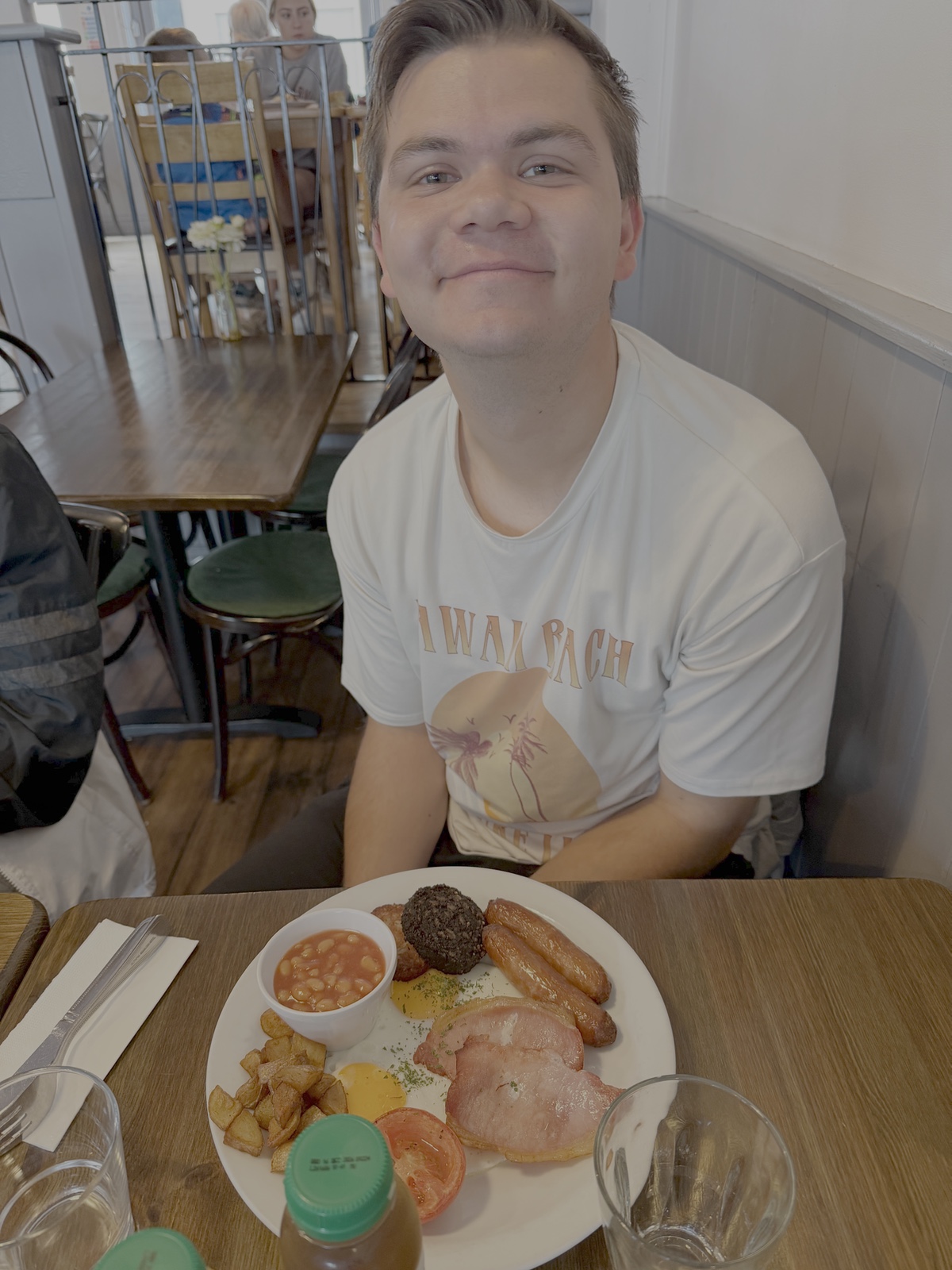
That morning we decided to try the traditional "Full Irish Breakfast," which has eggs, potatoes, bacon (more like ham), sausages, beans and "black & white pudding", which is two sausage patties—the black one with the blood in it, and the white one without.
Fun fact: The word "pudding" comes from the Old French boudin, derived from the Latin botellus, meaning "sausage" or "small intestine". The word "pudding" originally meant a savory sausage made by boiling seasoned meats and grains inside animal casings. As cooks adapted those boiling techniques to sweet, cornstarch-thickened milk, the name transferred over—and in America, eventually came to mean only the creamy bowl dessert. In the U.K., "pudding" is used now to describe dessert in general, while in Ireland, it is typically used just for certain dishes.
The Full Irish Breakfast was hearty, to be sure, and gave us the energy we would need that day for our bike ride.
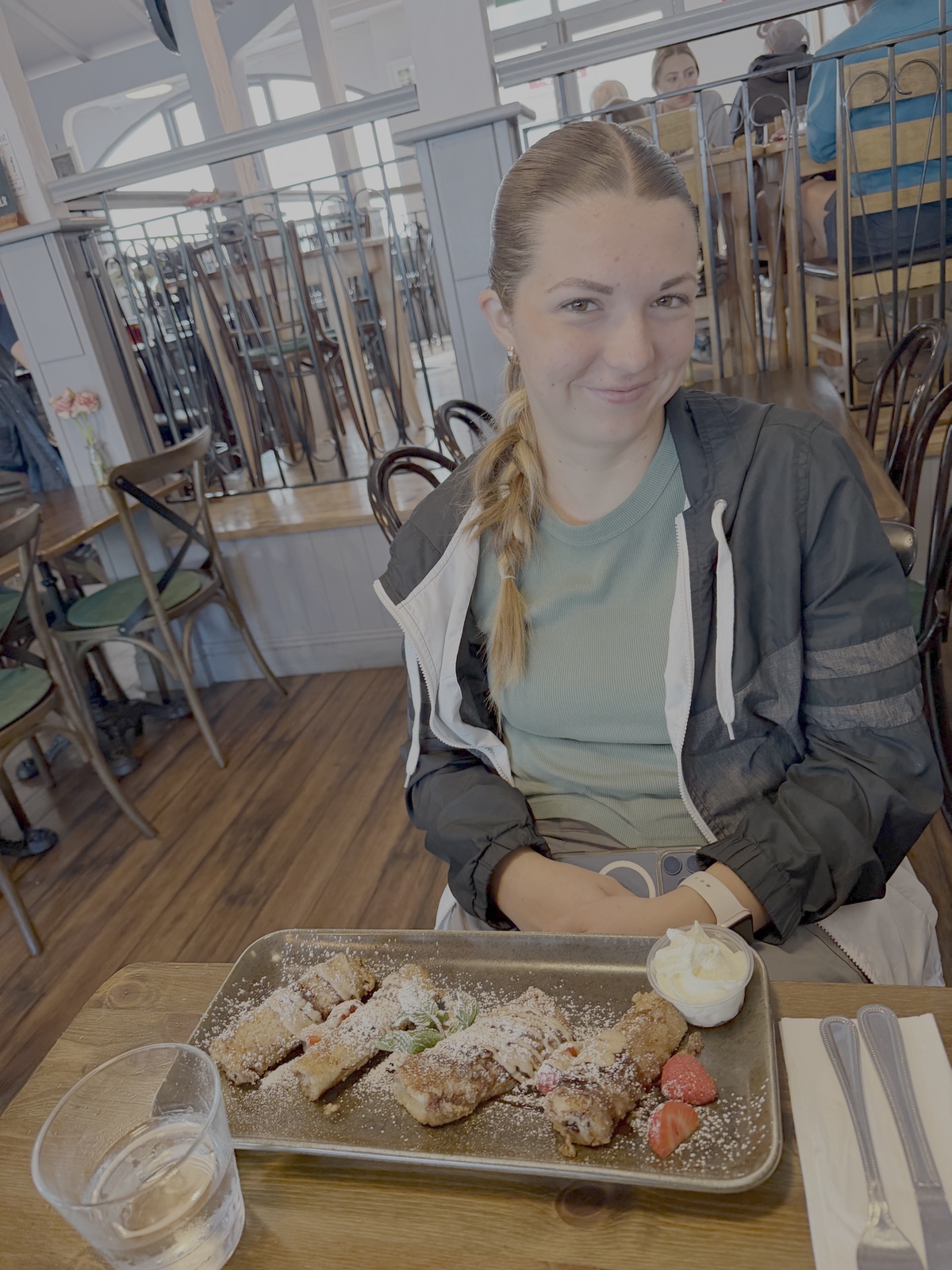
Katelyn did French Toast, which looked tasty.
Our plan that day was to ride bikes up to the top of the Gap of Dunloe, a narrow mountain pass that separates the MacGillycuddy's Reeks mountain range from the Purple Mountain Group range, both of which are fun names.
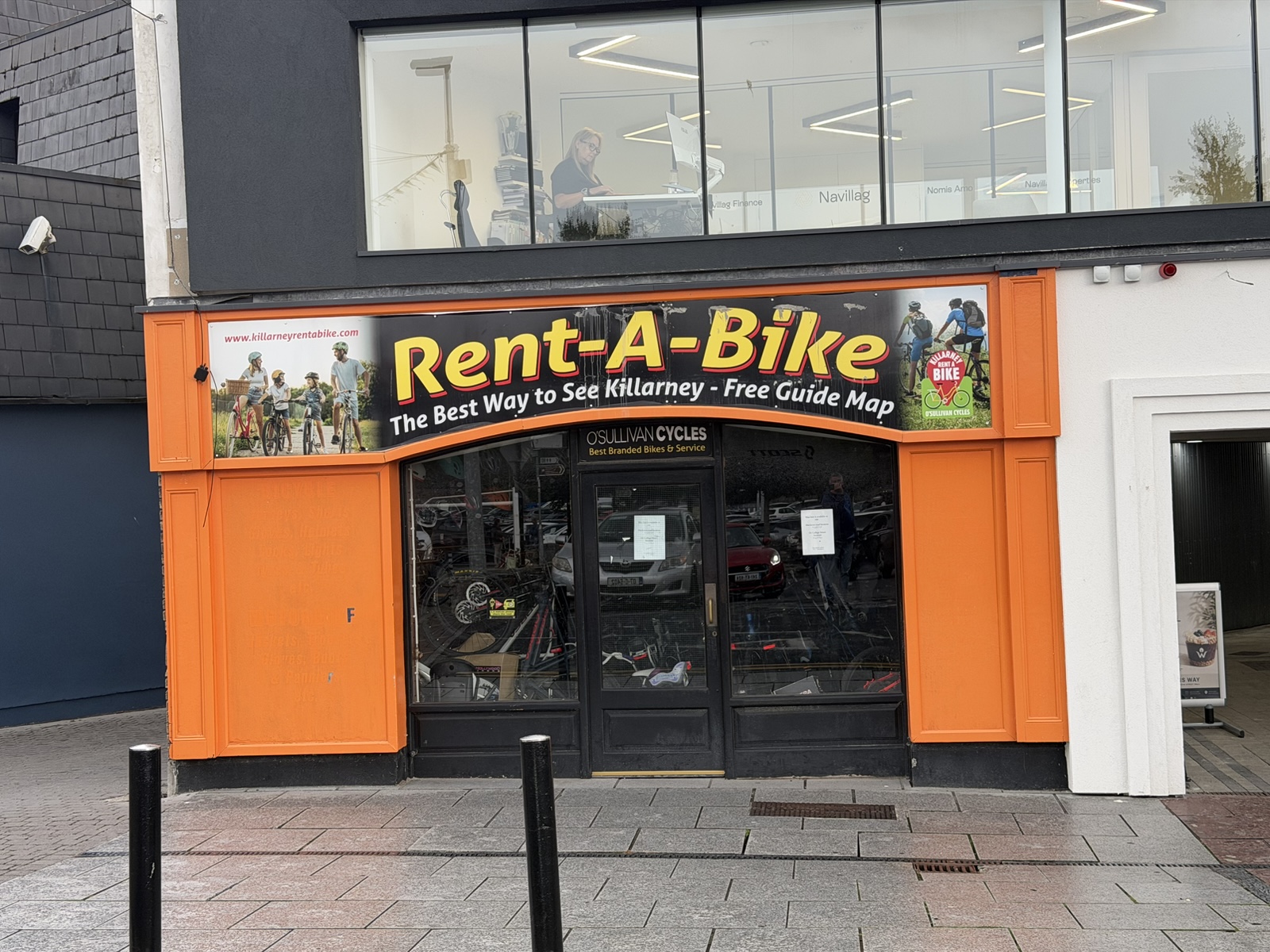
So after breakfast, Linette and Katelyn drove back to the house while Jared and I tried to rent bikes at a local bike shop. They didn't have bikes for rent there, so we went to a second place with a big "Rent-a-Bike" sign over it, but alas, it was closed. So we went to a third place (which the first place had already told us to try) and were finally able to rent two bikes, which came with a convenient "dry bag" to serve as our "trunk" as we rode.
Our home exchange included two bikes that Linette and Katelyn could use.
We rode over to our house, gathered up the gals, and rode over to the nearby paths that go through Killarney National Park. What a beautiful area!
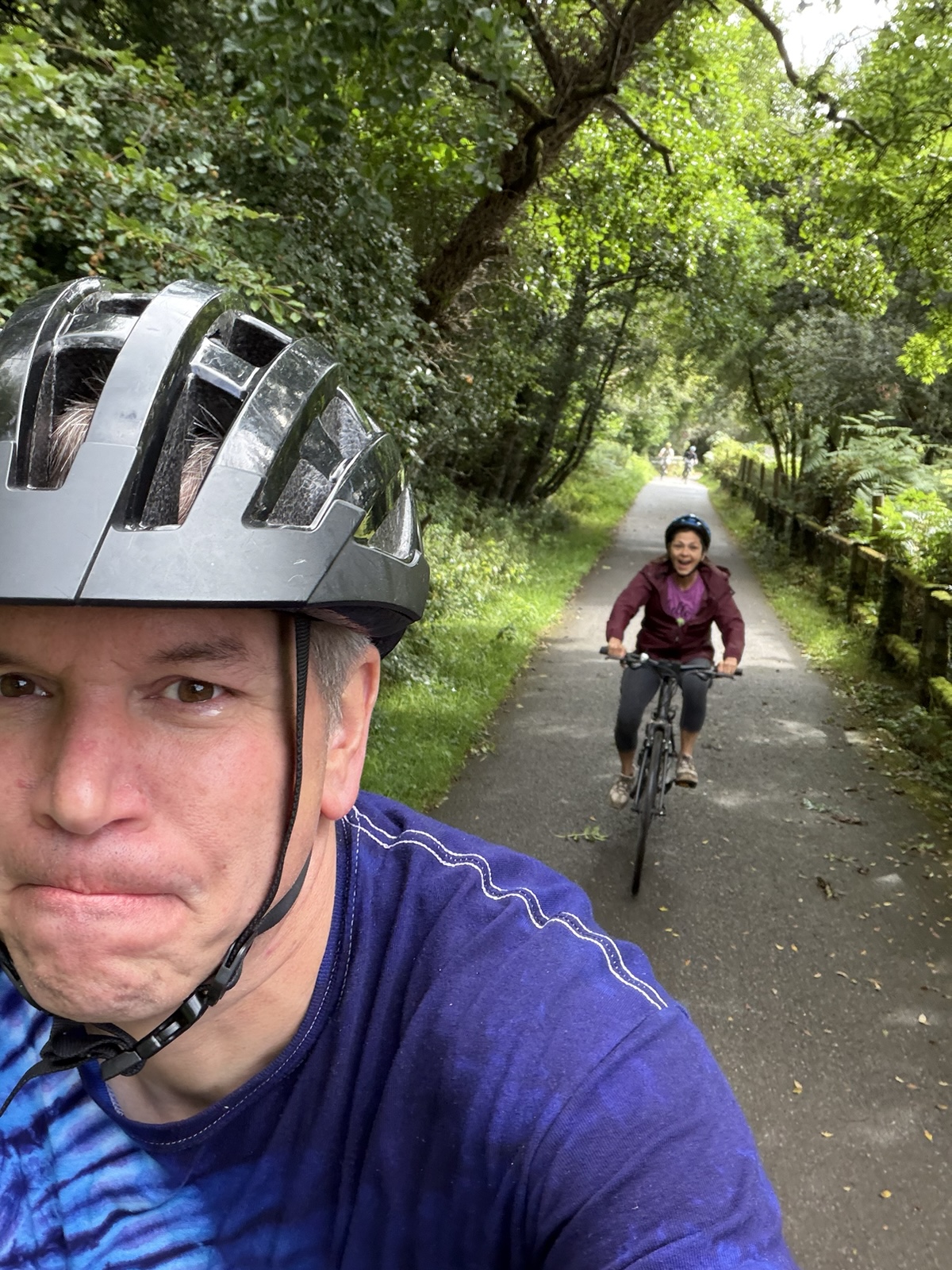
Here is a 20-second video of biking through Killarney National Park.
We were soon outside of town and in the country.
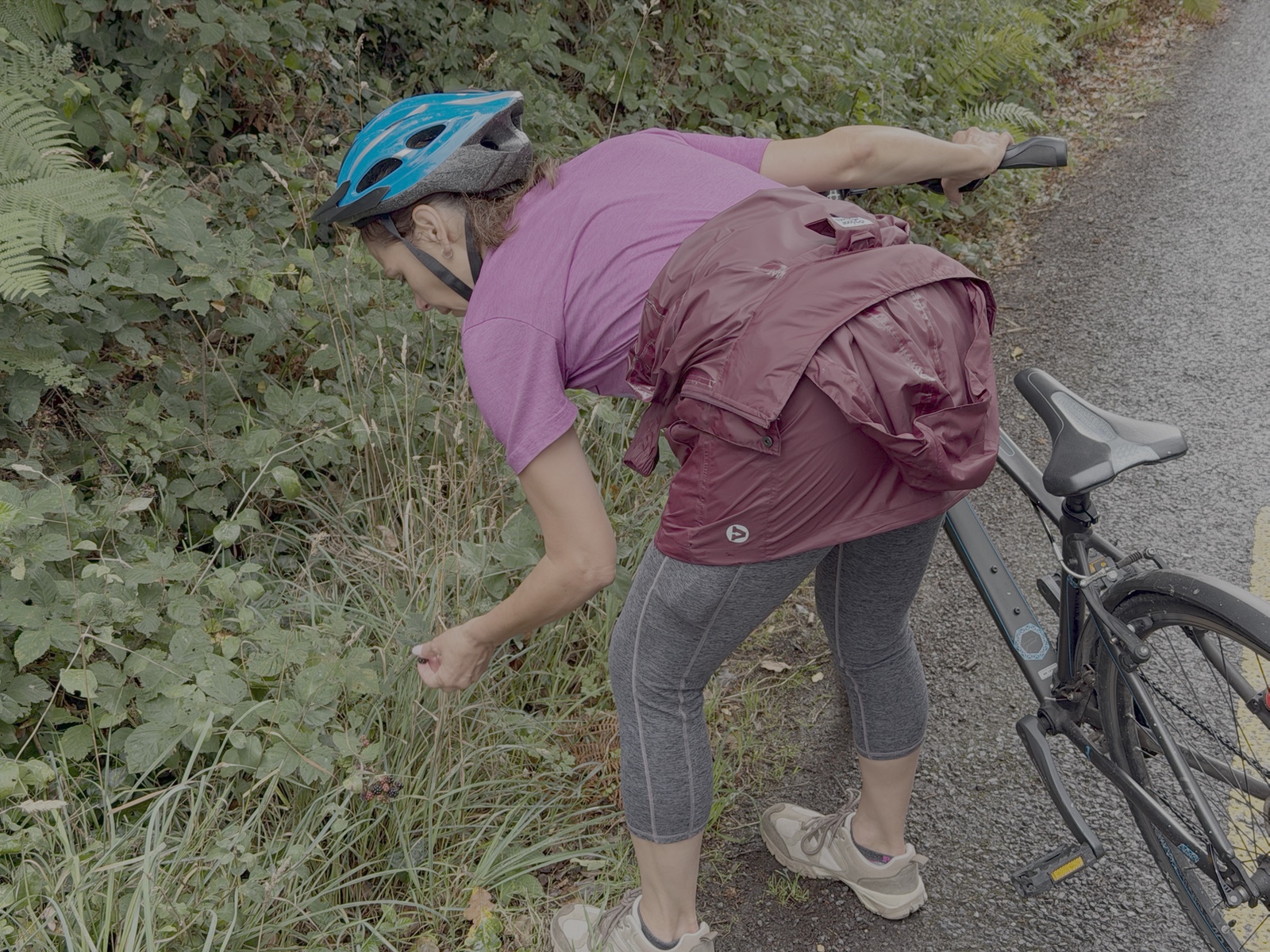
Linette picked some more blackberries as we rode along.
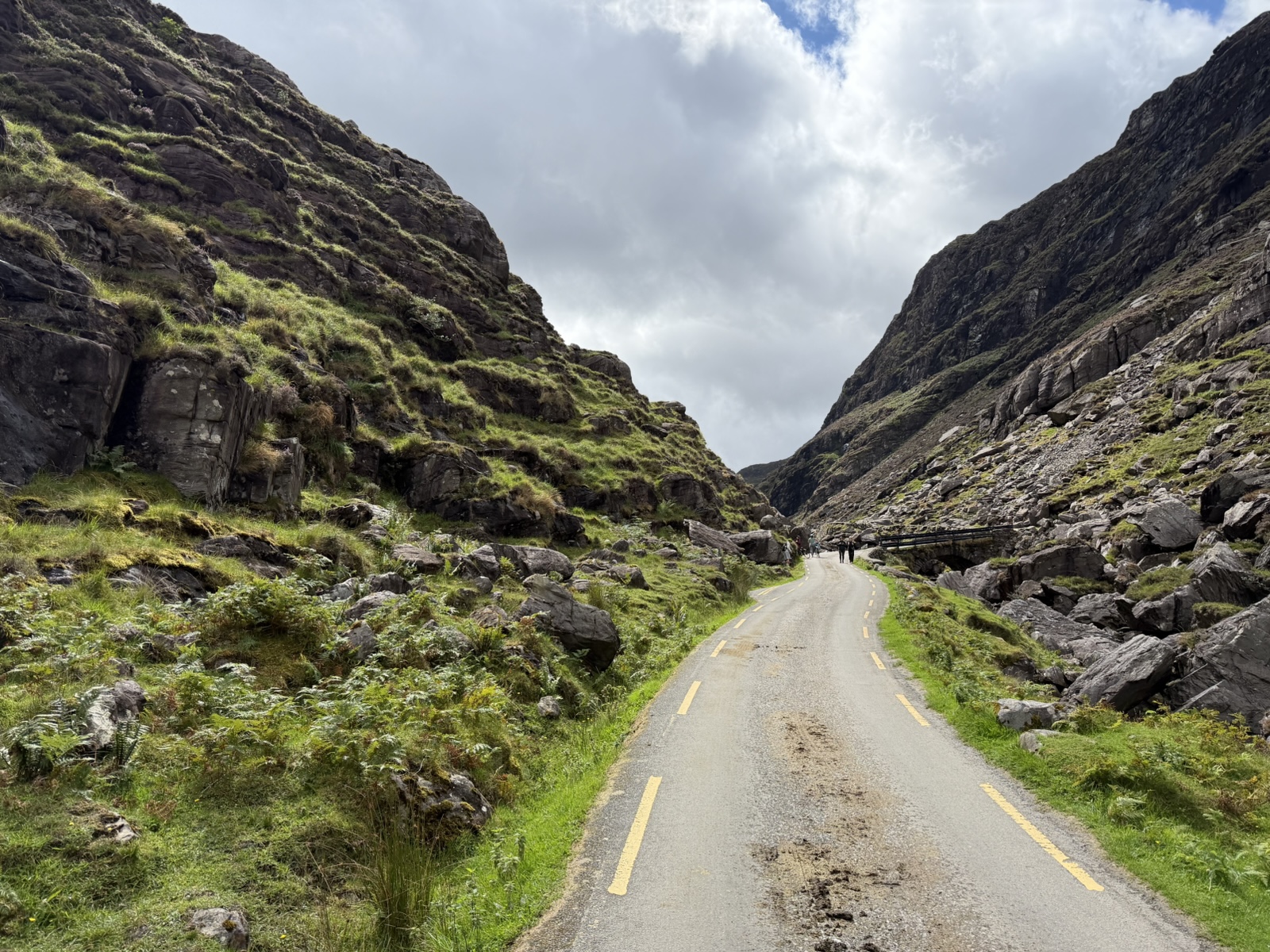
The ride to the top of the Gap of Dunloe was 10 miles each way. After we got to where most of the cars have to stop, there continued to be horse-drawn carriages, bikes, hikers and an occasional car along the narrow road up to the gap.
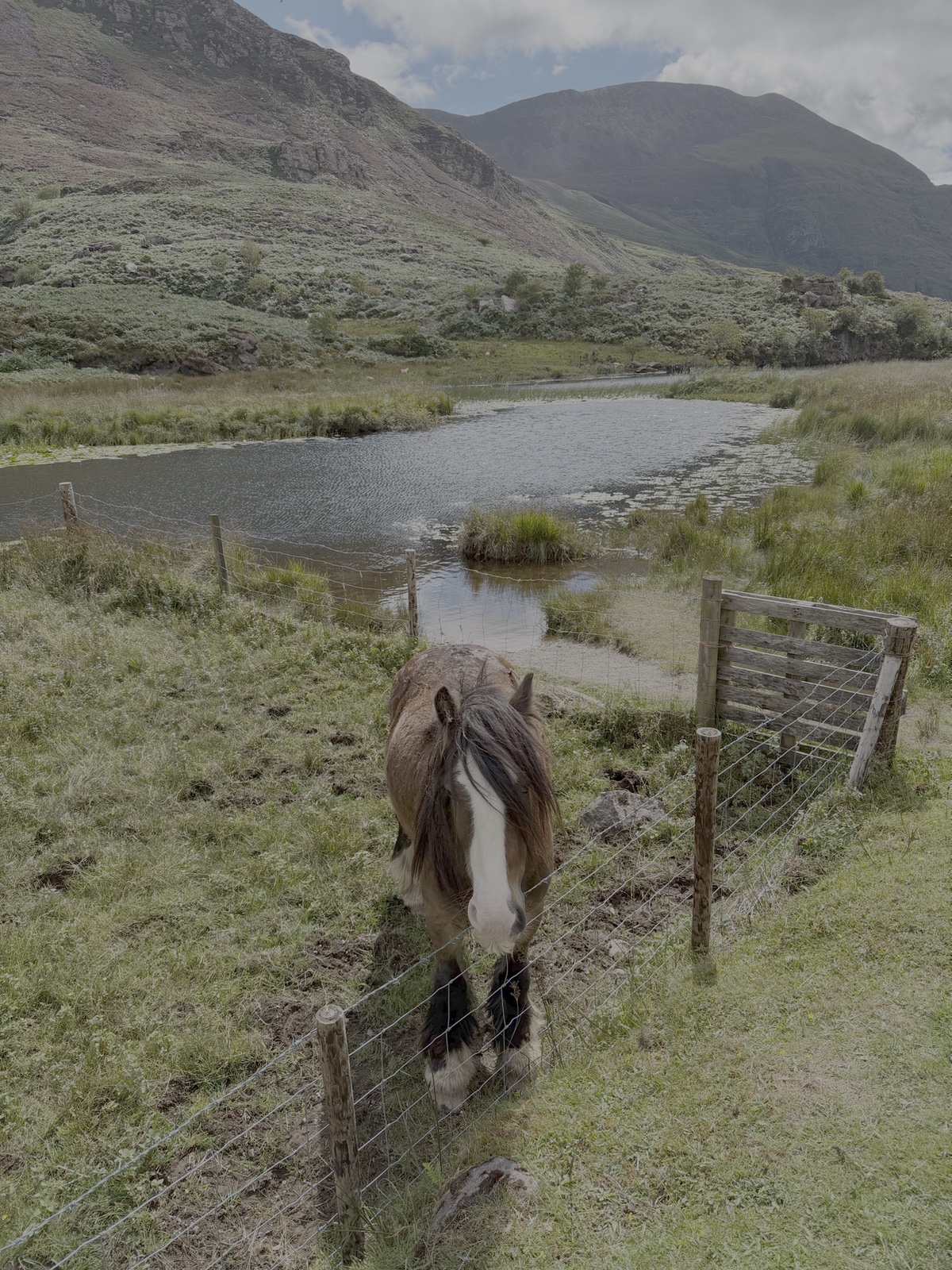
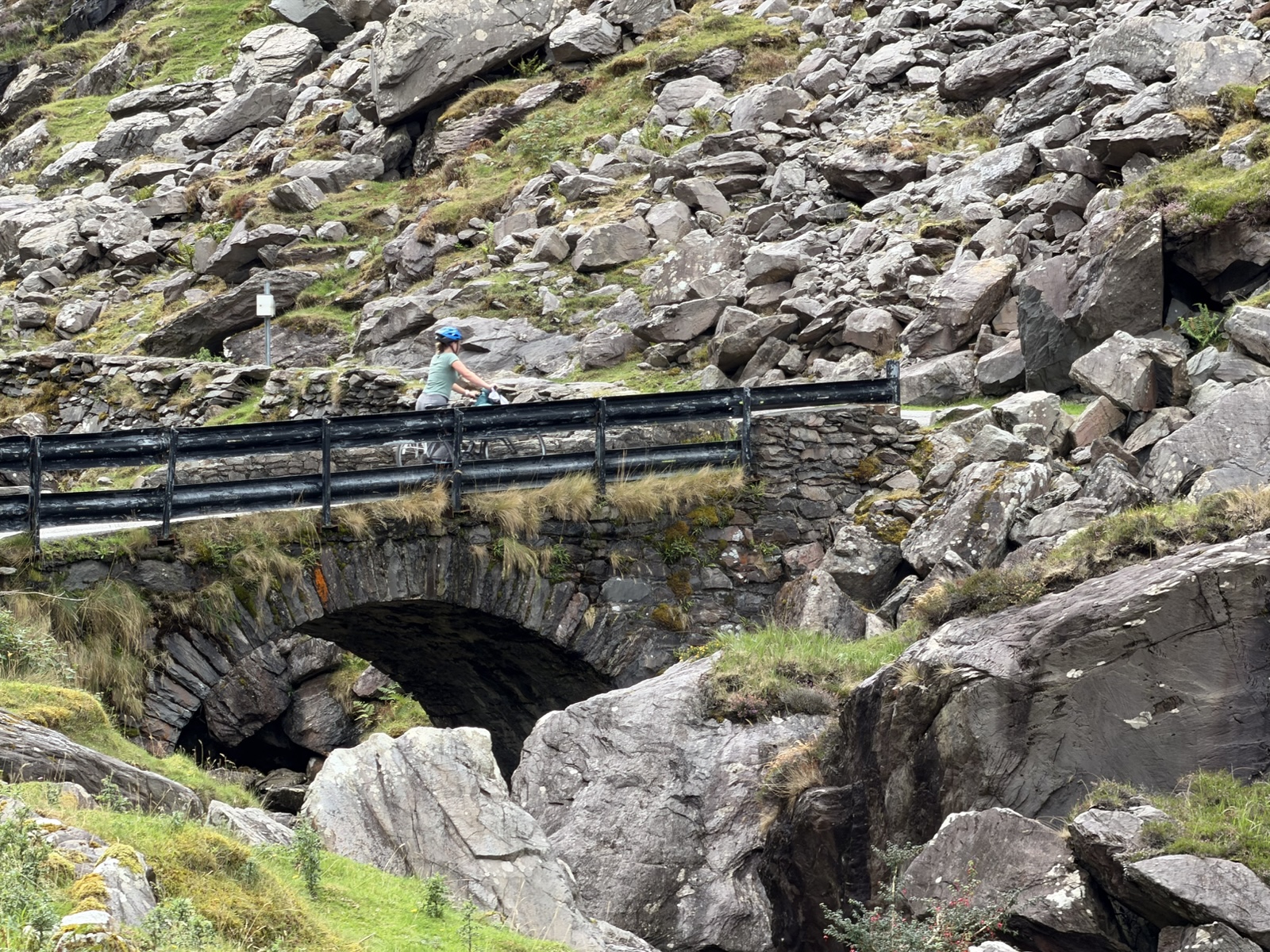
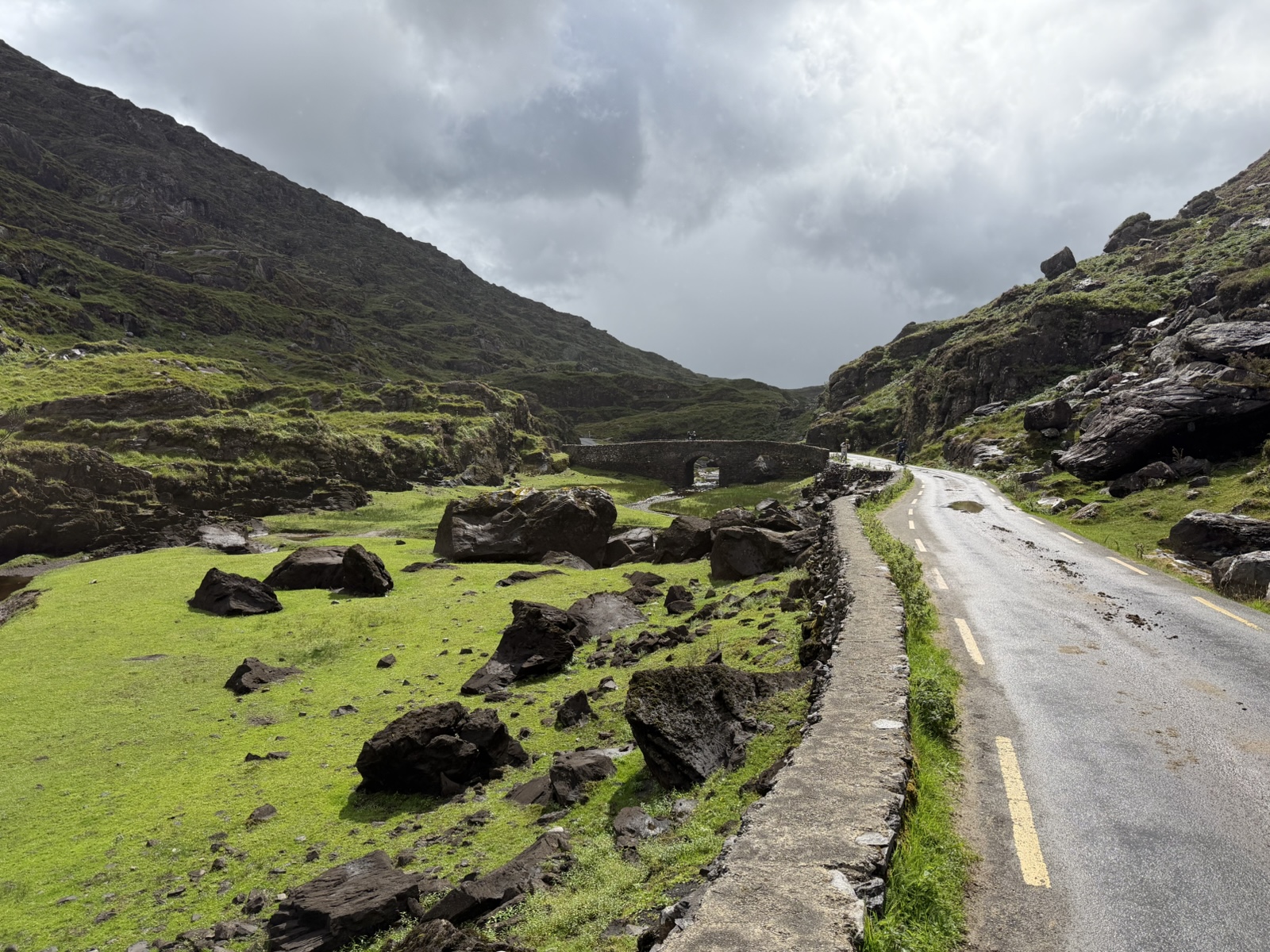
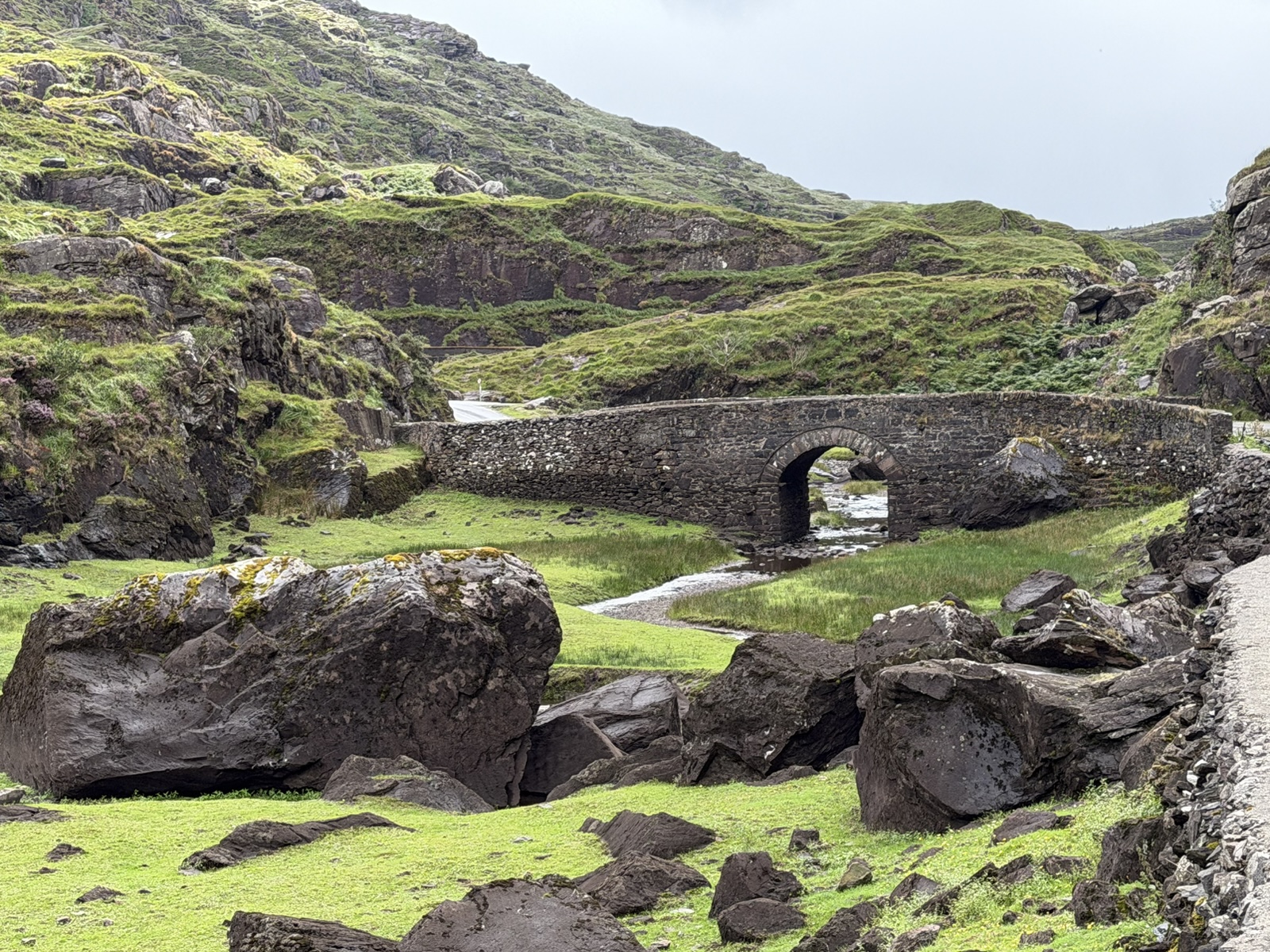
One of our first landmarks was the Wishing Bridge. Local legend says that "wishes whispered on this bridge don't disappear, but stay here, carried by the water and the wind through the valley."
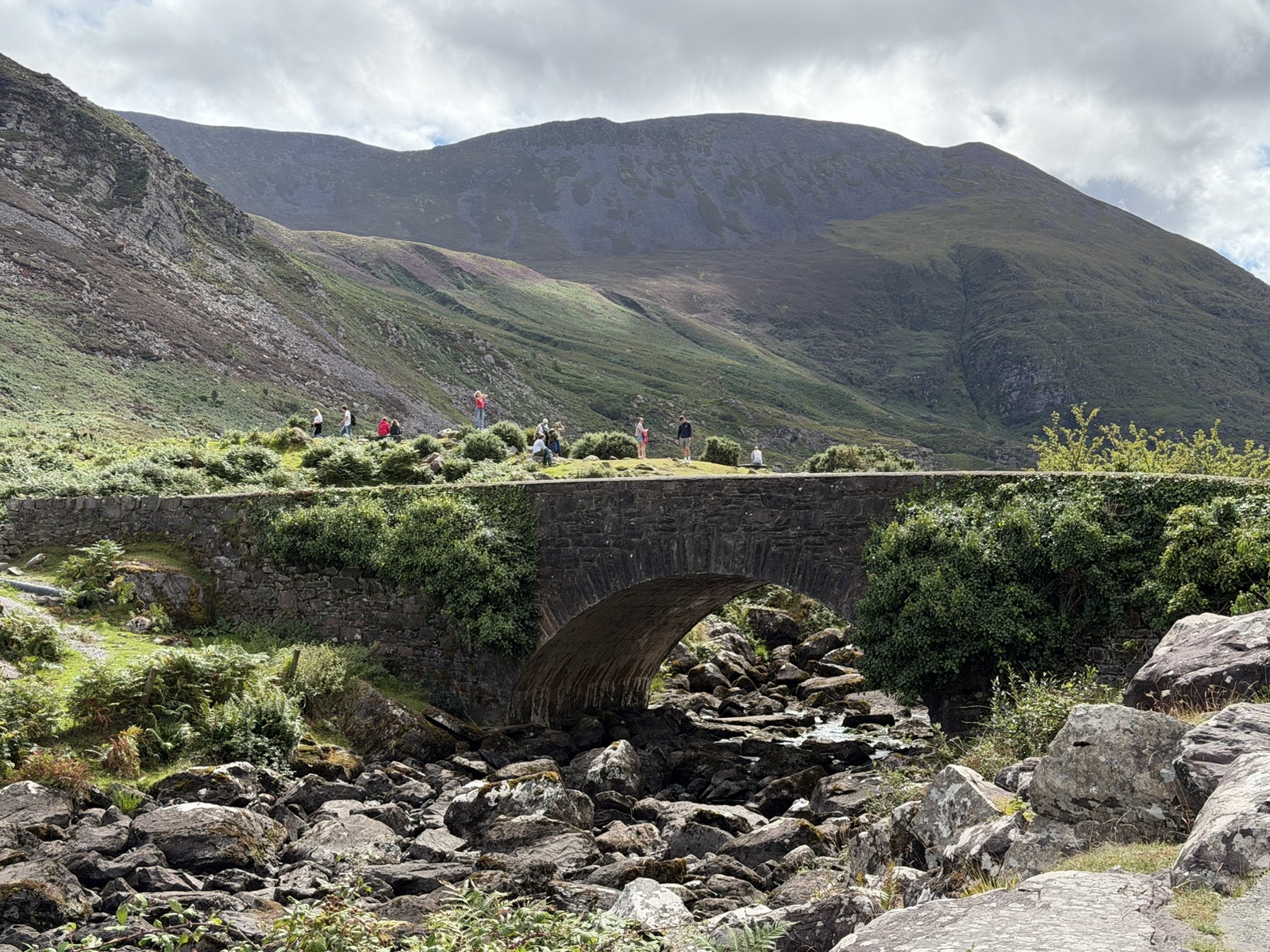
The bridge was just below Black Lake, where quite a few people stopped to enjoy the view.
I didn't know at the time that the Wishing Bridge granted wishes. Luckily, mine had already come true.
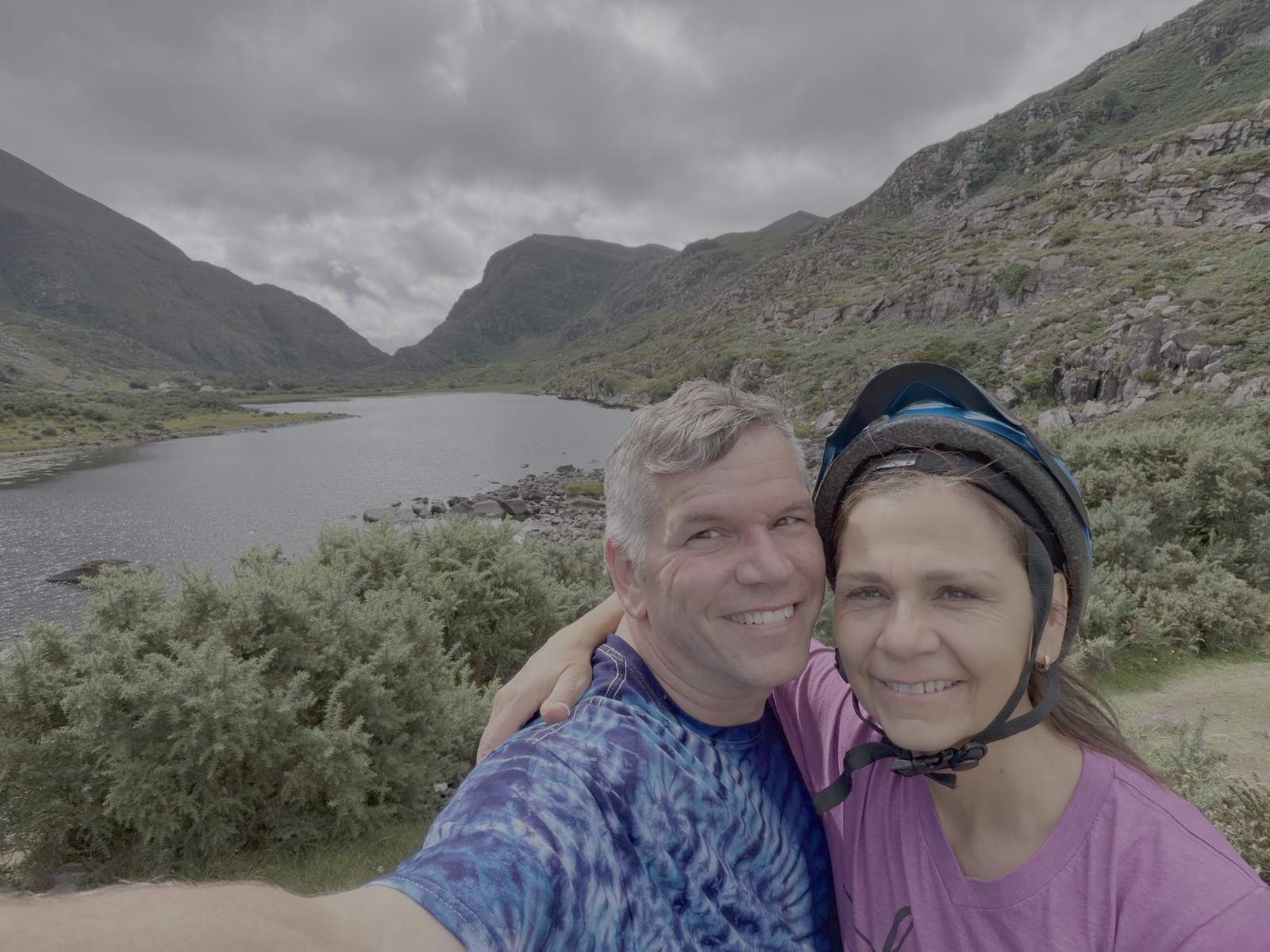
For those who are walking, this is often as far as they would go. But on bikes, we could cover a lot of ground, so we continued up the valley.
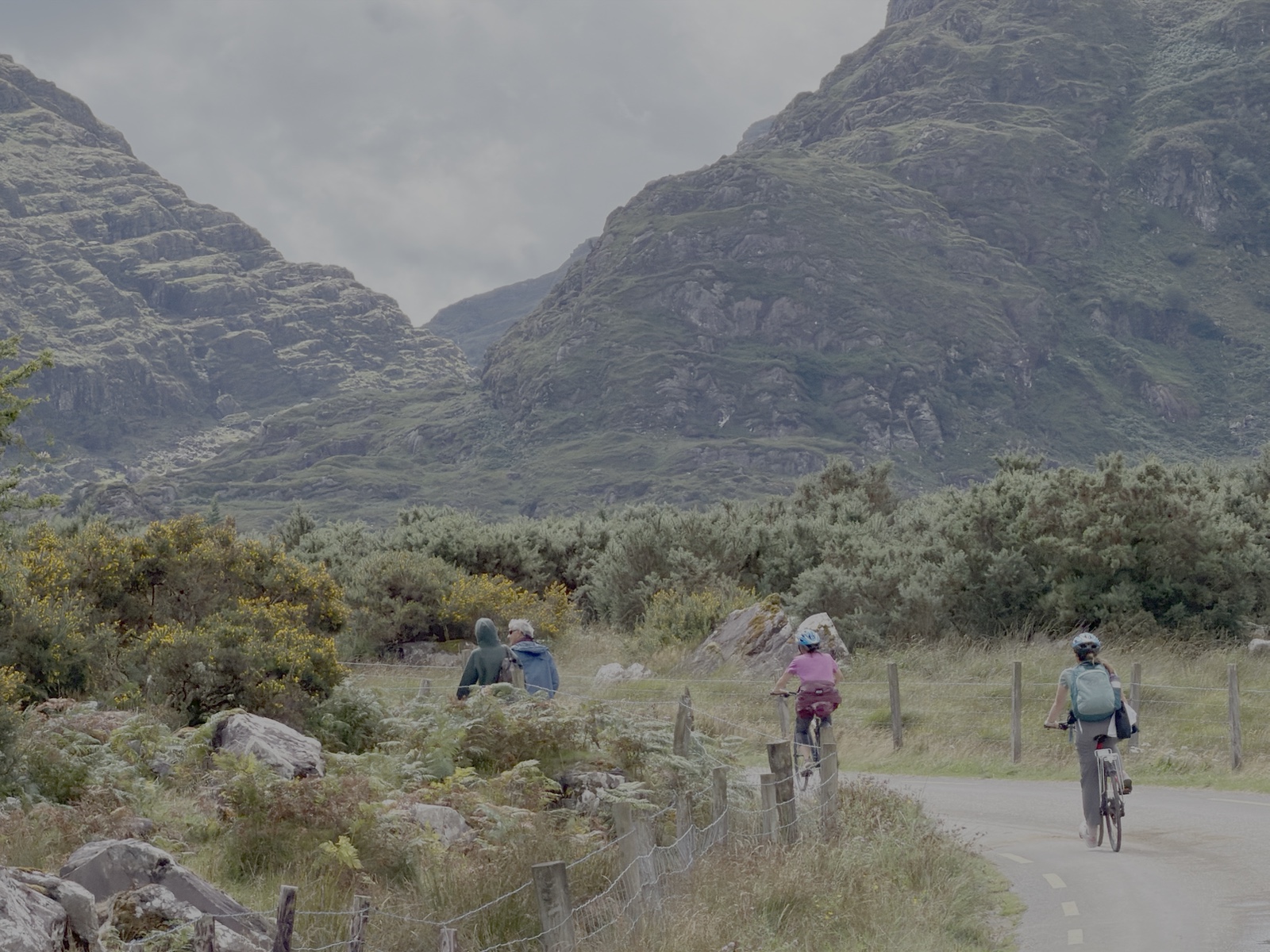
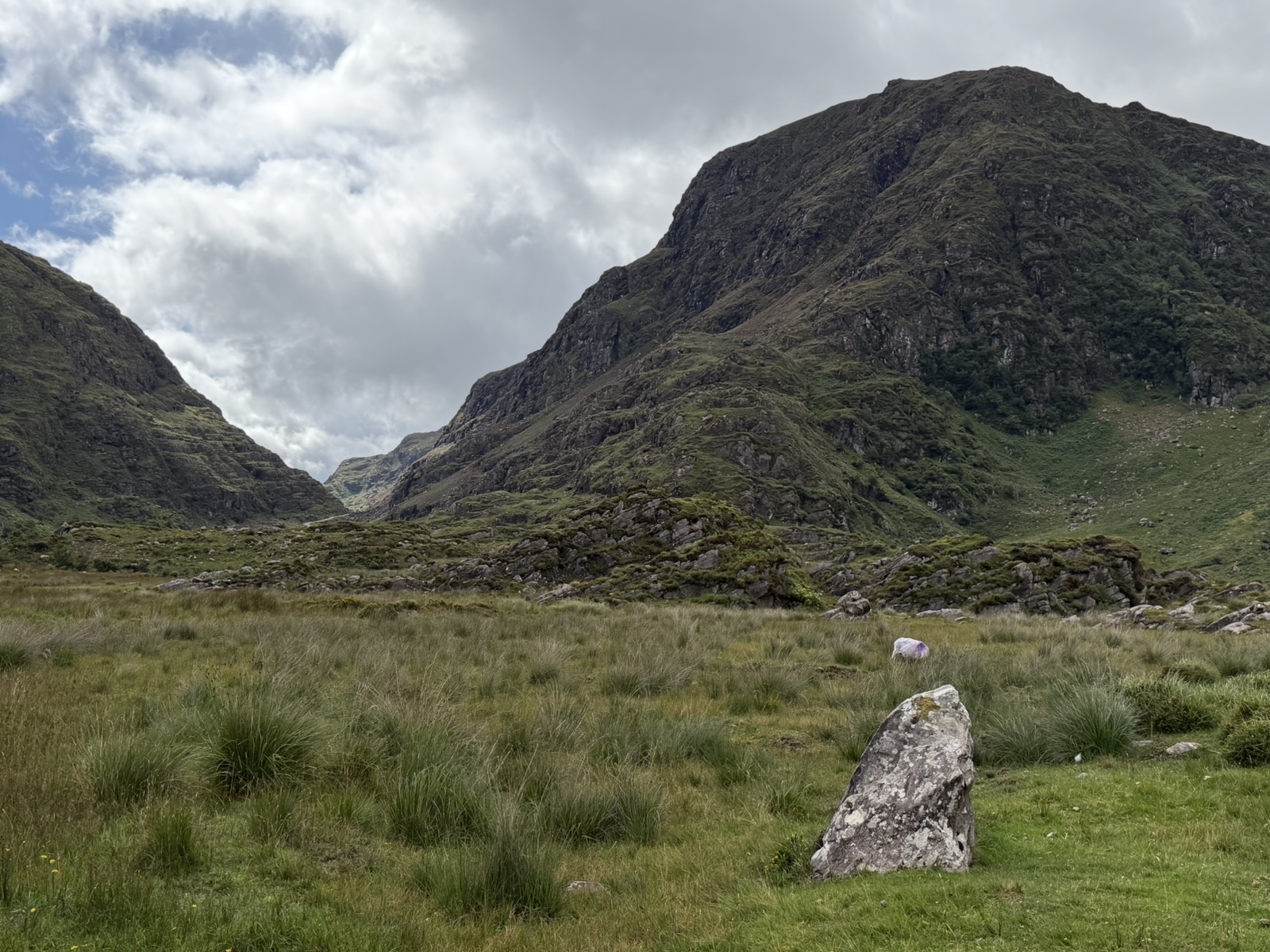
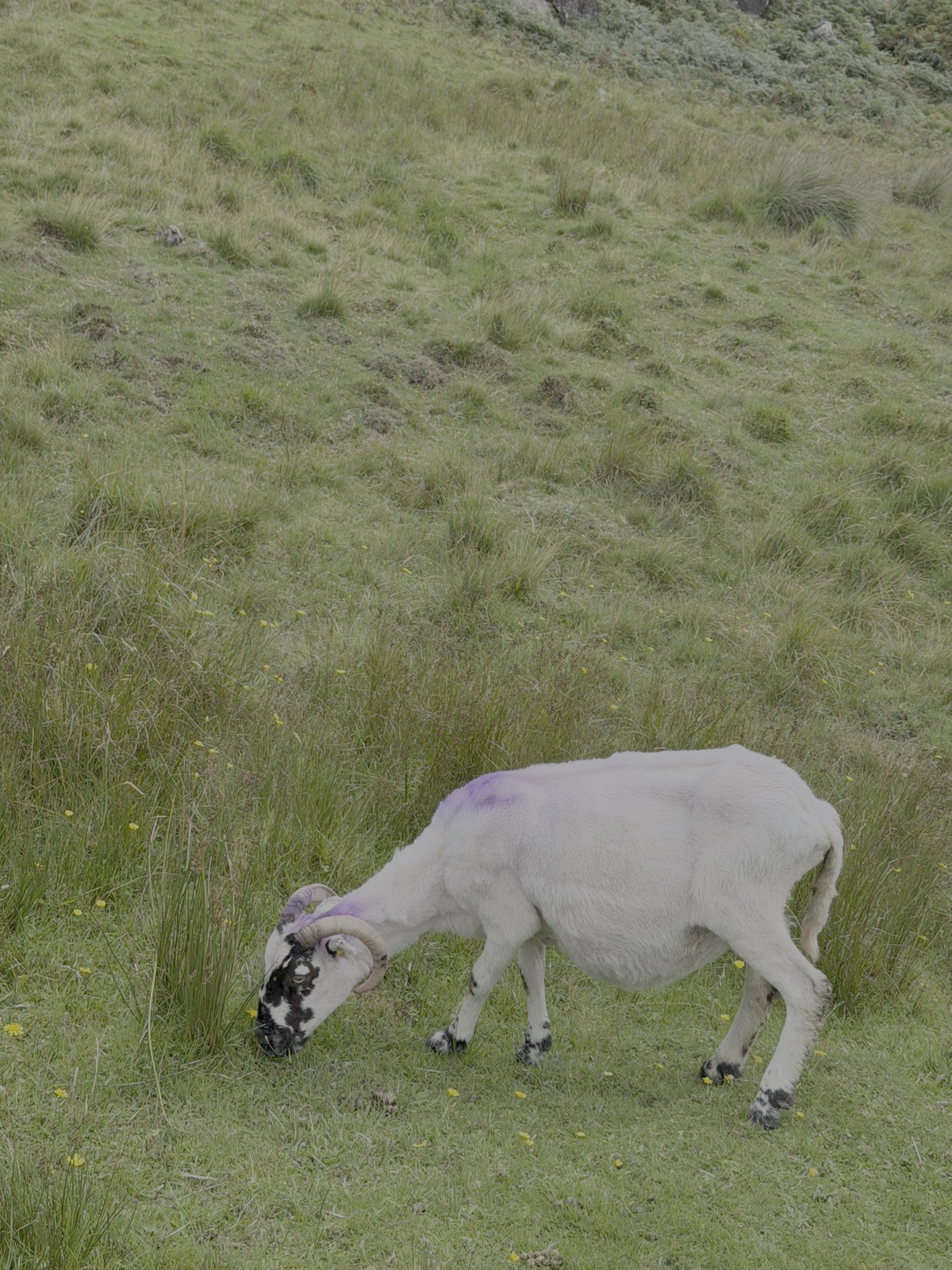
There were sheep all along the way. (Mostly purple ones).
The clouds were coming and going, so the light on the mountains was always changing.
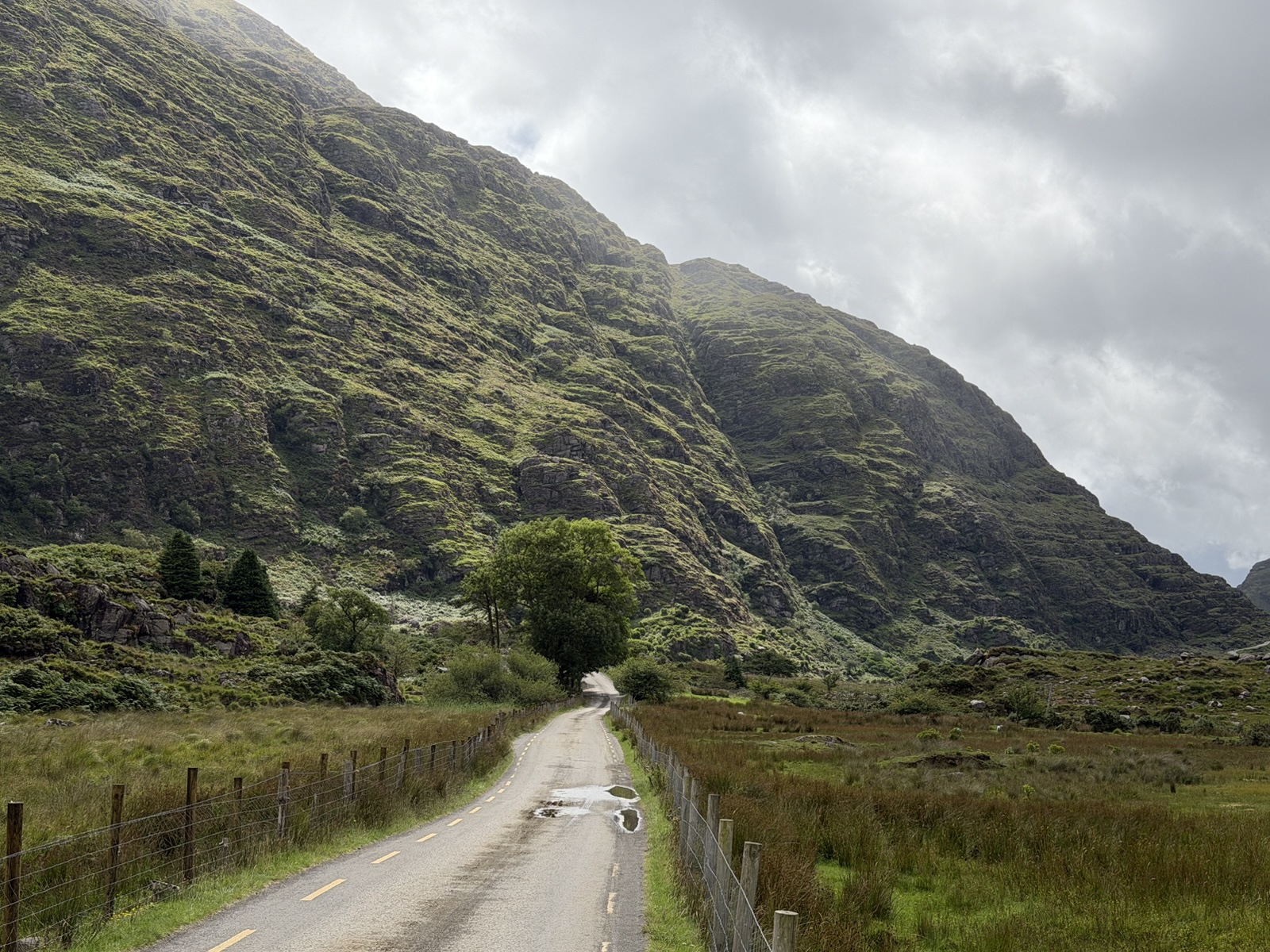
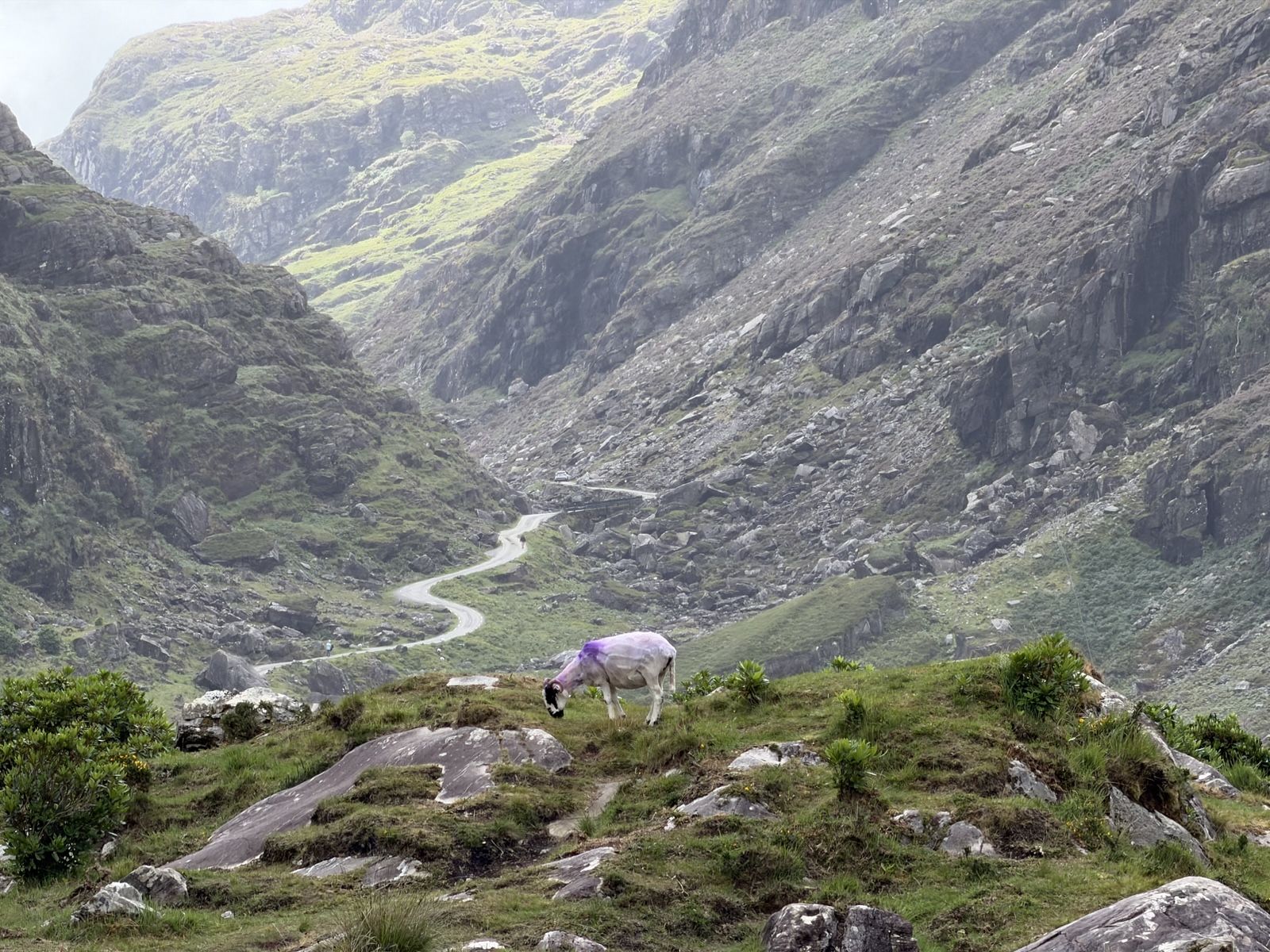
Here is a 2-minute video that I took while riding through this part of the area. I love how it captures the quiet, peaceful setting, the random sheep, other hikers, and even some horse-drawn carriages.
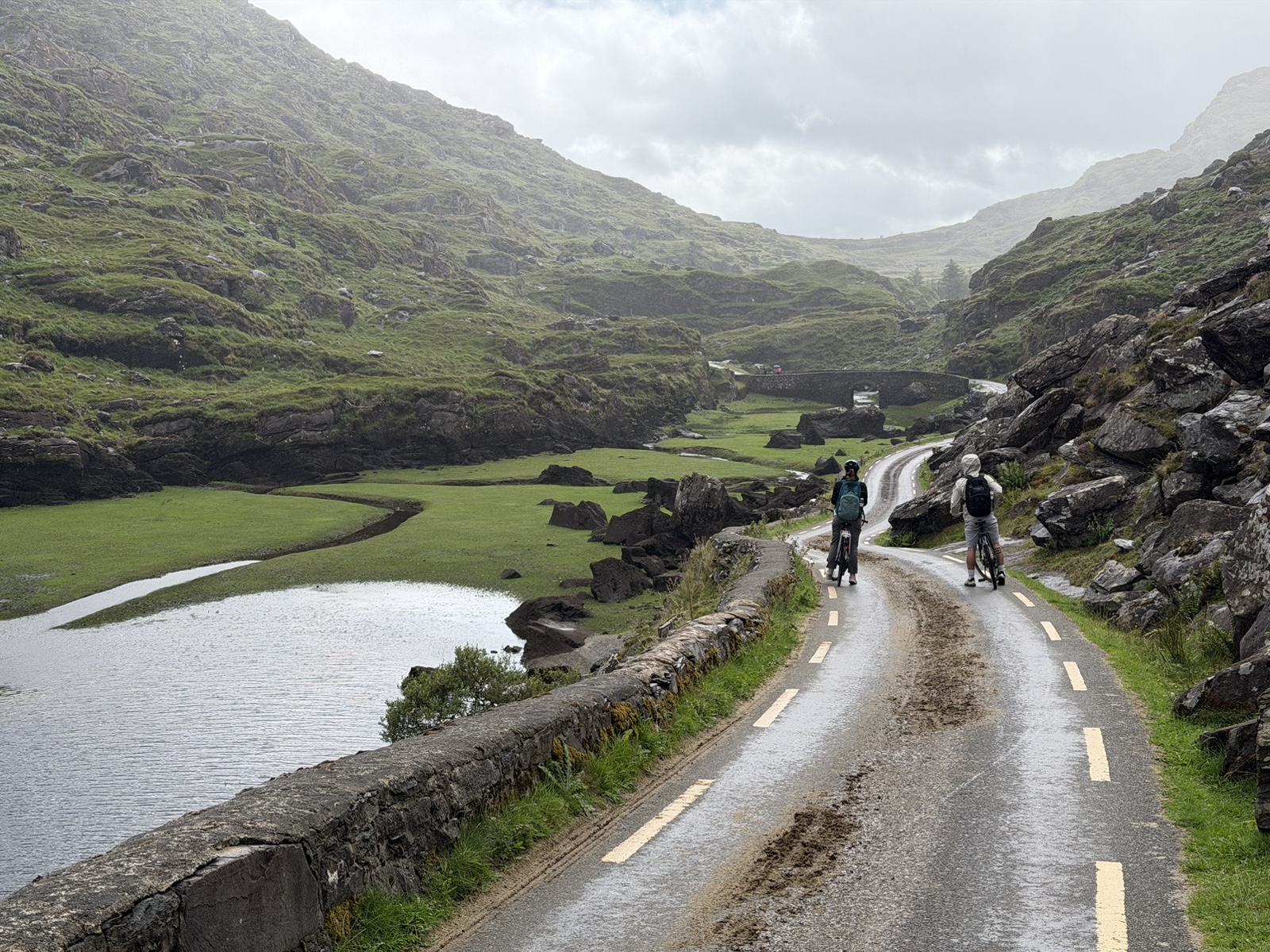
Here is a view from above Augher Lake. (You can see Katelyn and Jared with their bikes further down the road).
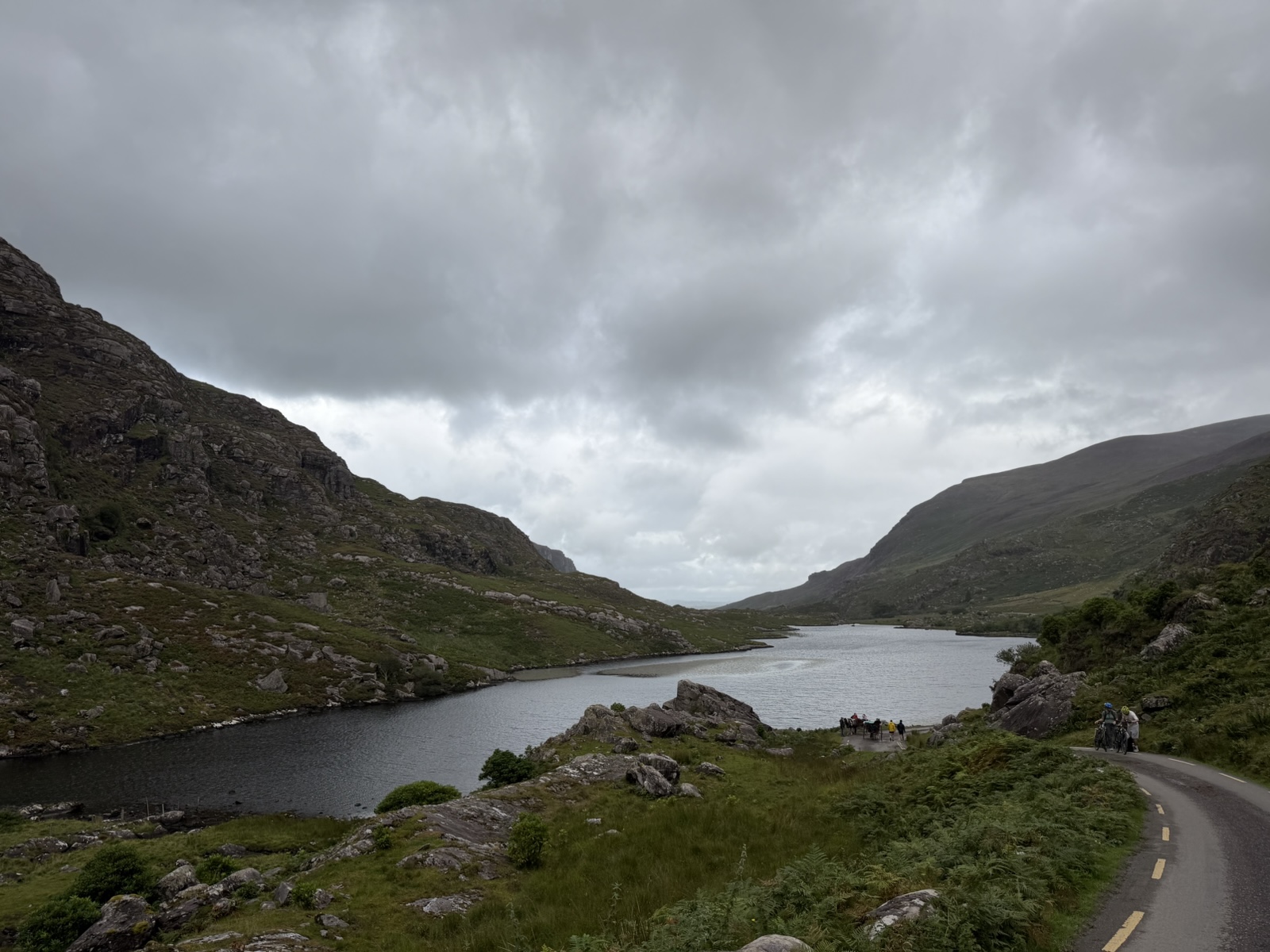
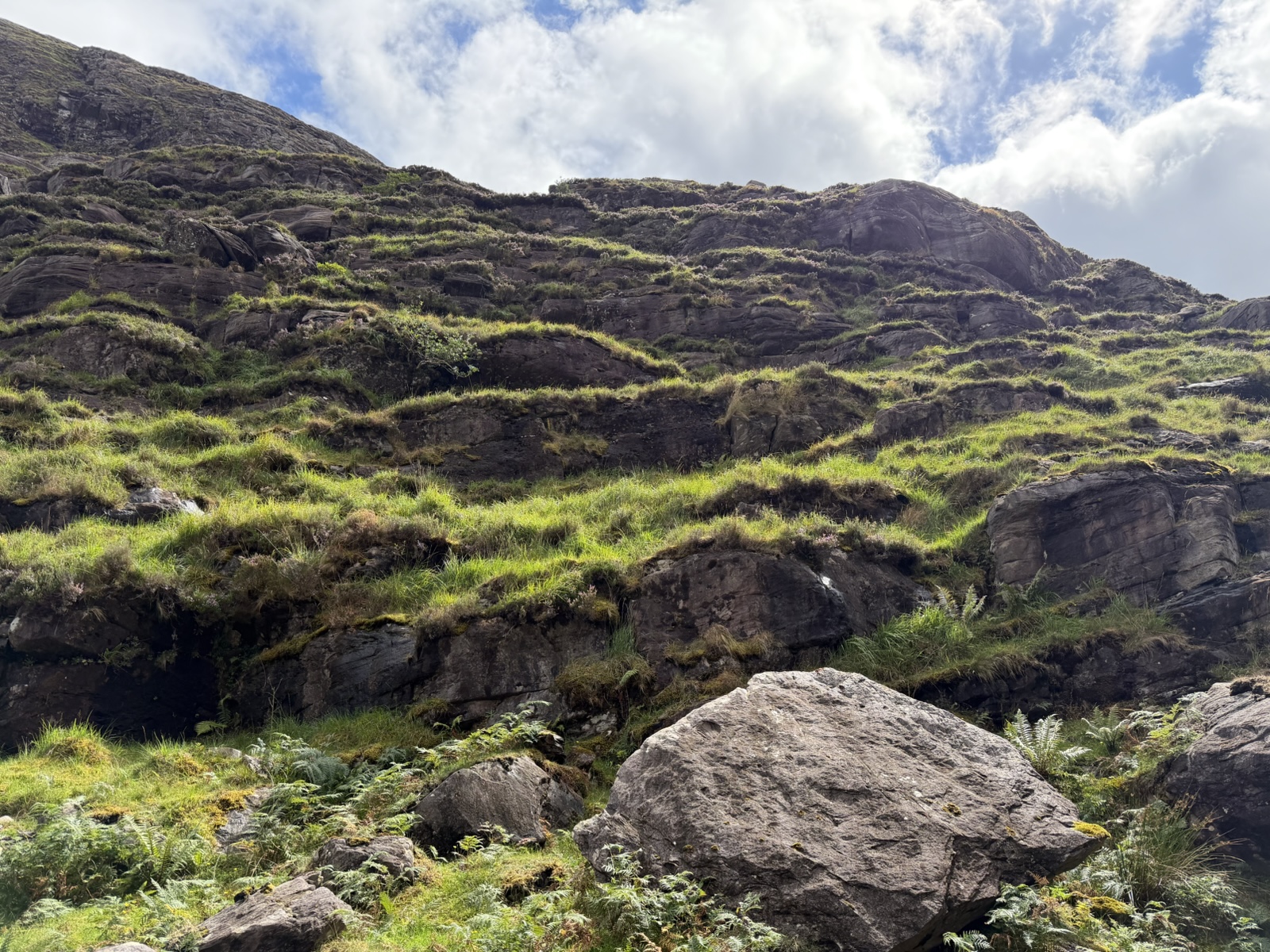
The sun played hide-and-seek with the clouds, which made the light so interesting on the rocks and greenery of the pass.
One of my favorite spots was a pond not too far from the end of our ride.
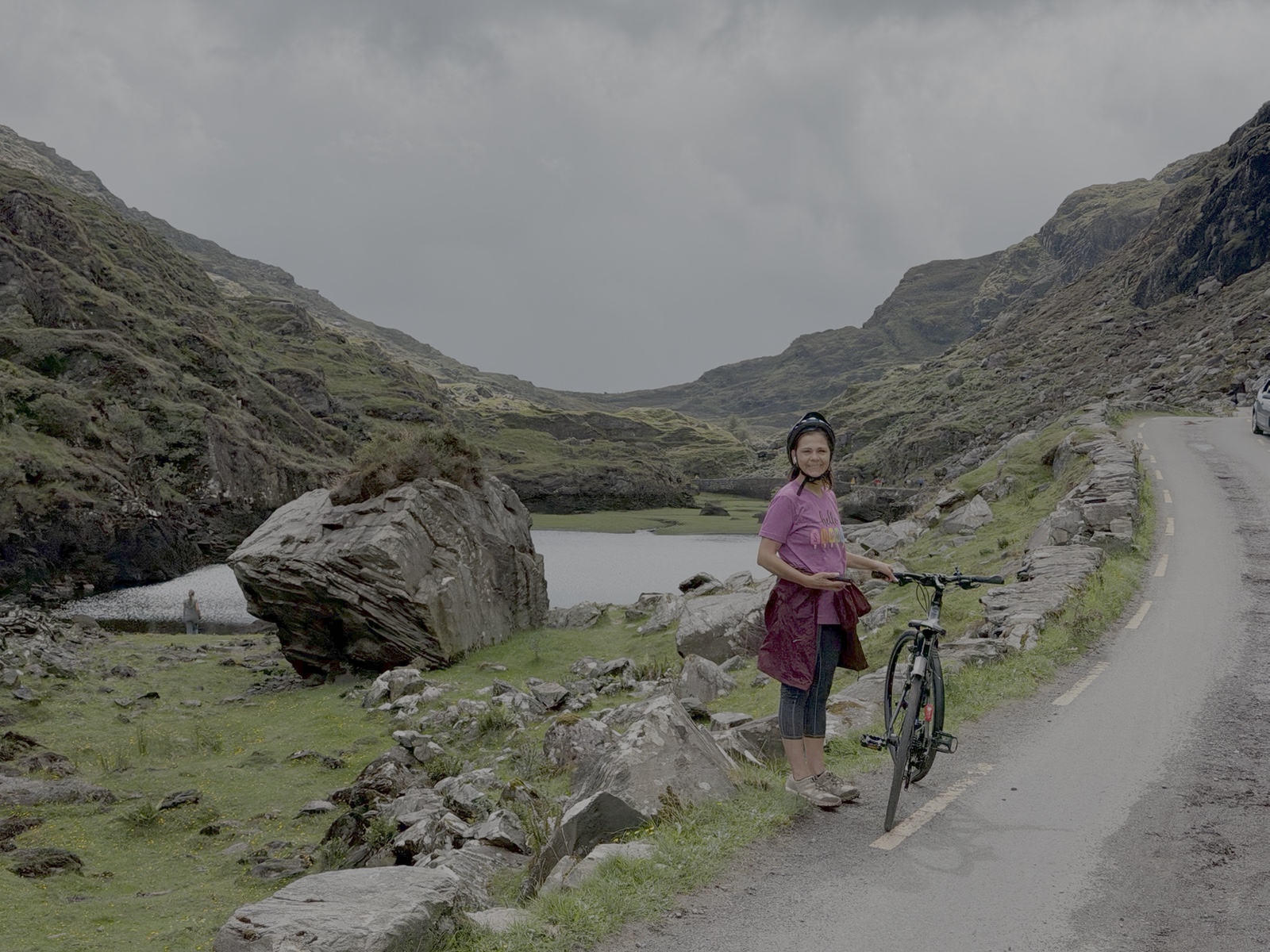
It was ridiculously green.
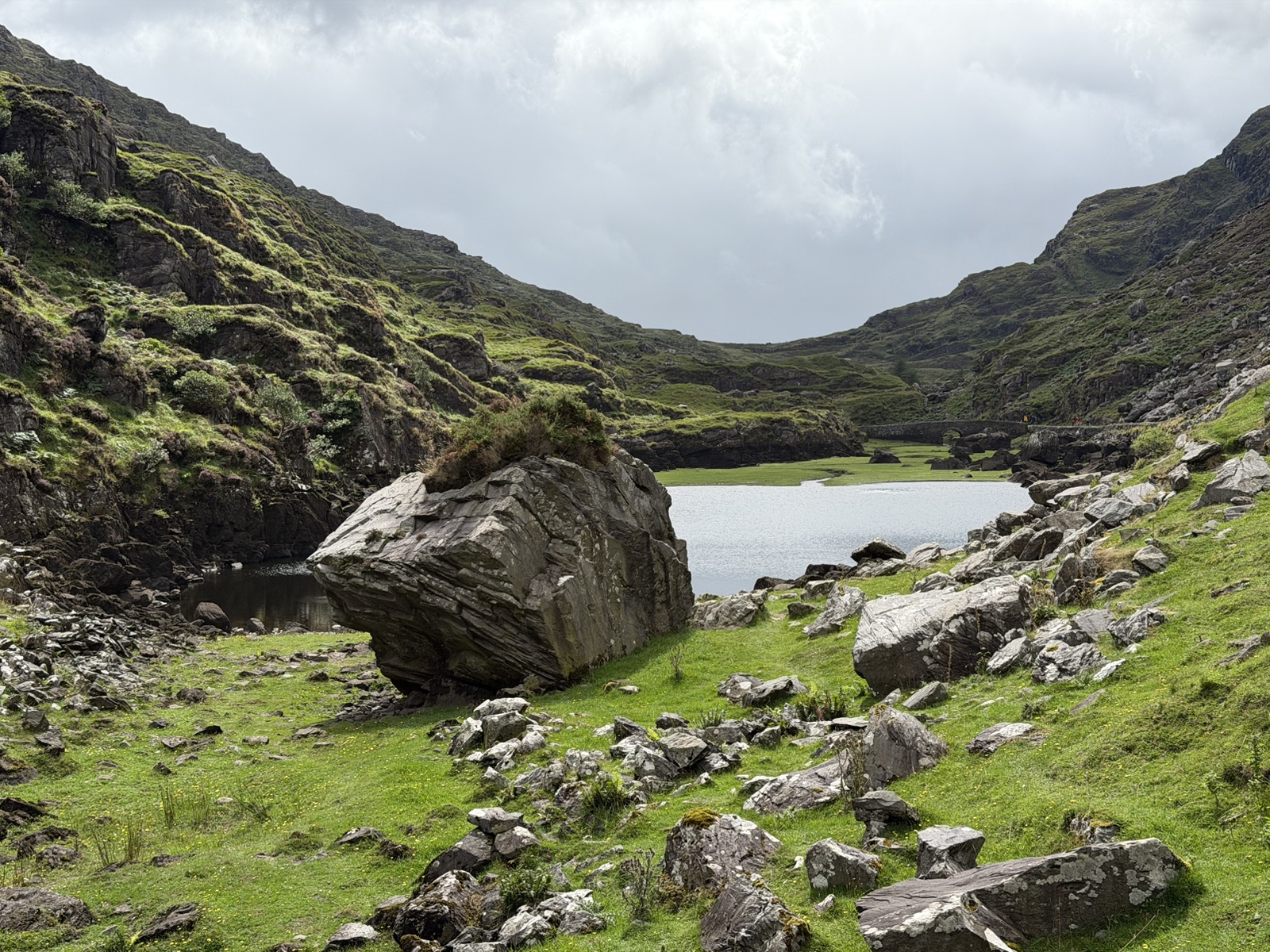
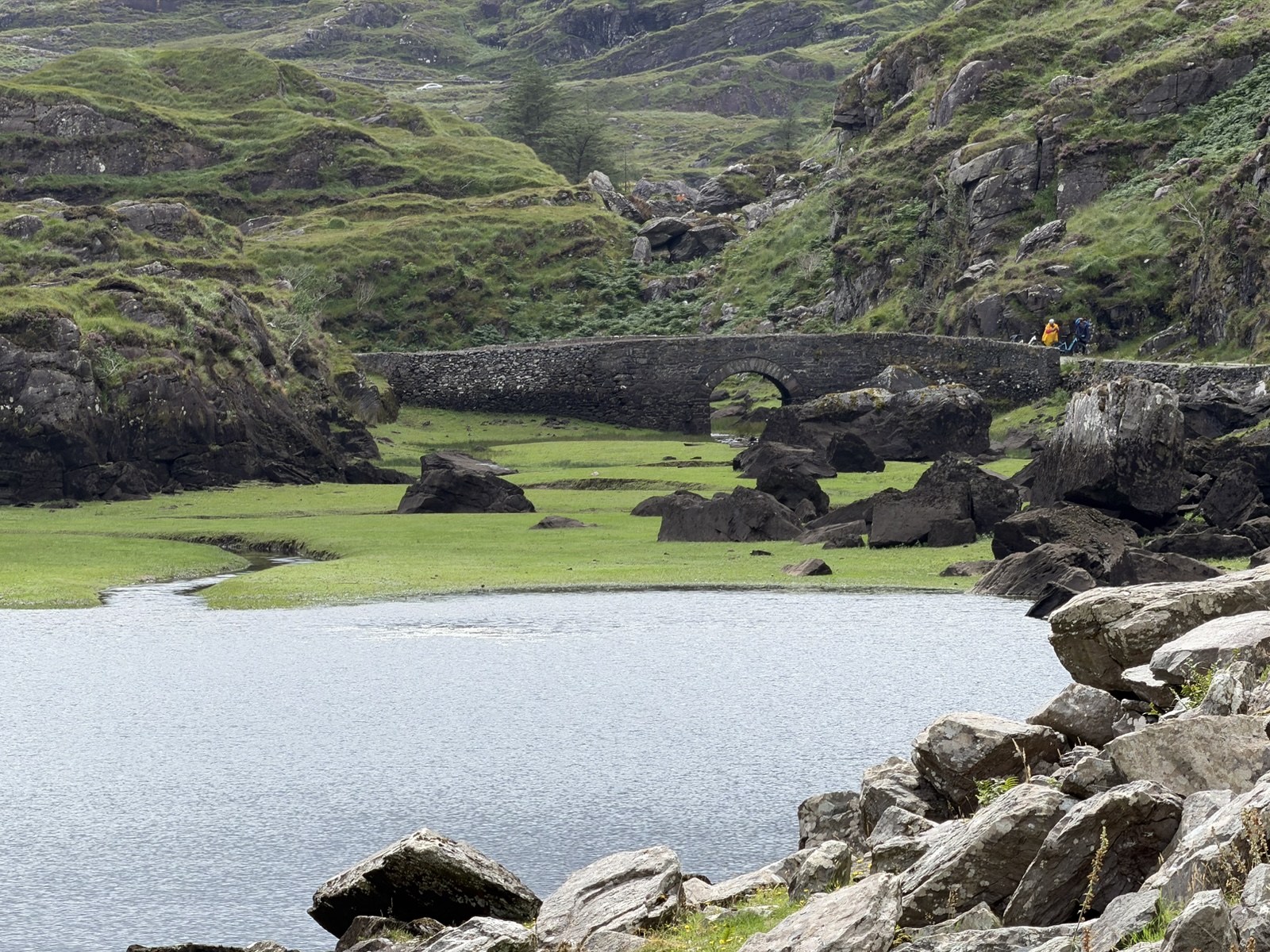
Some of us went down to the shore to skip rocks.
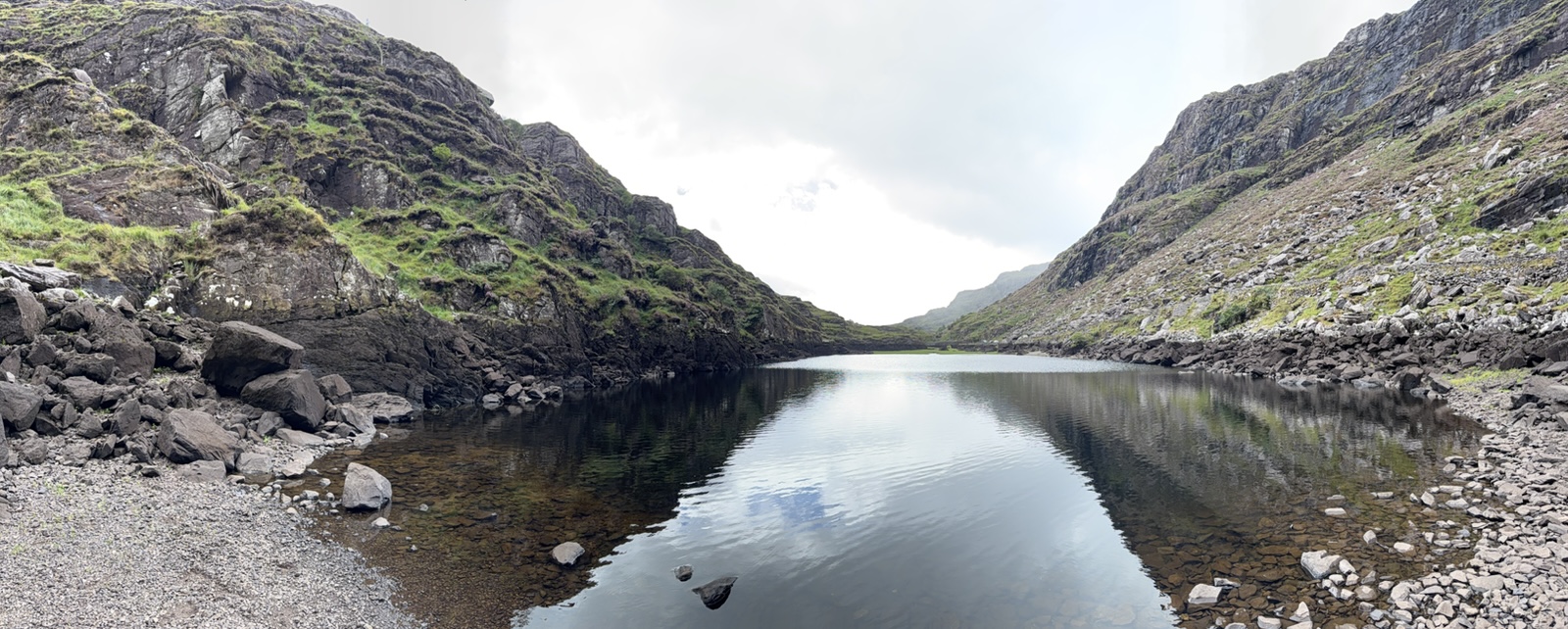
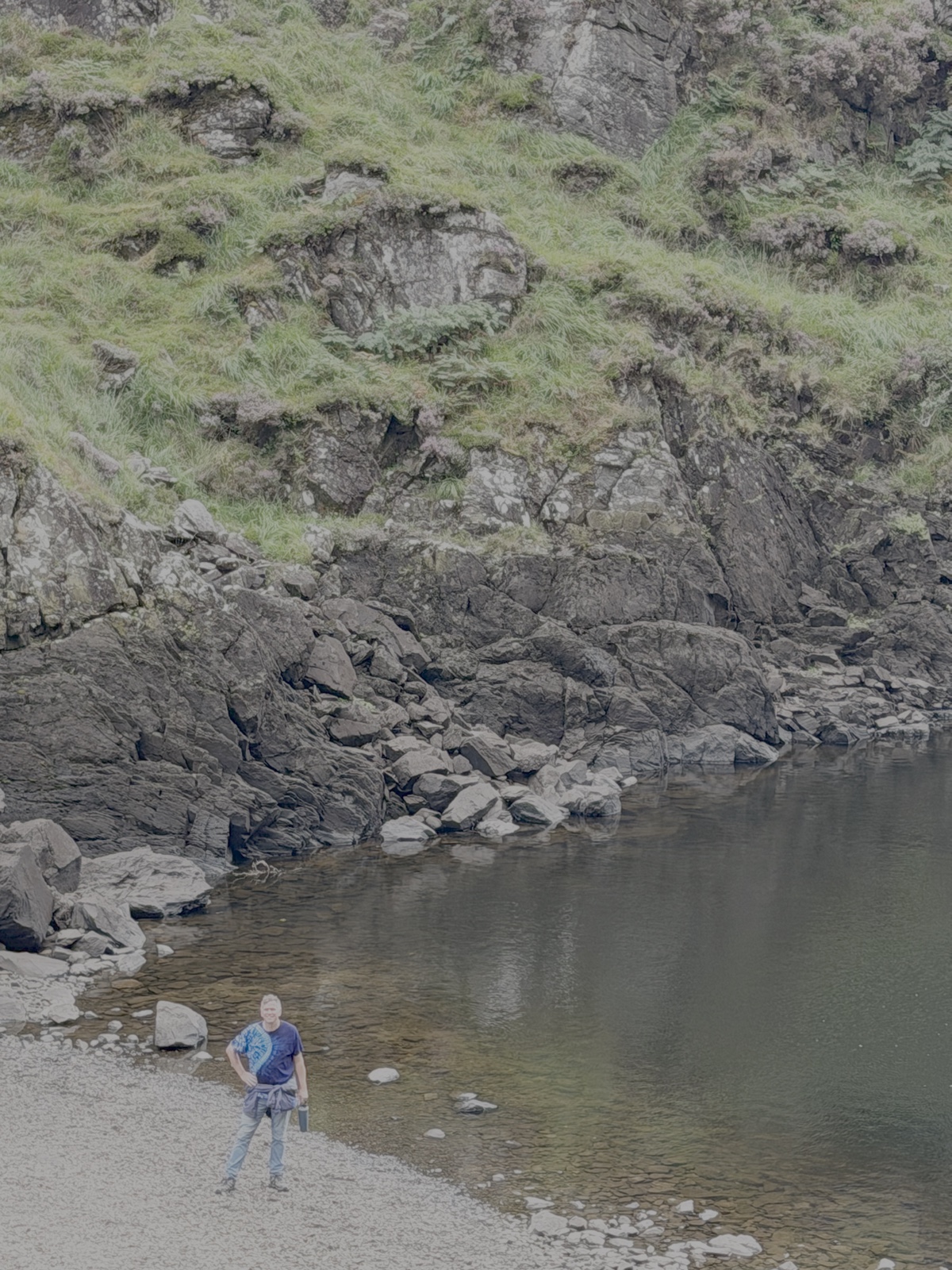
Here's a 15-second slow-motion video of a rock I skipped.
Here is a 1-minute video of what the view looked like. I like how a cloud's shadow passes by, and you can see Jared and Katelyn skipping rocks.
The winding road along the pond was charming.
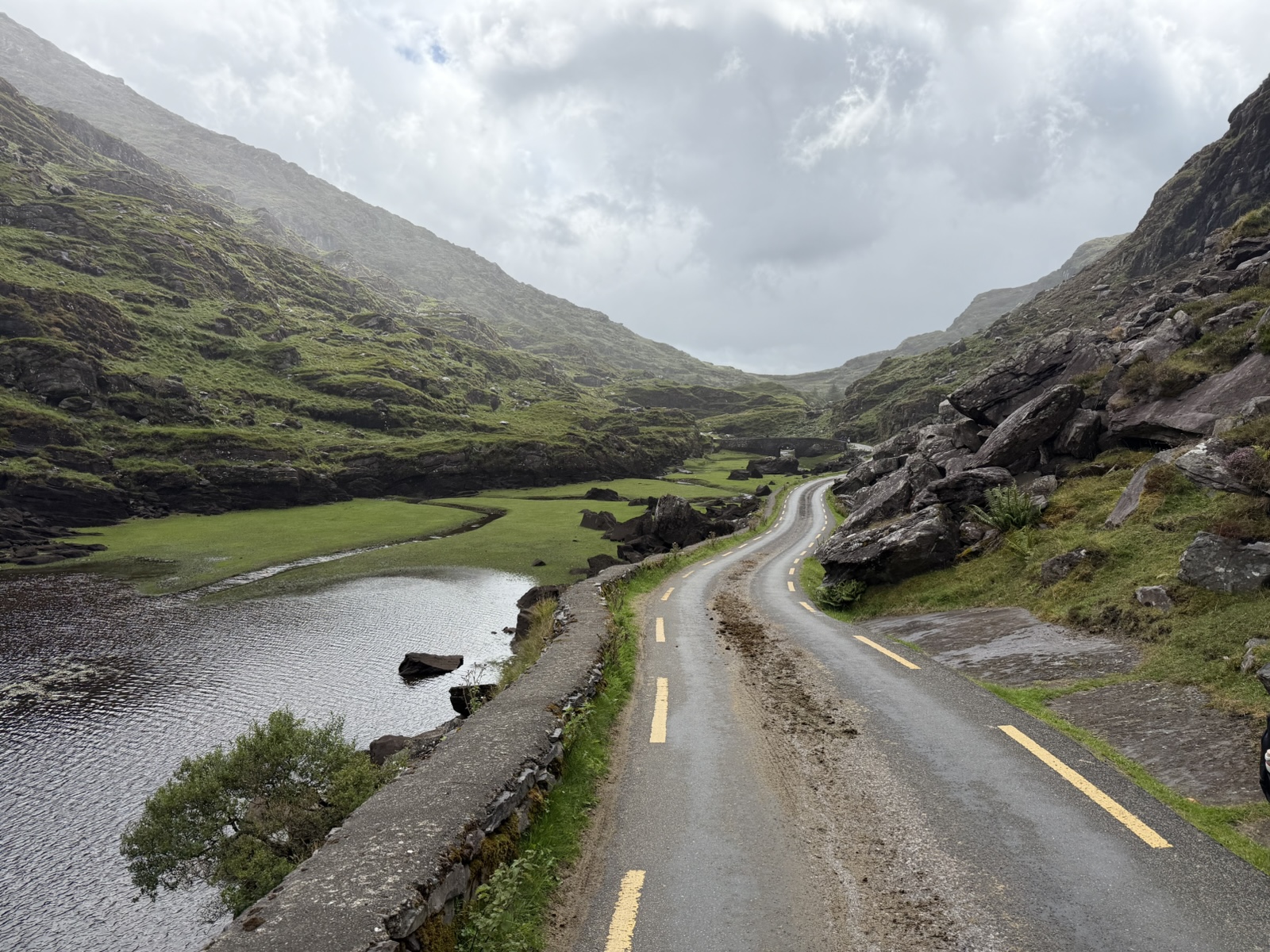
(We rode our bikes on the two sides to avoid the mud and manure in the middle).
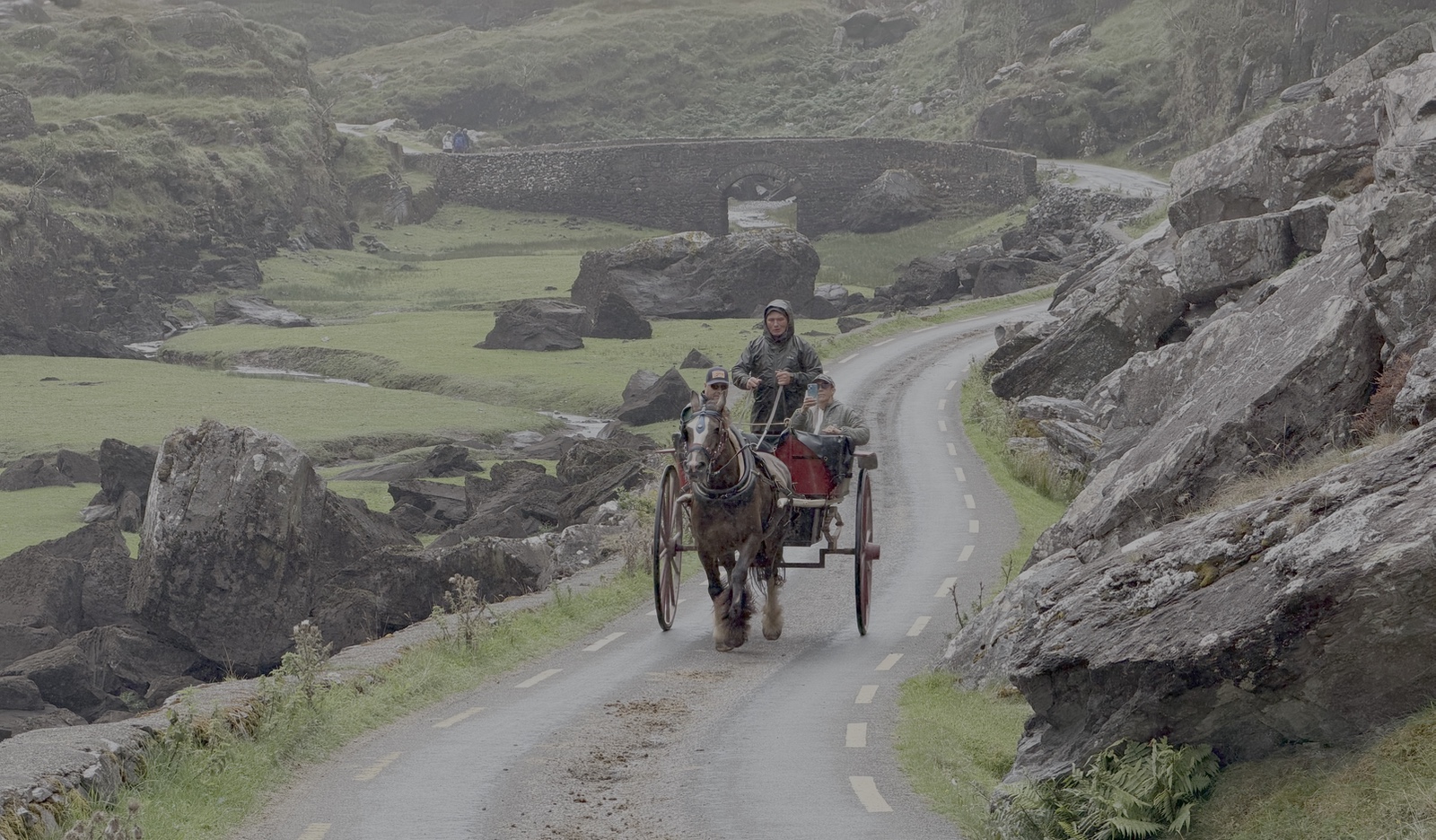
Jaunting carts passed by regularly, carrying passengers up and down the gap.
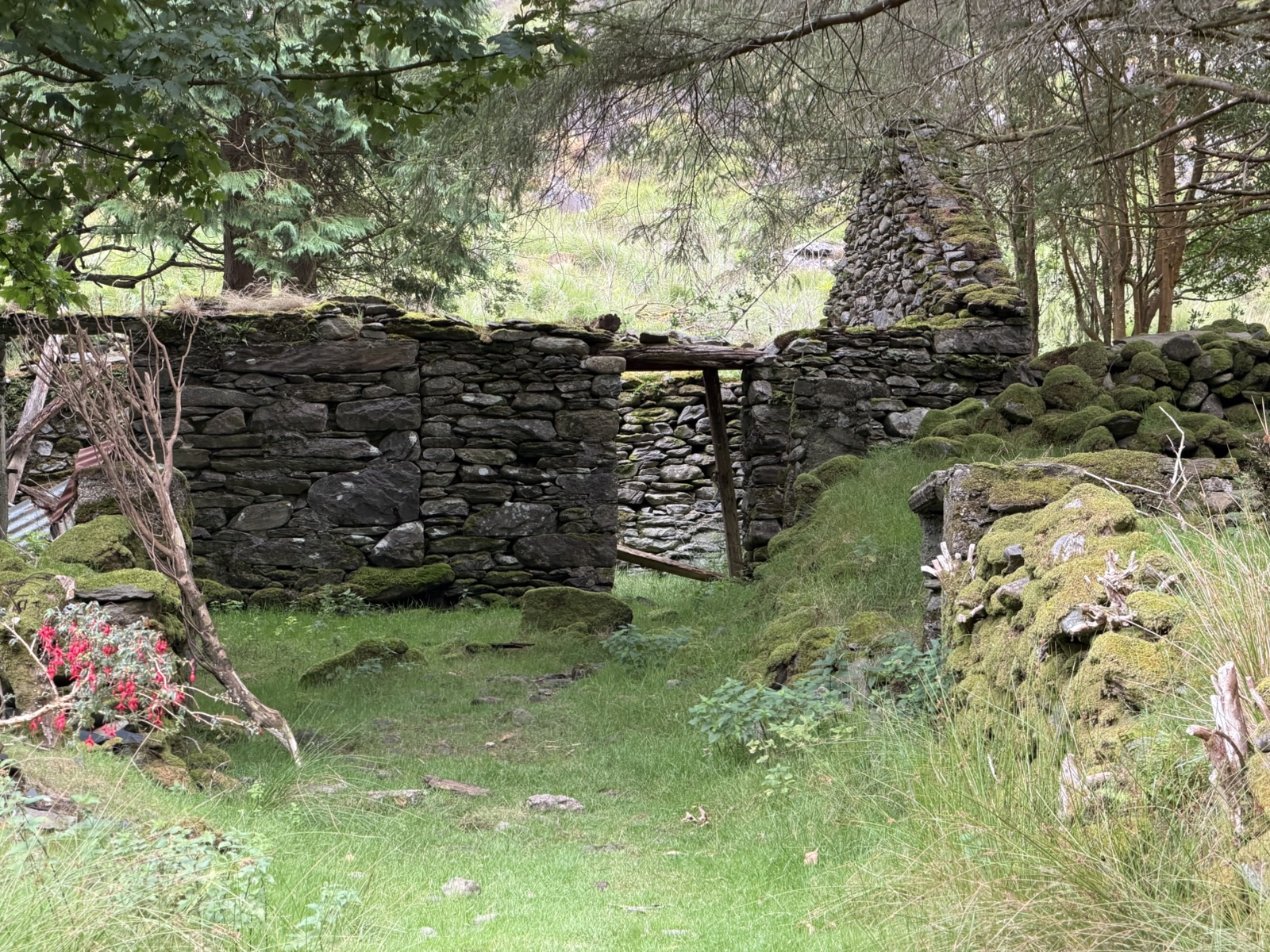
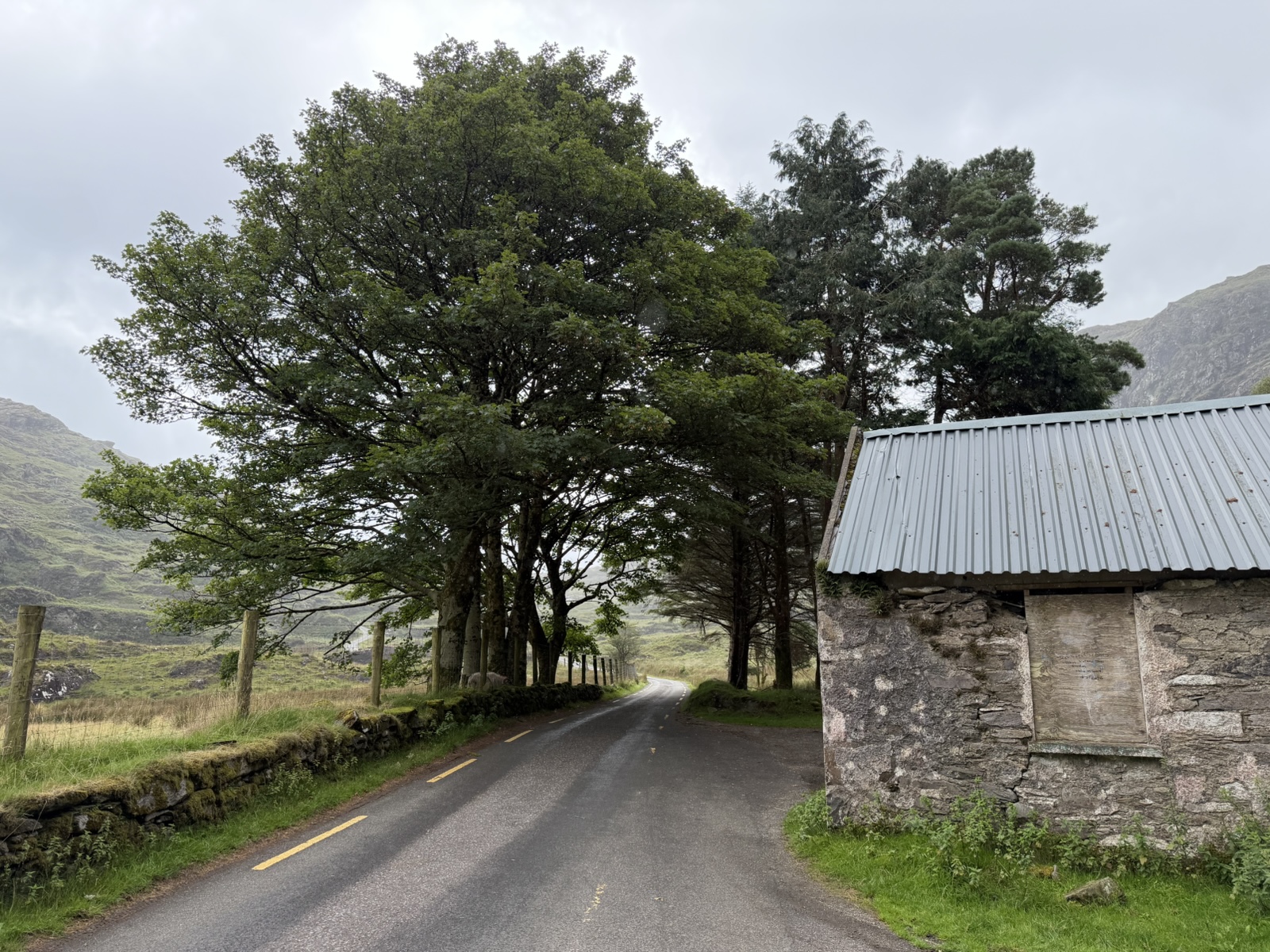
As we neared the top of the gap, we came across an abandoned set of stone houses that were decorated with moss.
There were some sheep in the field across the street from the house. This one was especially cute and fuzzy.
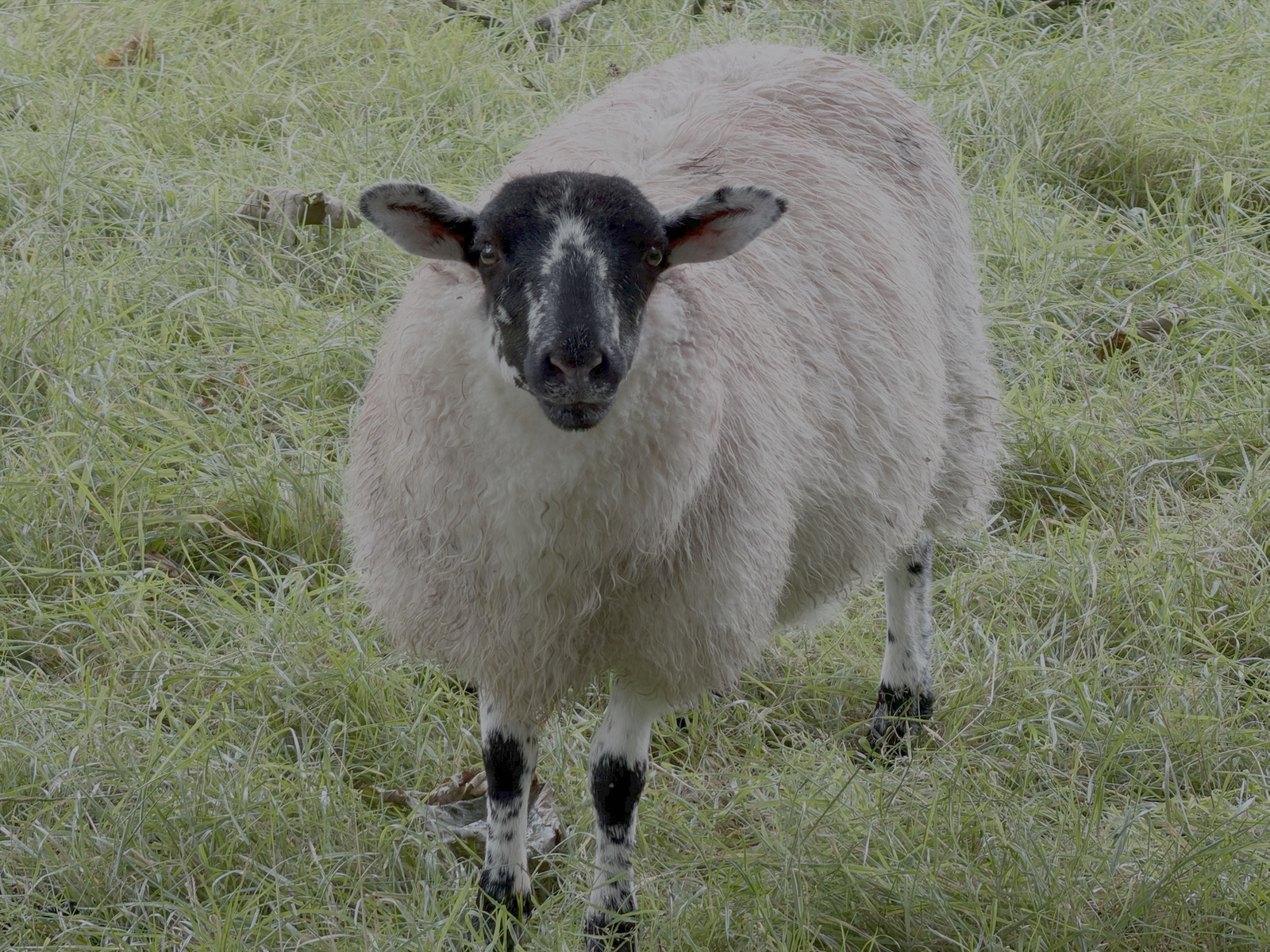
I kept being mesmerized by the color of green that covered the area.
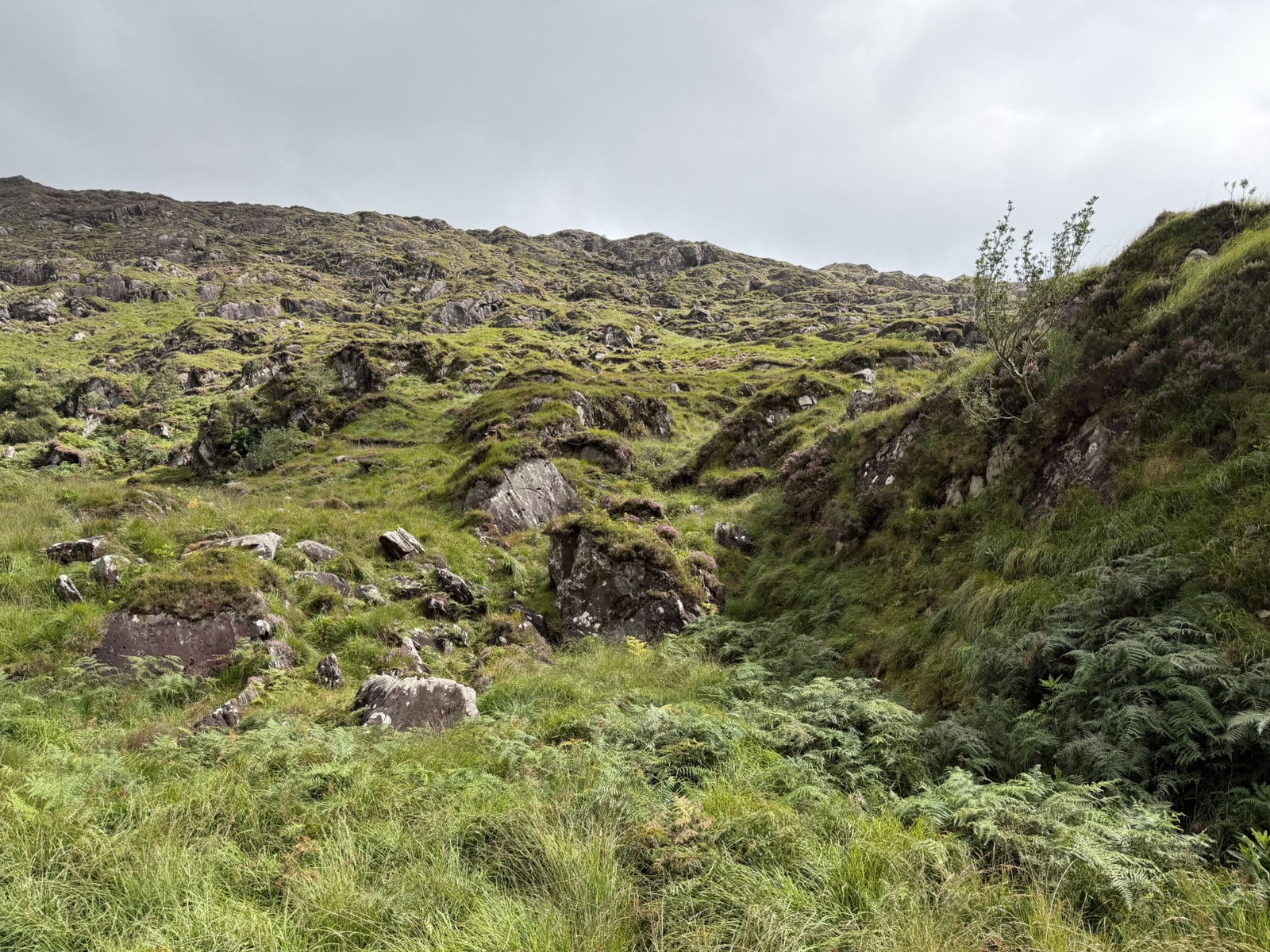
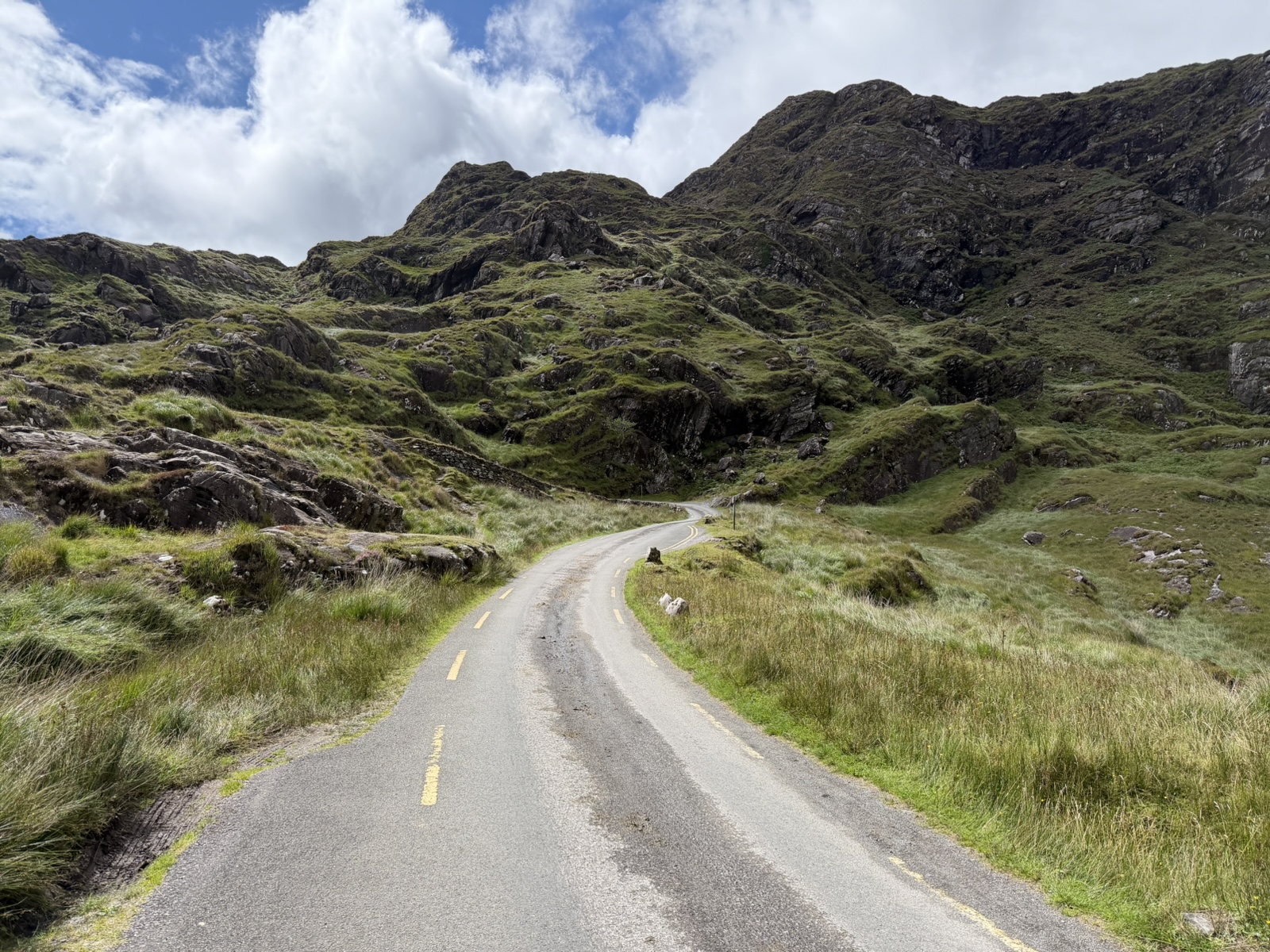
As we neared the top, it was cool to see how far we had come. And I was glad we were on bikes!
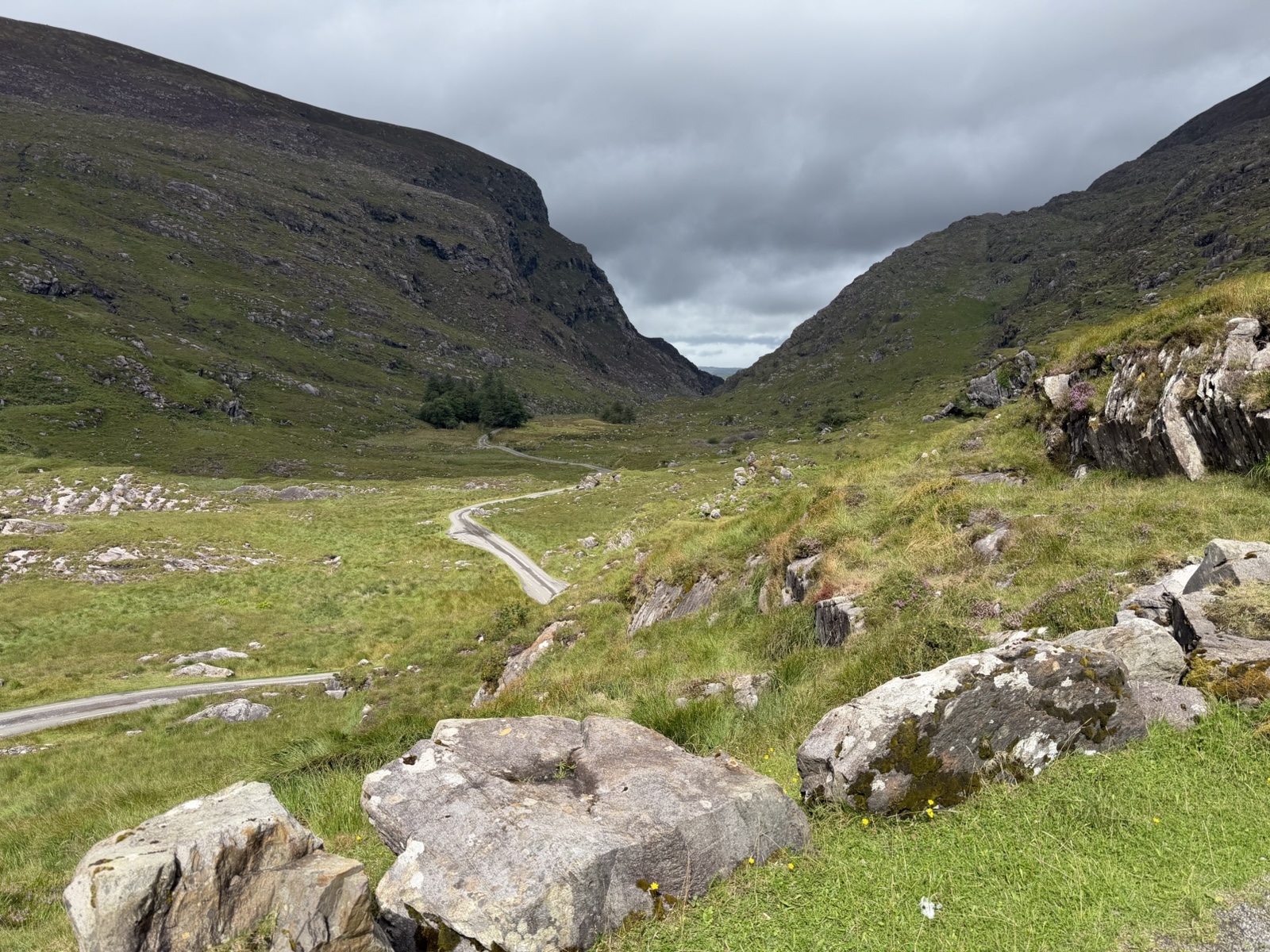
Here is Linette near the top.
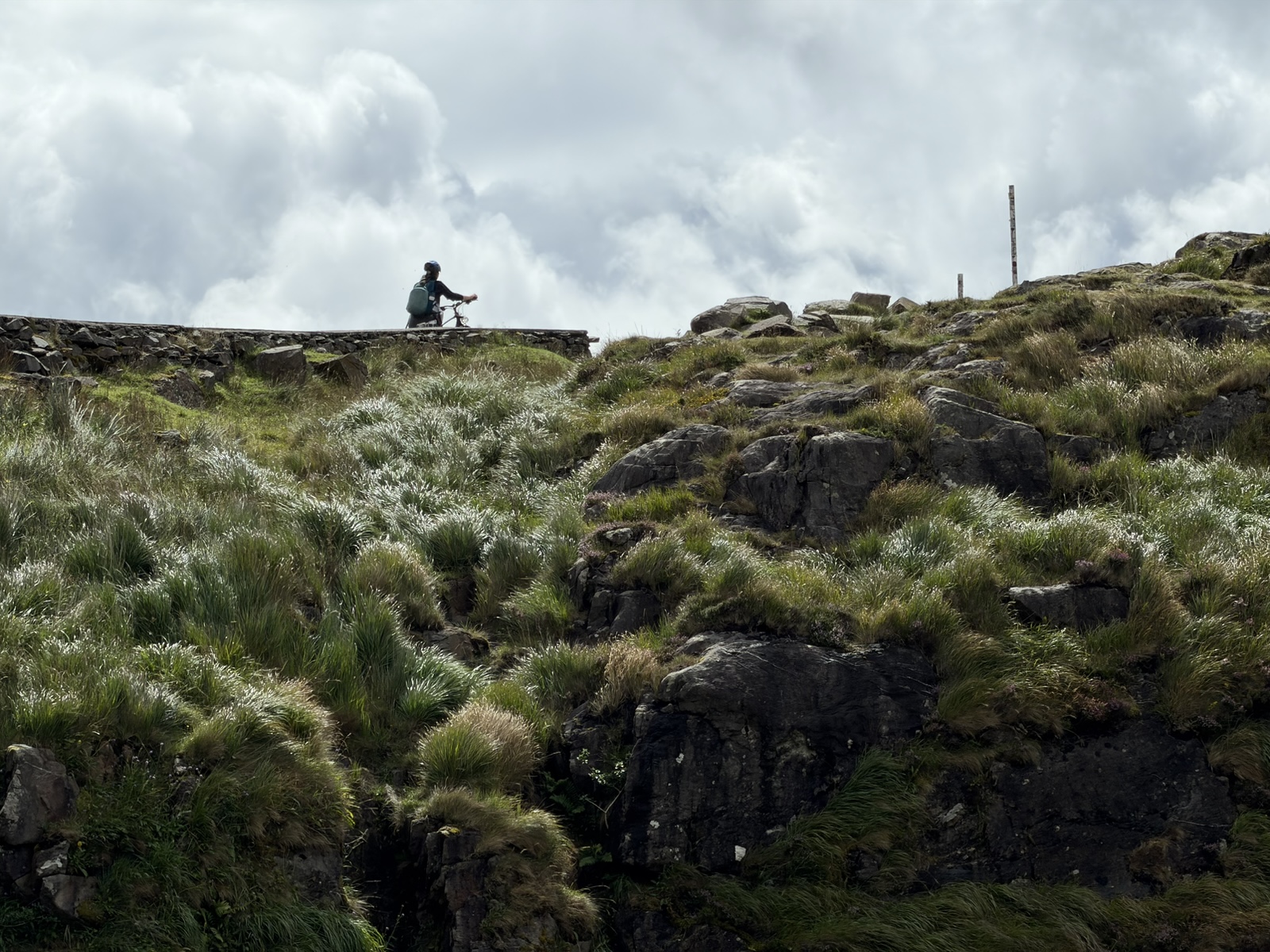
Finally, we reached the top of the Gap of Dunloe. We met a kid there who was an exchange student from Spain, staying with a family from England who was in Ireland "on holiday" (which is how they say "on vacation").
The road continues on down around Killarney National Park and would eventually have taken us back to our place, but it was almost twice as far to go that way. We had talked about taking a ferry across the lake from the bottom of this mountain, but we had so much fun stopping and taking pictures and skipping rocks along the way that it was too late for that by the time we reached the top. That was fine with us, though.
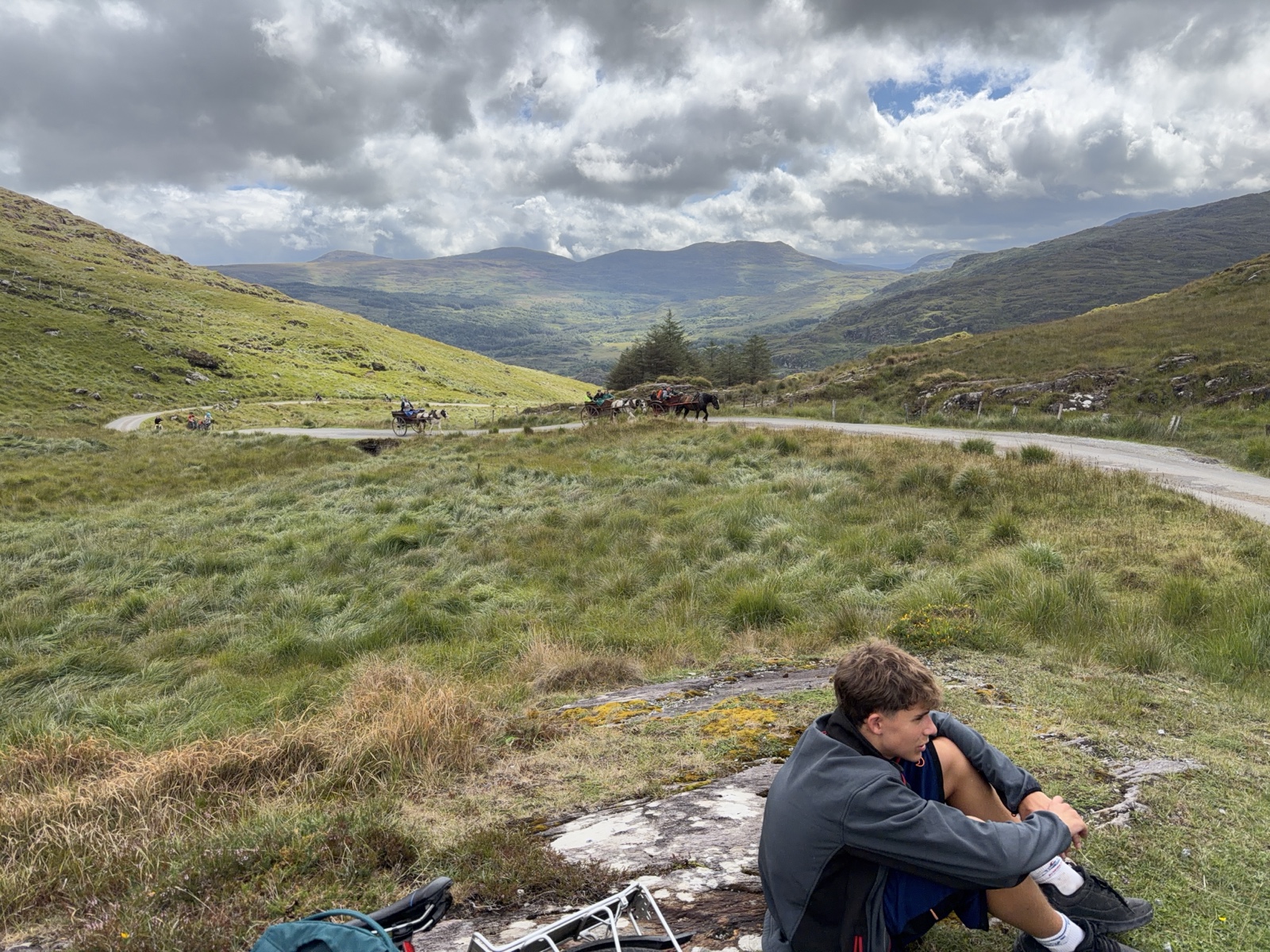
We had some snacks at the top of the hill, and the exchange student's host family finally caught up with him, so we talked with them for a bit. Then it started raining really hard, so we all rode down the hill and hunkered down under the trees where the abandoned houses were.
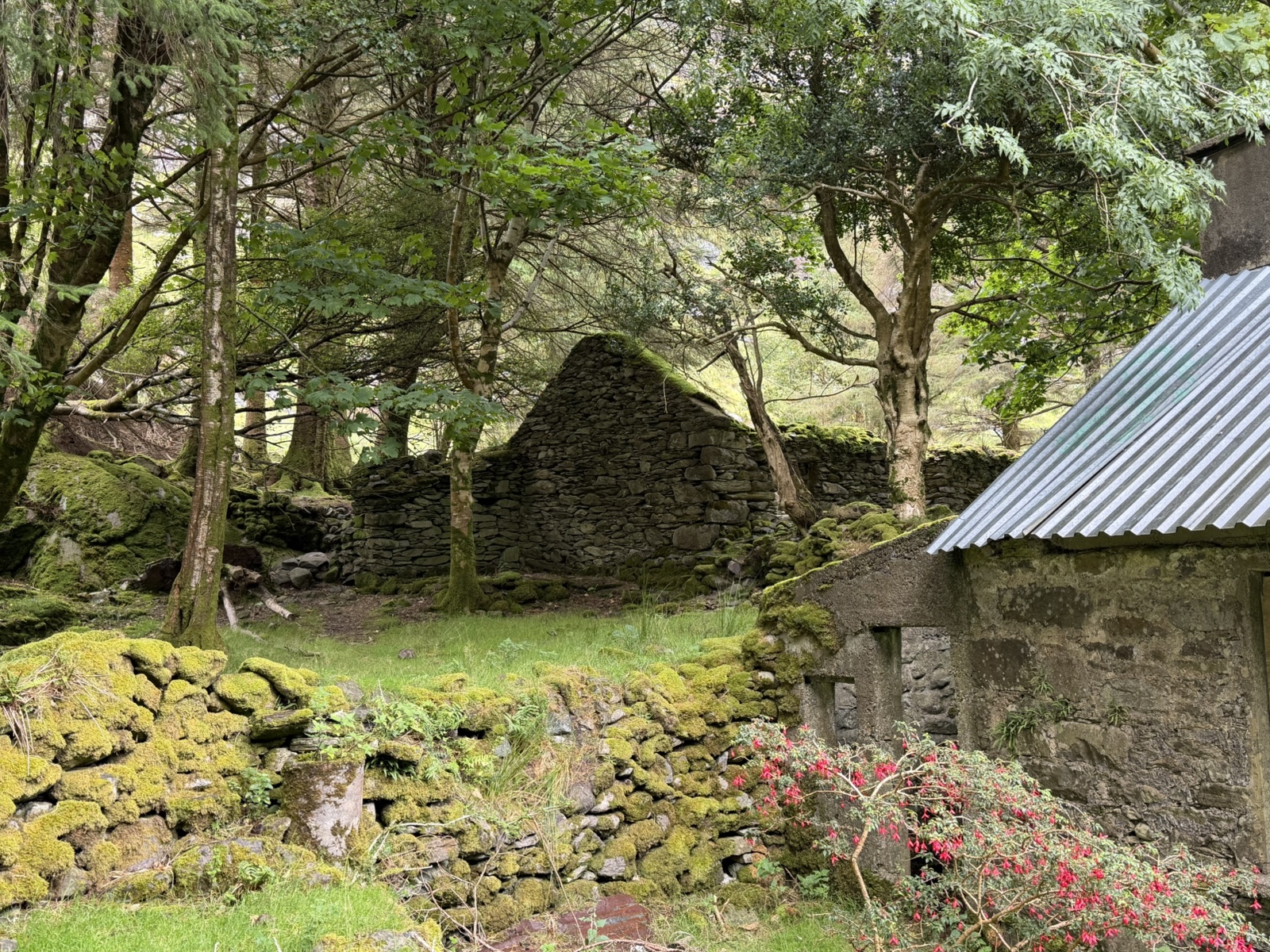
The family we had talked to settled down there for lunch.
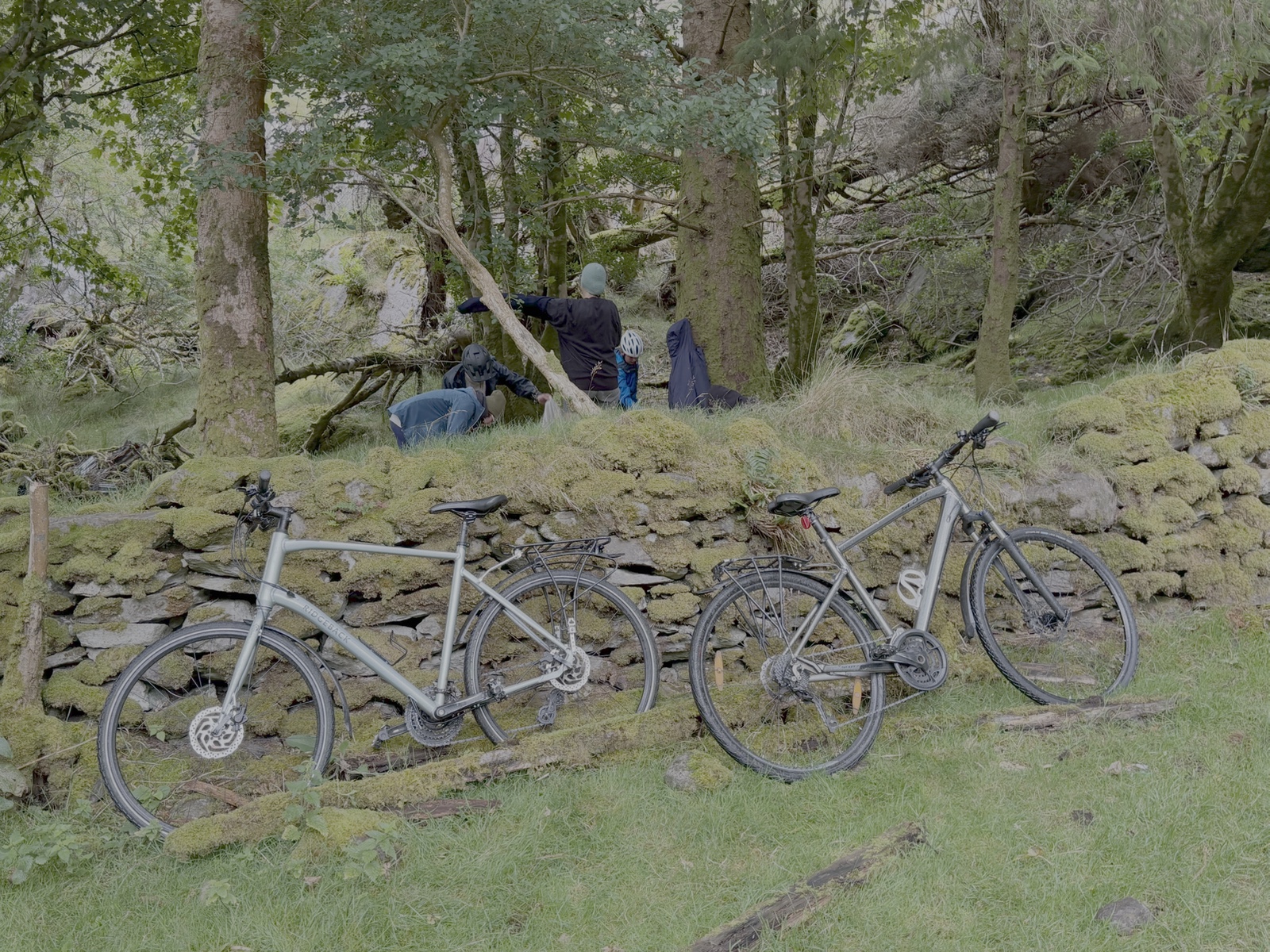
I thought the moss was so pretty, and it reminded me of where I grew up in Eugene, Oregon, only more so.
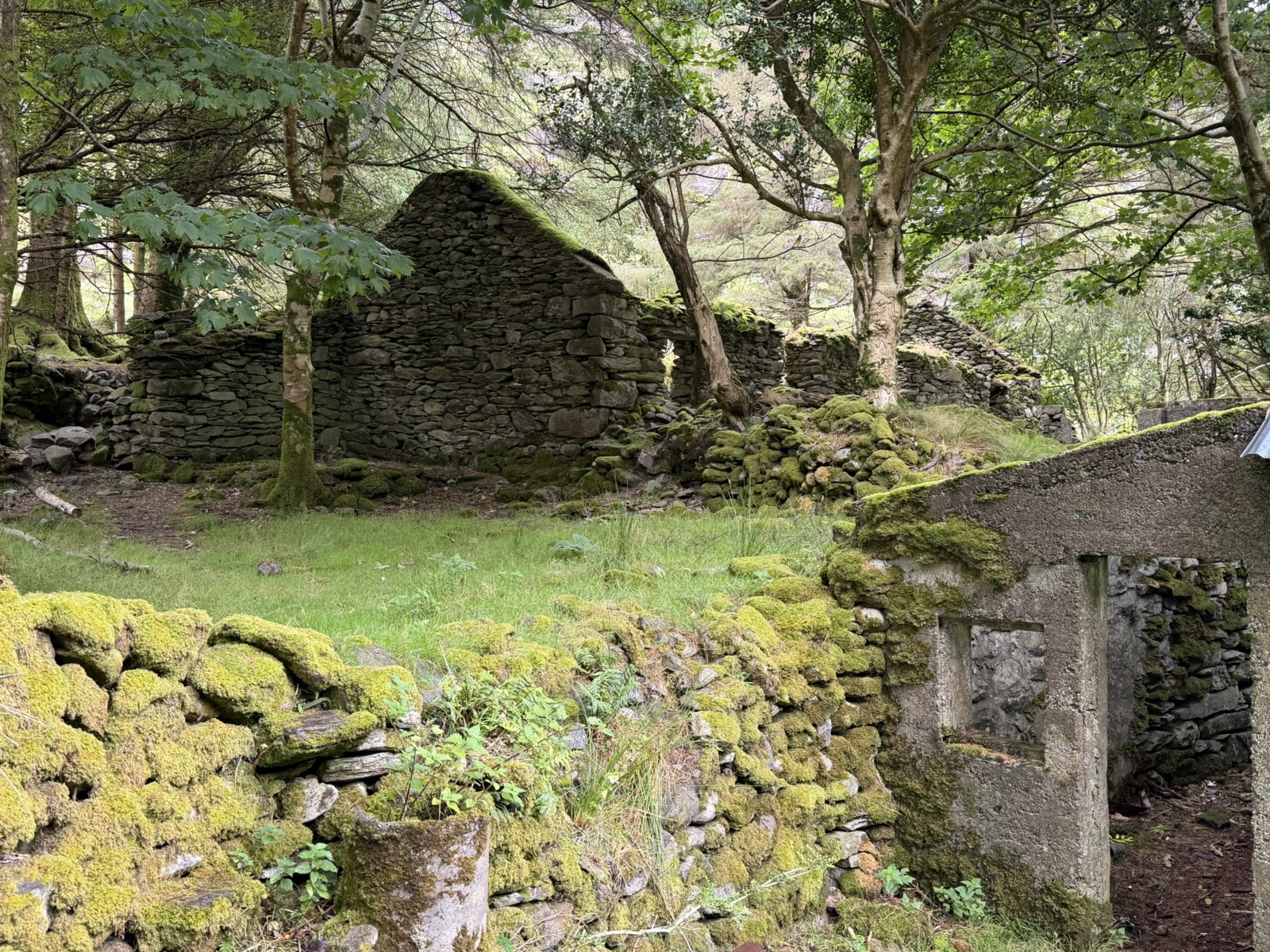
These stone dwellings were in use by tenant farmers at least by the 1800s. In 1929, John Kiernan and his family, along with his brother James, moved their furniture workshop from Killarney town to these cottages in order to sell directly to visitors as they passed by in horse-drawn "jaunting cars". They were master woodcarvers and cabinetmakers. Killarney was world-famous for its inlaid wood furniture made from the indigenous Strawberry Tree, yew, holly, and bog oak (oak trees that had sat preserved in bogs for hundreds or thousands of years).
The workshop operated continuously as a thriving hub for handcrafted Irish souvenirs and furniture until 1952, when a catastrophic fire destroyed the main workshop and part of the residential complex. John Kiernan was widely recognized as one of the very last traditional Killarney arbutus (strawberry tree) furniture makers. Over the following decades, as the remaining members of the family relocated down to lower ground in Beaufort or Killarney town, the structures were left to nature, and native trees, moss, and foliage grew through the unroofed stone walls, giving the cluster a nostalgic, enchanting look.
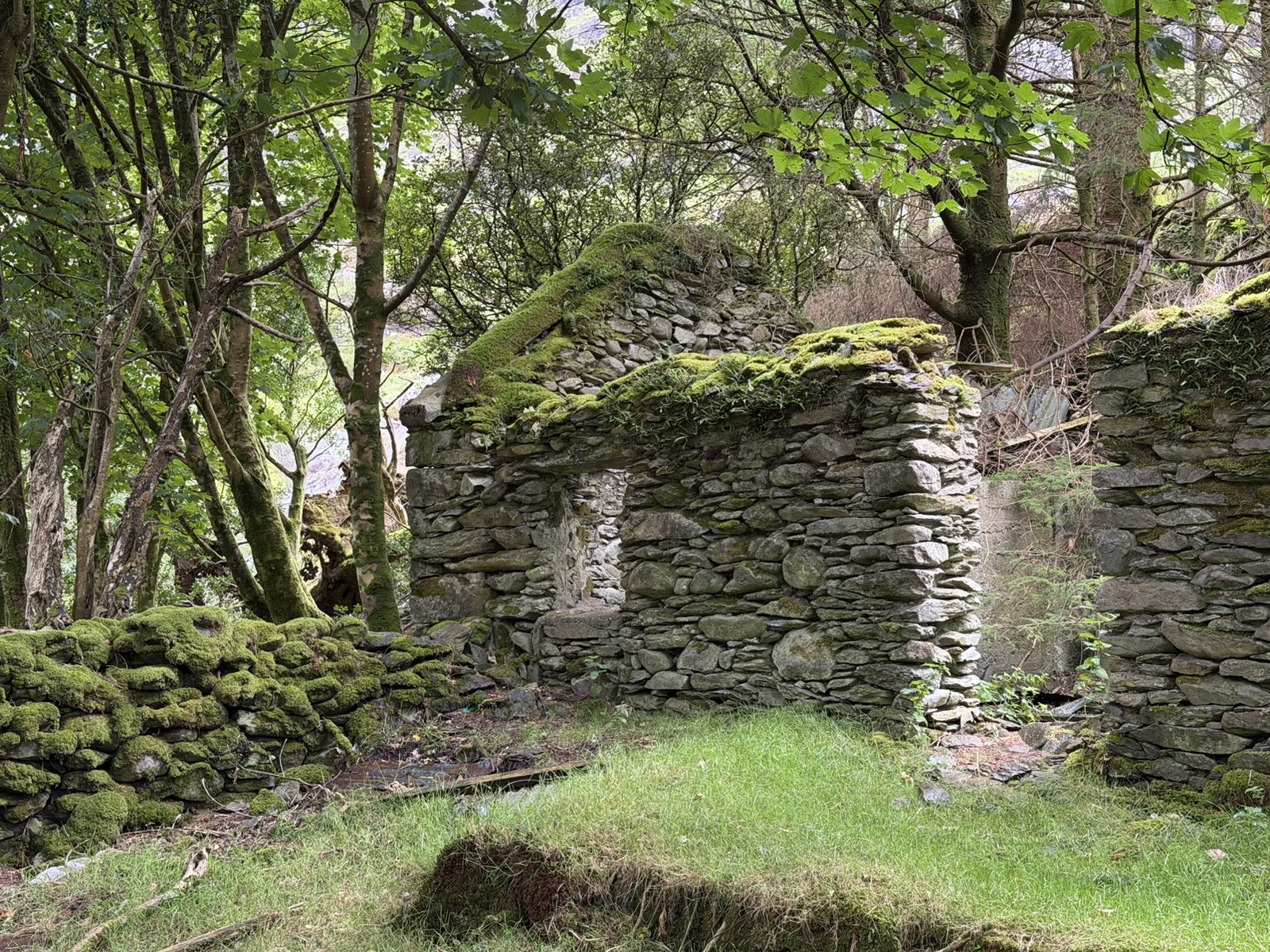
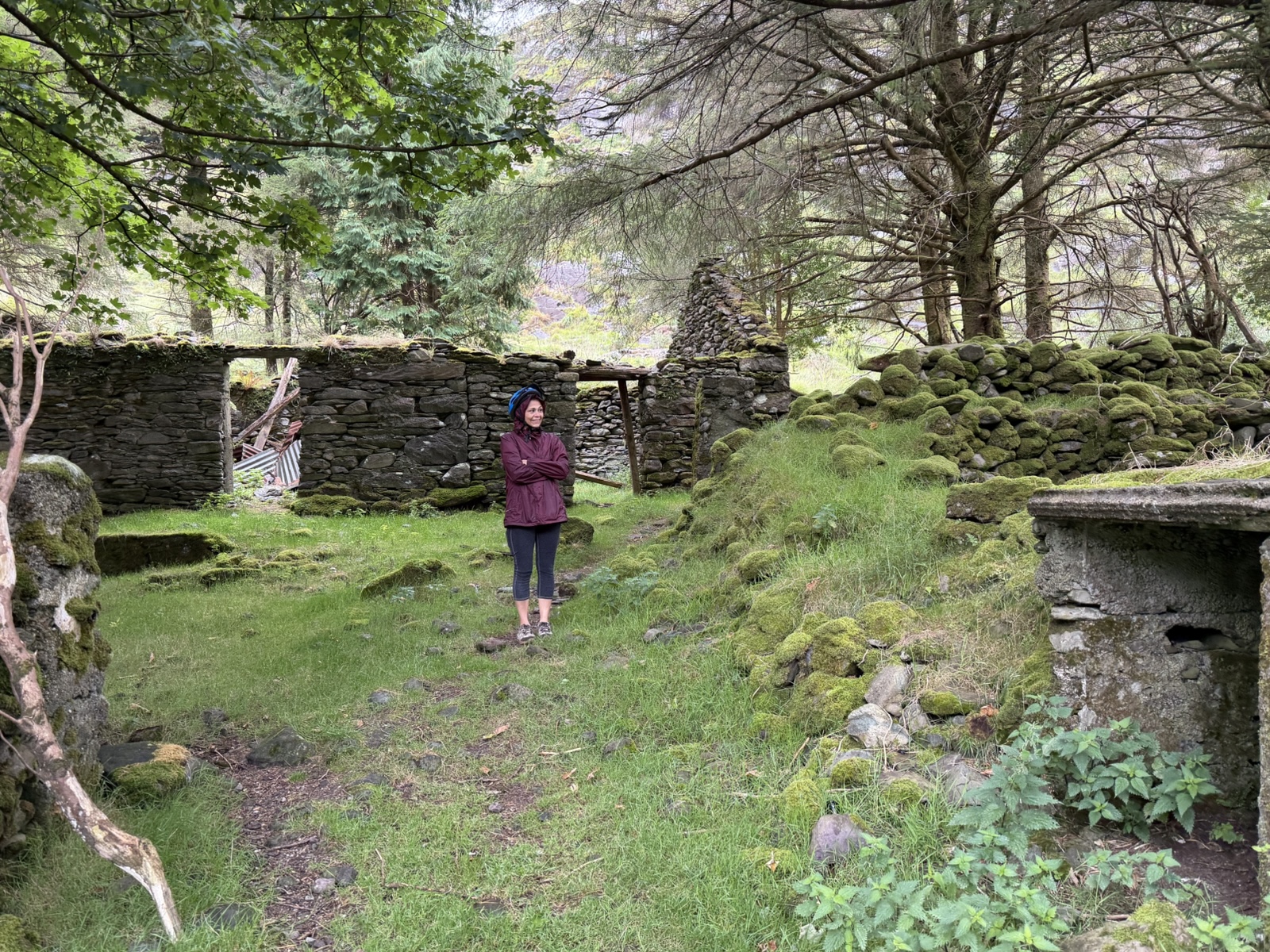
Having pedaled up the gap for the last couple of hours, it was delightful to see everything again while mostly coasting back down.
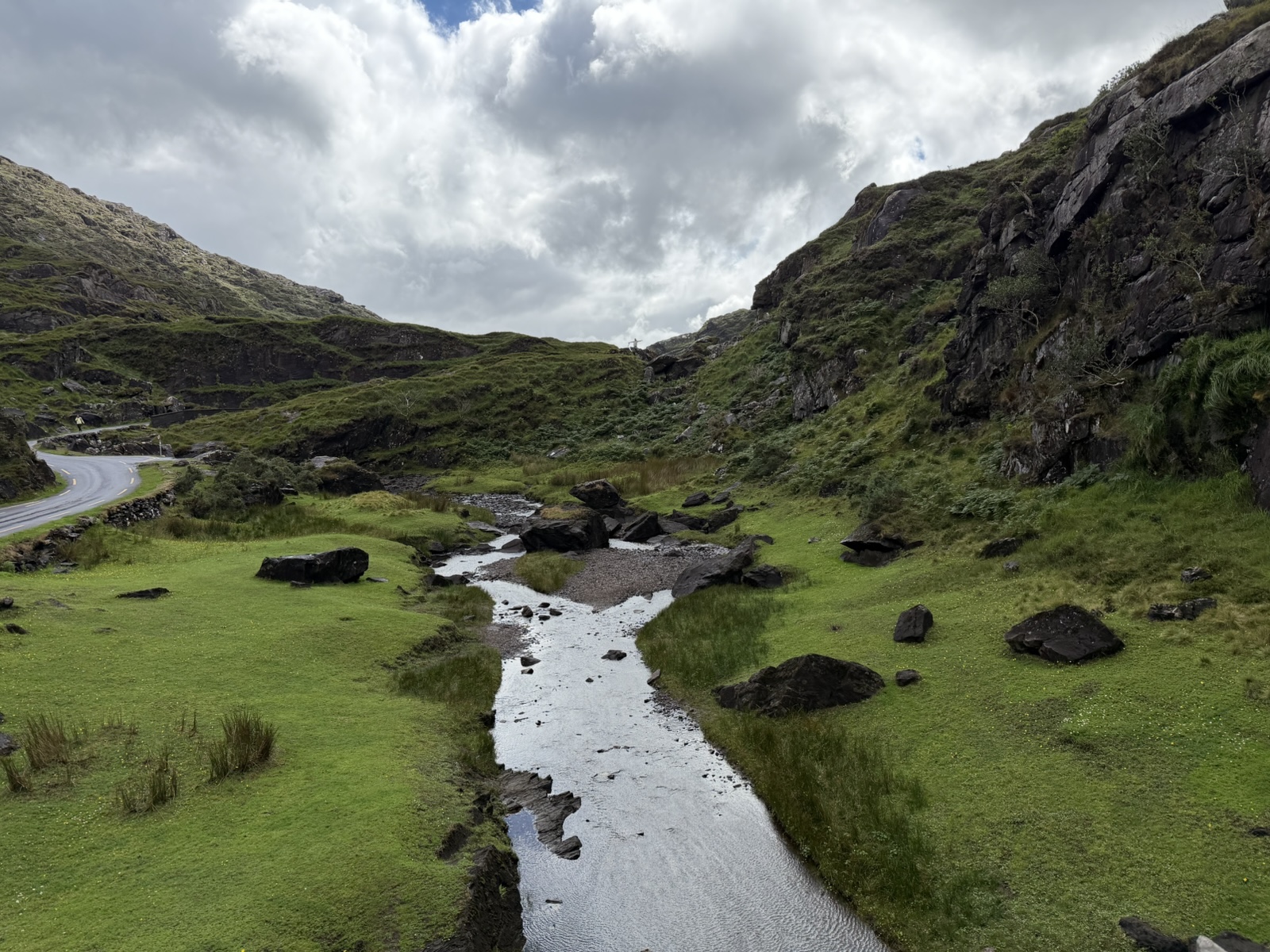
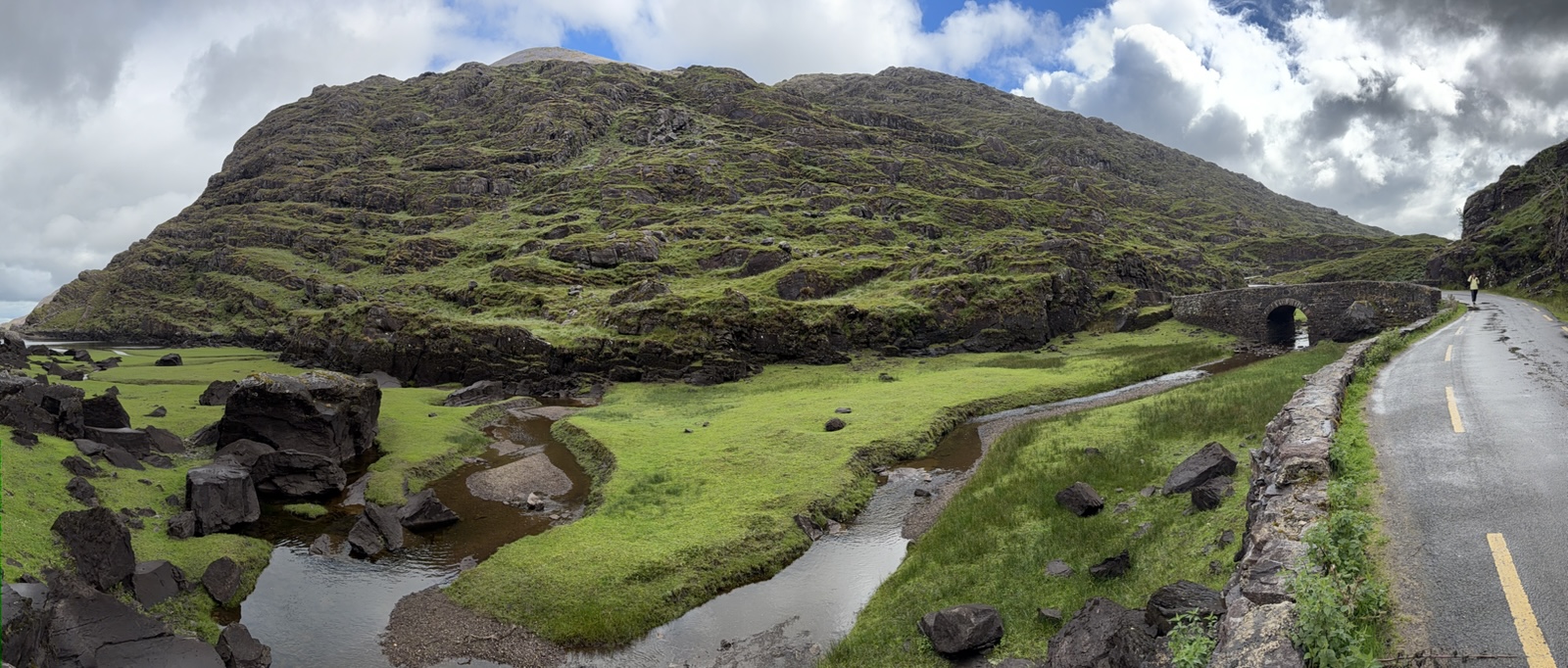
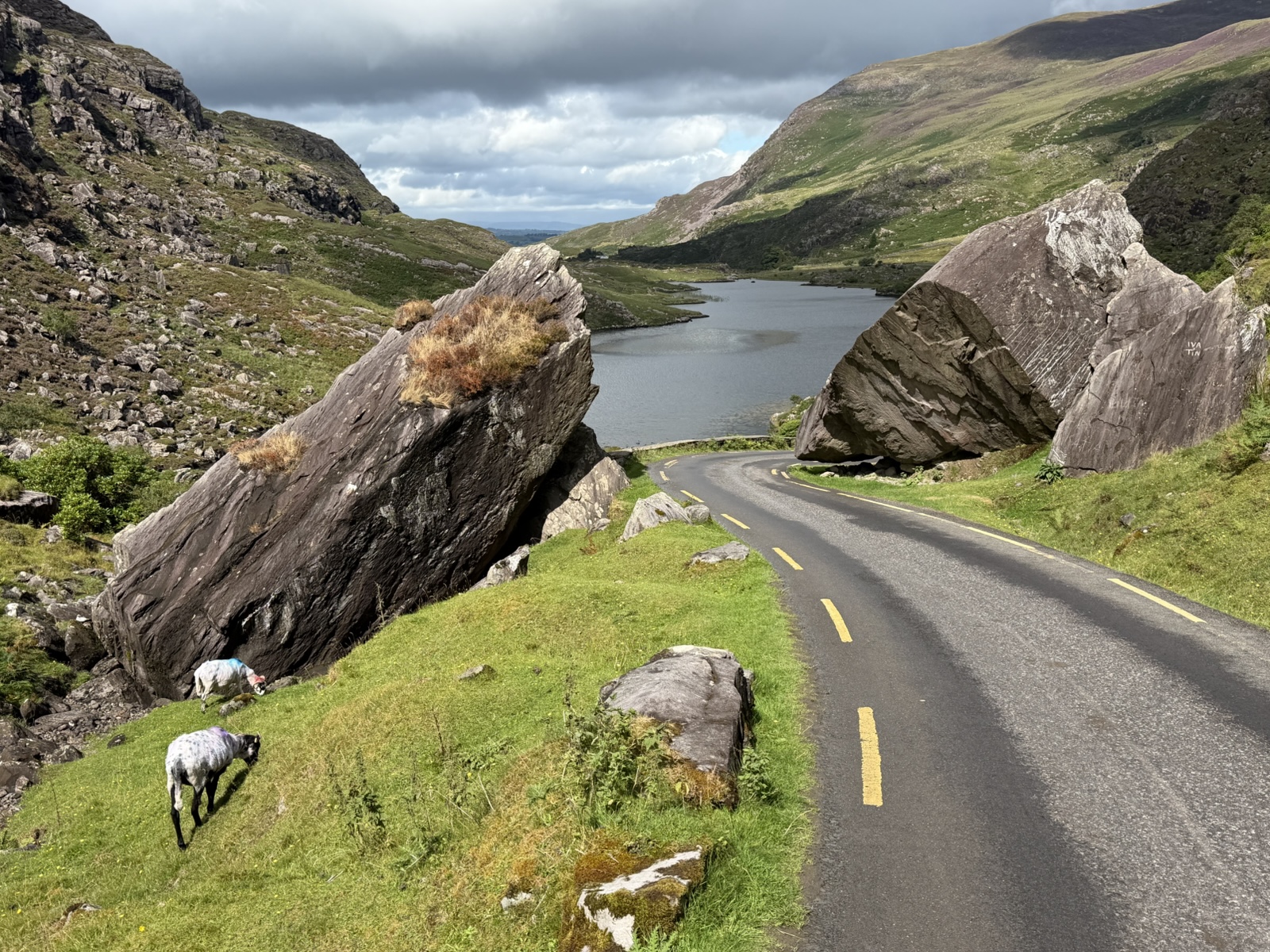
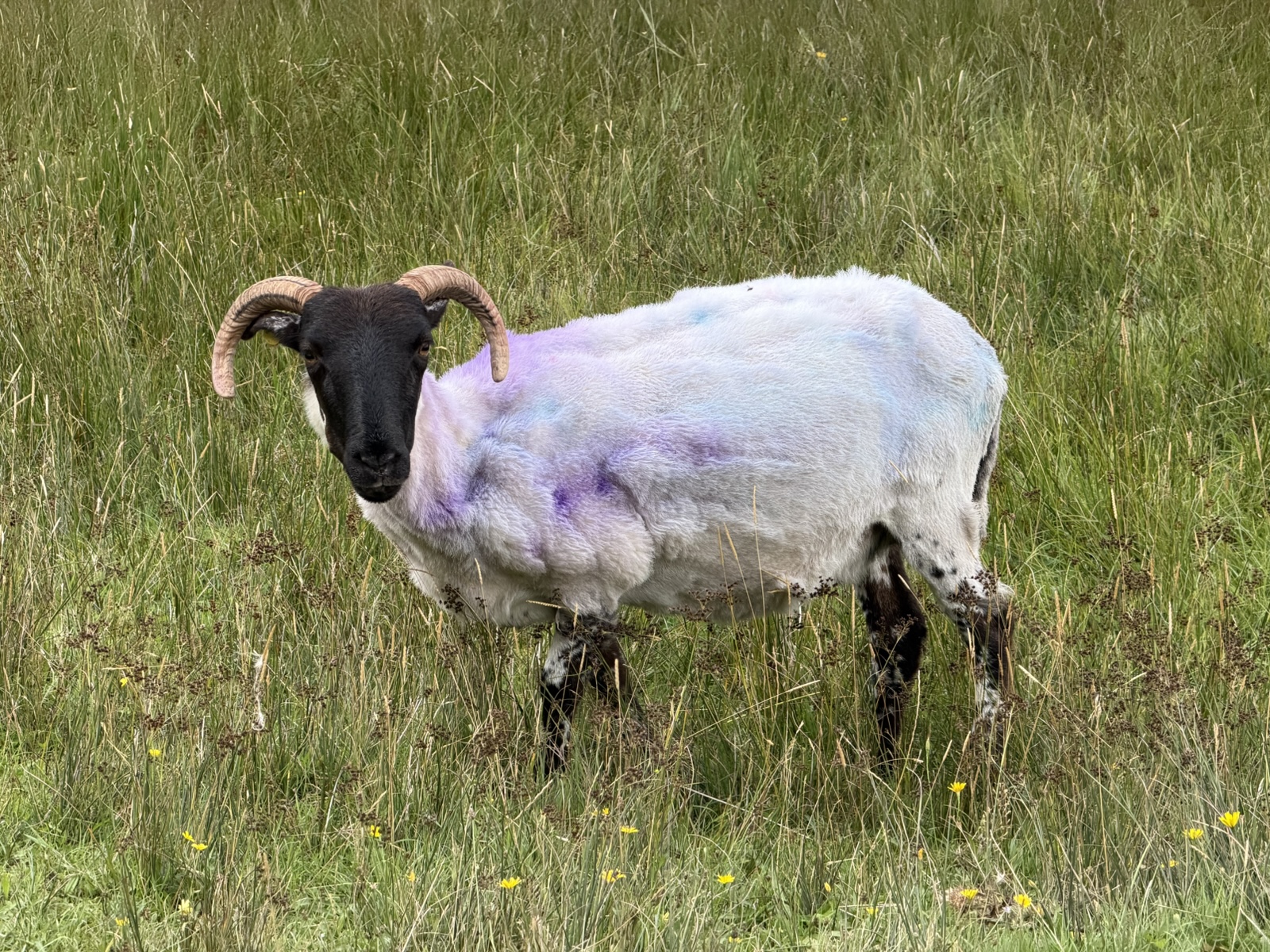
What a pretty ride!
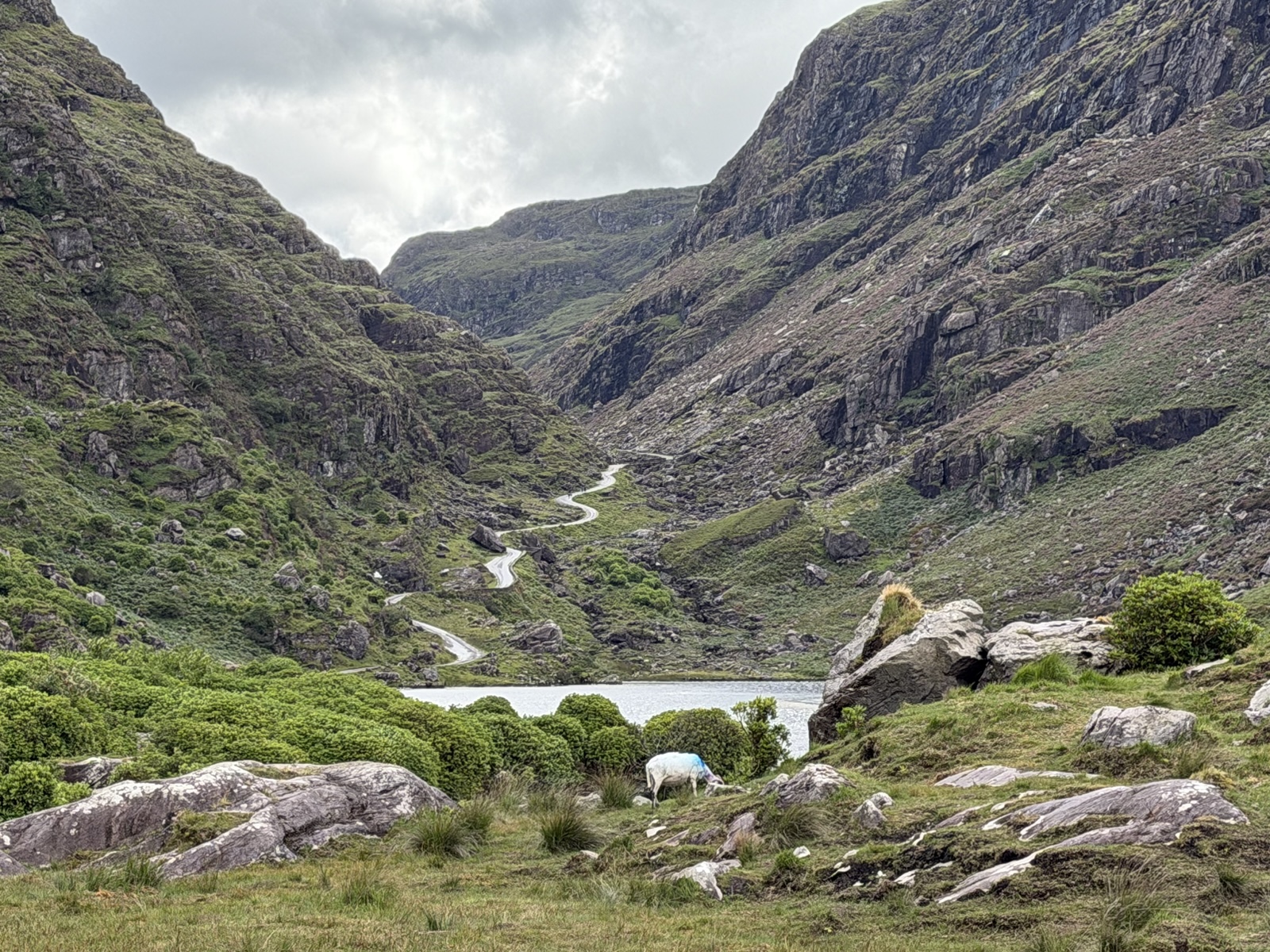
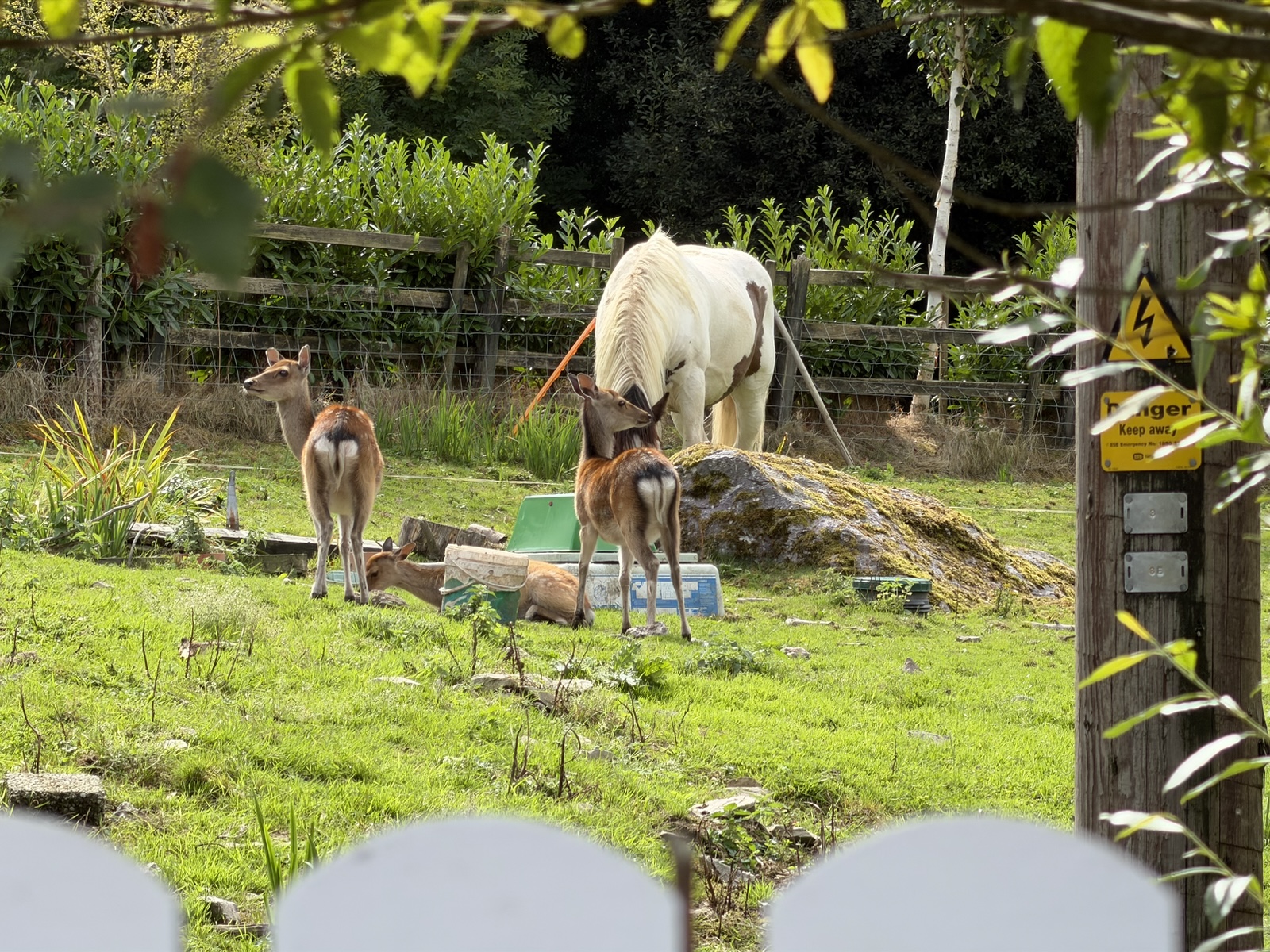
When we got back to where the shops were, and where the horses were kept, we saw that some deer were having supper with the horse in this pasture.
Linette got ahead of the rest of us, due to the "disparity in picture-taking" (i.e., Jared, Katelyn and I kept stopping to take pictures). She waited for us at a lake, and as we zoomed by, we didn't hear her call out to us. So she tried to catch up, but one curve caught her off guard, she hit the brakes hard, and the bike slid out from under her, causing her to bang her elbow and land in the slimy strip of mud and manure in the middle of the road. I'm glad she wasn't hurt worse, but she did need to clean up a bit at the restroom before we continued, and she had a good bruise on her elbow. Katelyn had a good-sized bandage for her.
Jared had also slipped on a rock up by the Wishing Bridge's pond, and I was able to supply him with a band-aid for his finger.
But other than that, we fared pretty well. I had been a bit worried about getting hit by a car on that narrow road, but it turned out that while the roads are too small for two cars, they're no problem for a car and a bike.
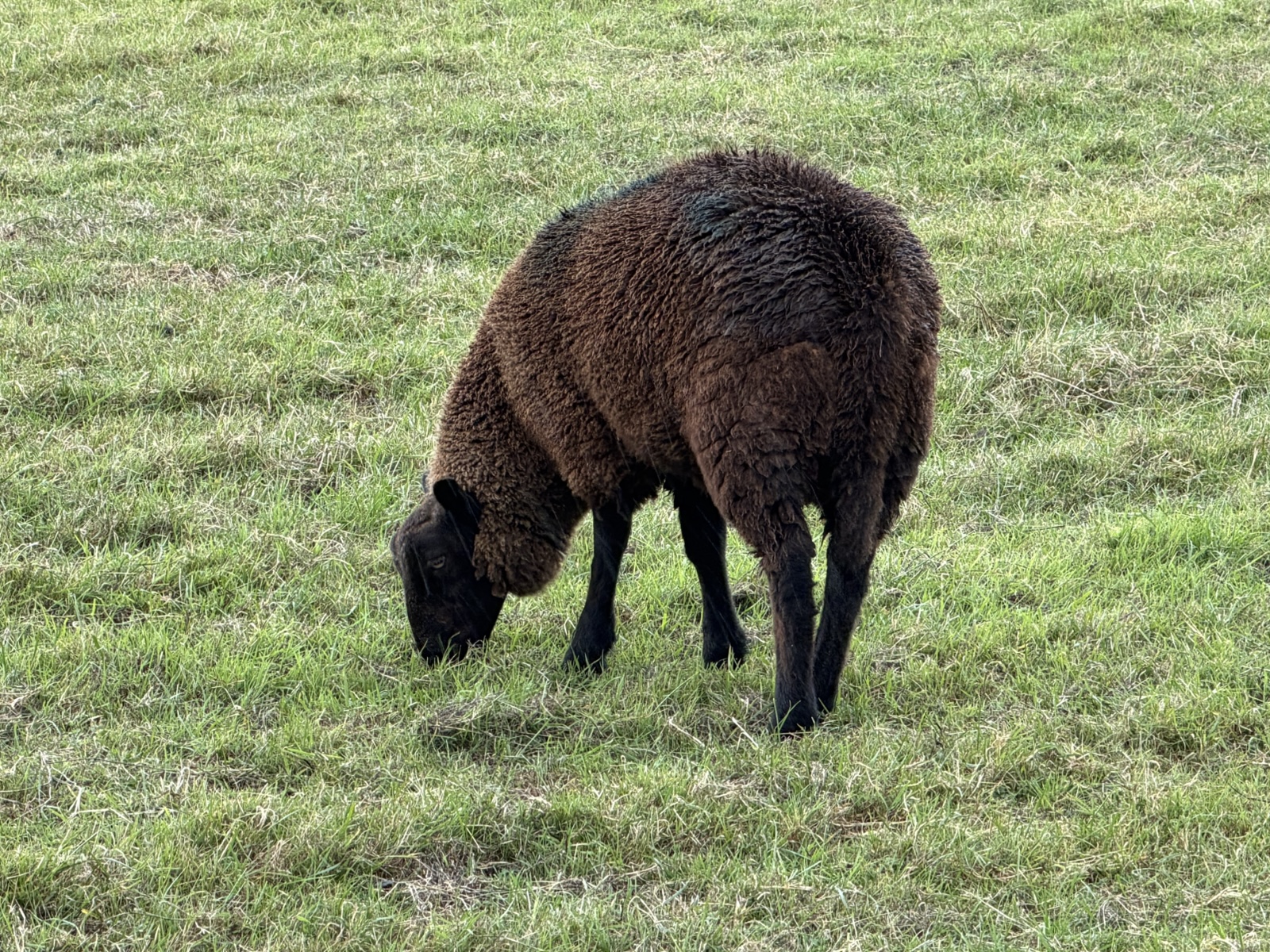
As we rode back along the flatter roads, we saw this dark brown sheep, which I thought was really pretty.
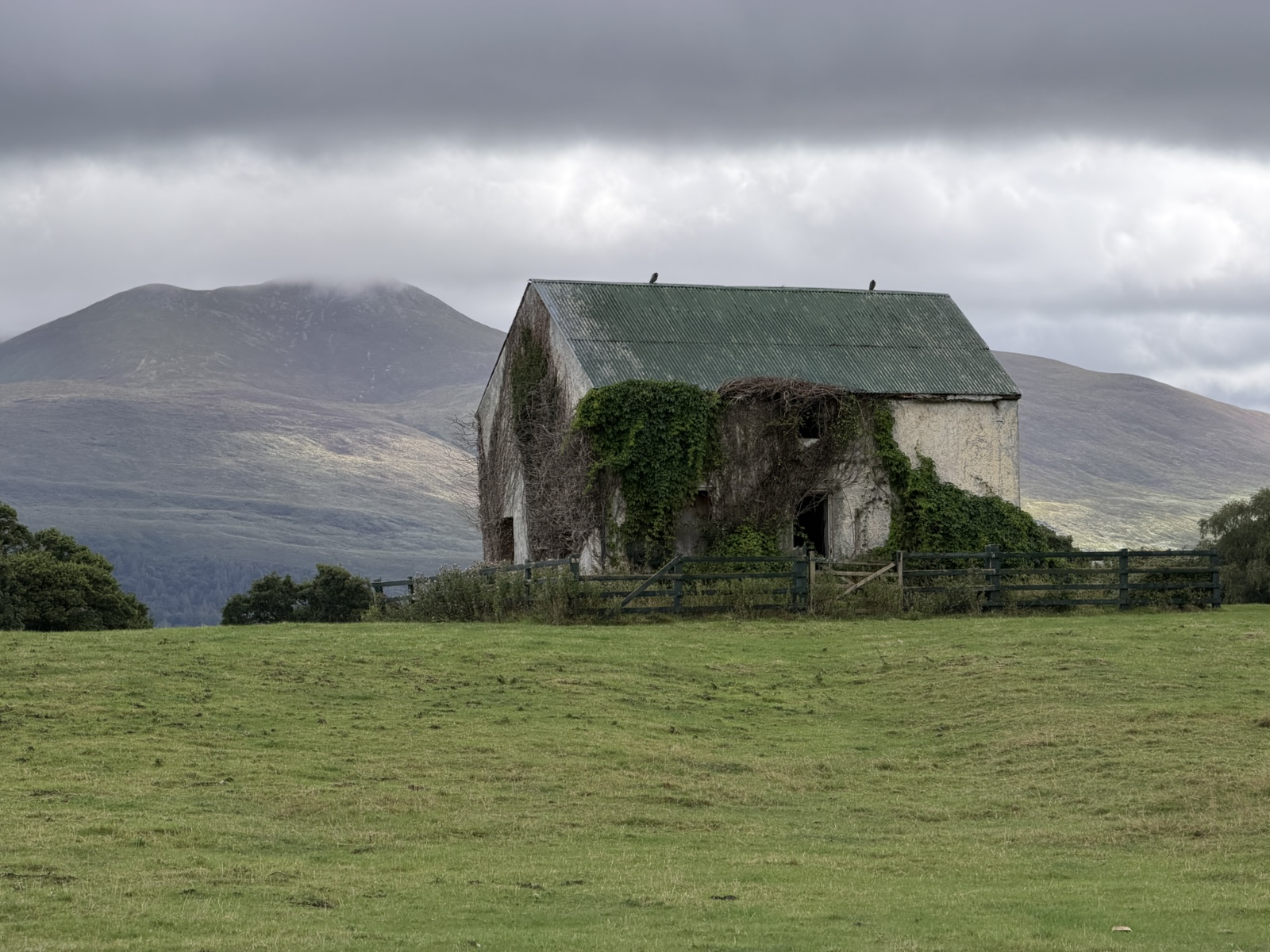
It was cool to see how the ivy had started to cover this farm house.
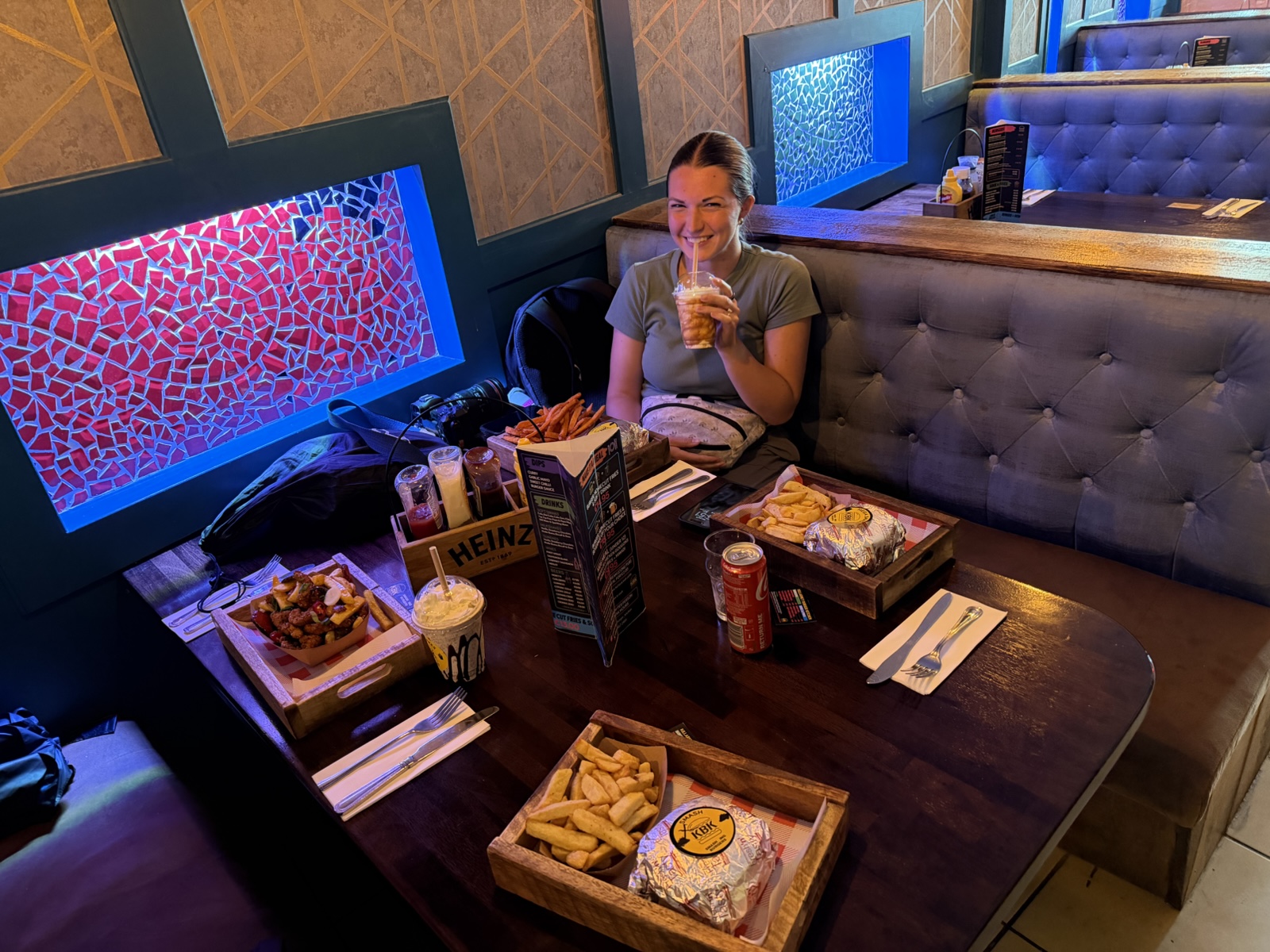
After all that riding, it was nice to get a big juicy burger and "chips" (French fries) at the Killarney Burger Kitchen. When we returned from cleaning up in the bathroom, the food had been delivered and we found Katelyn sitting there with four burgers, which looked kind of funny.
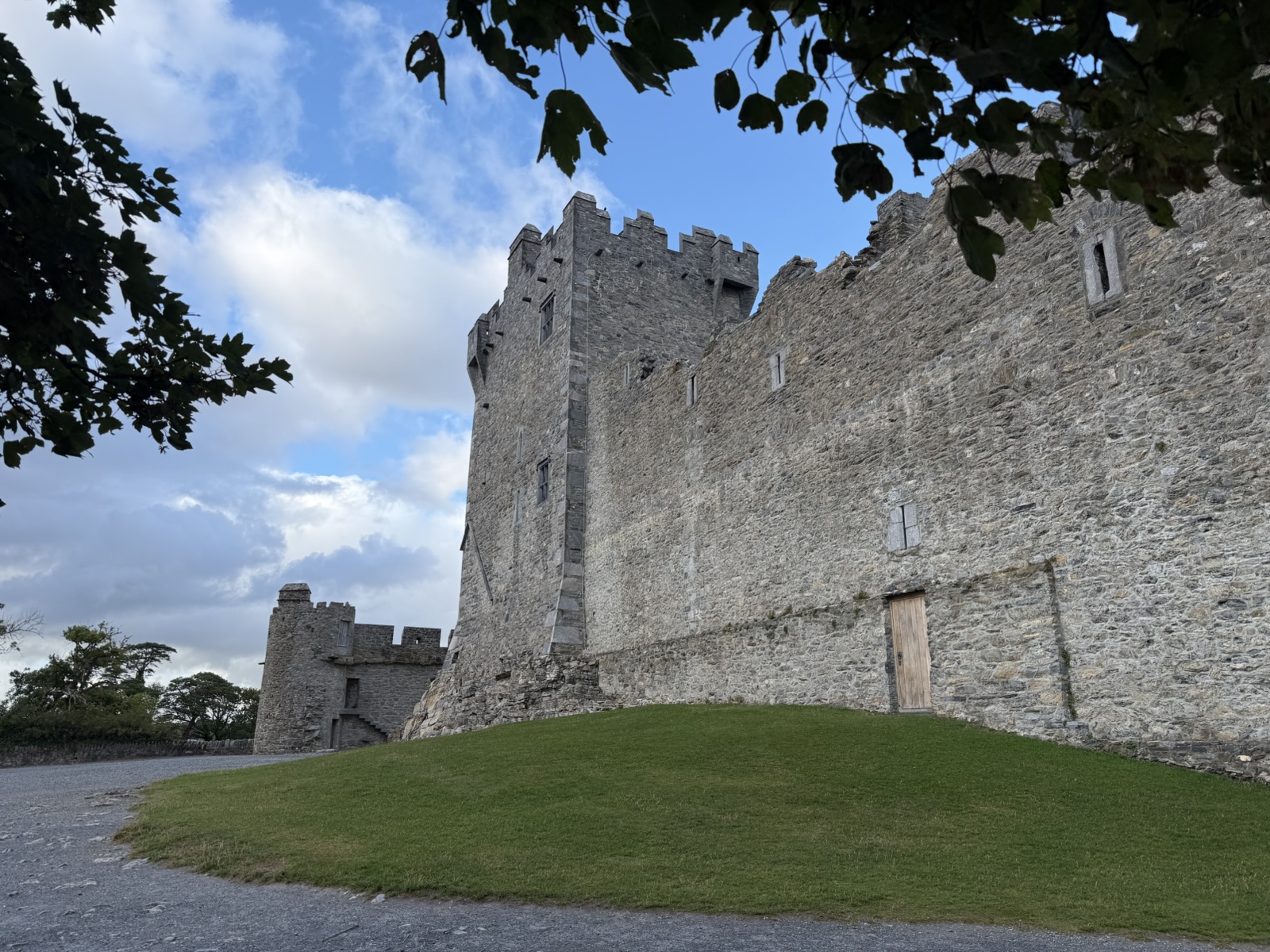
After dinner, we drove over to Ross Castle, which overlooks Lough Leane (the main lake of Killarney National Park).
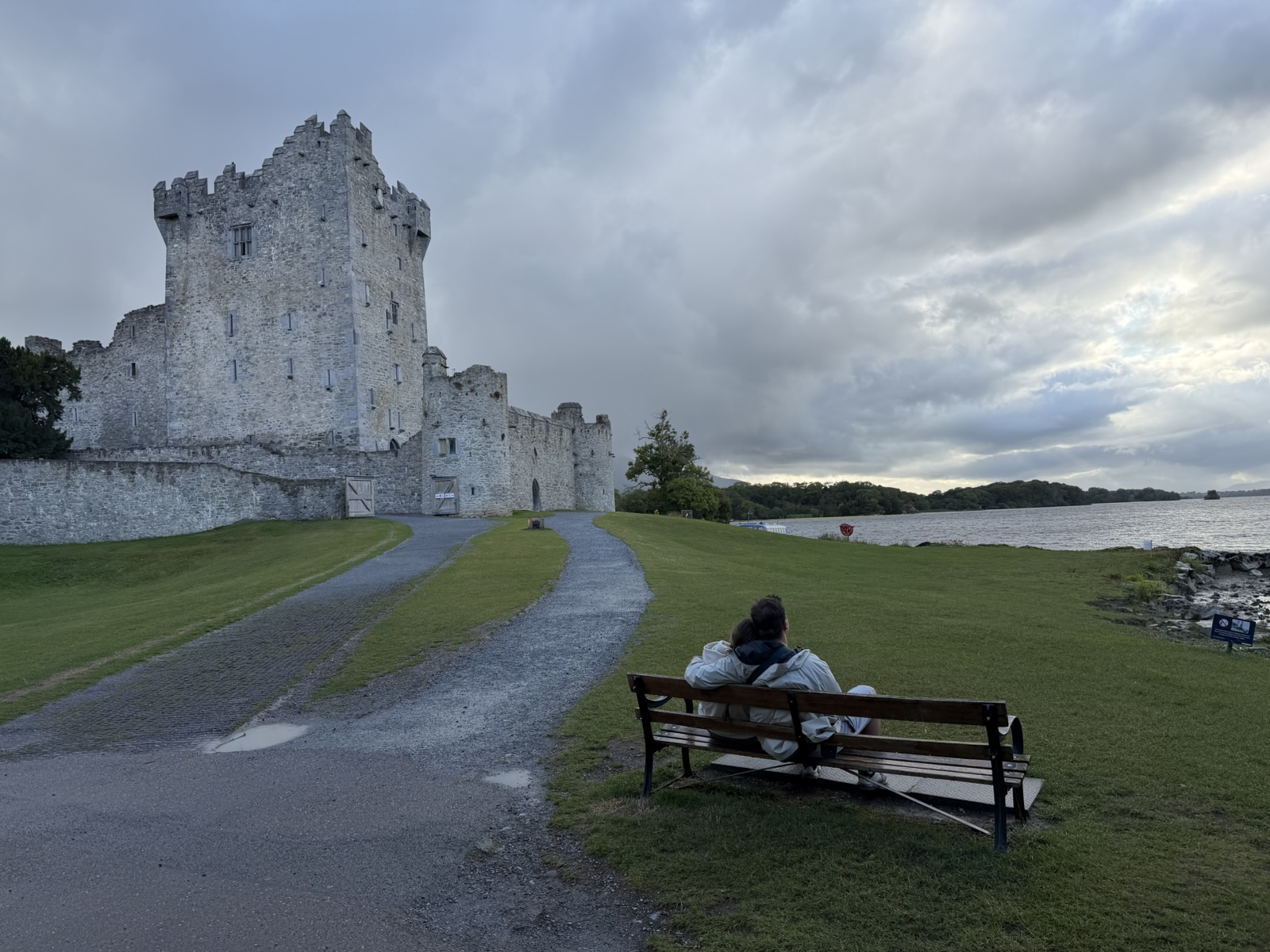
Ross Castle was built around 1450-1500 by the local ruling clan, the O'Donoghues of Ross. It changed hands a couple of times and then was among the last castles to surrender to Oliver Cromwell's Roundheads, in the 1650s. The Irish had a prophecy that Ross could never be taken until a warship could swim the lake, which seemed impossible at the time.
Ross may all assault disdain
Till on Lough Lein strange ship shall sail.
Sure enough, Lord Muskerry of the MacCarthy clan held the castle against Edmund Ludlow who had 4,000 soldiers and 200 horsemen. But Ludlow's men built heavy artillery vessels and launched them onto Lough Leane. Seeing the armed ships on the water, the defenders realized that they had no defense against an attack from the lake. Believing the prophecy was fulfilled, they surrendered the castle before the floating artillery ever needed to fire a shot.
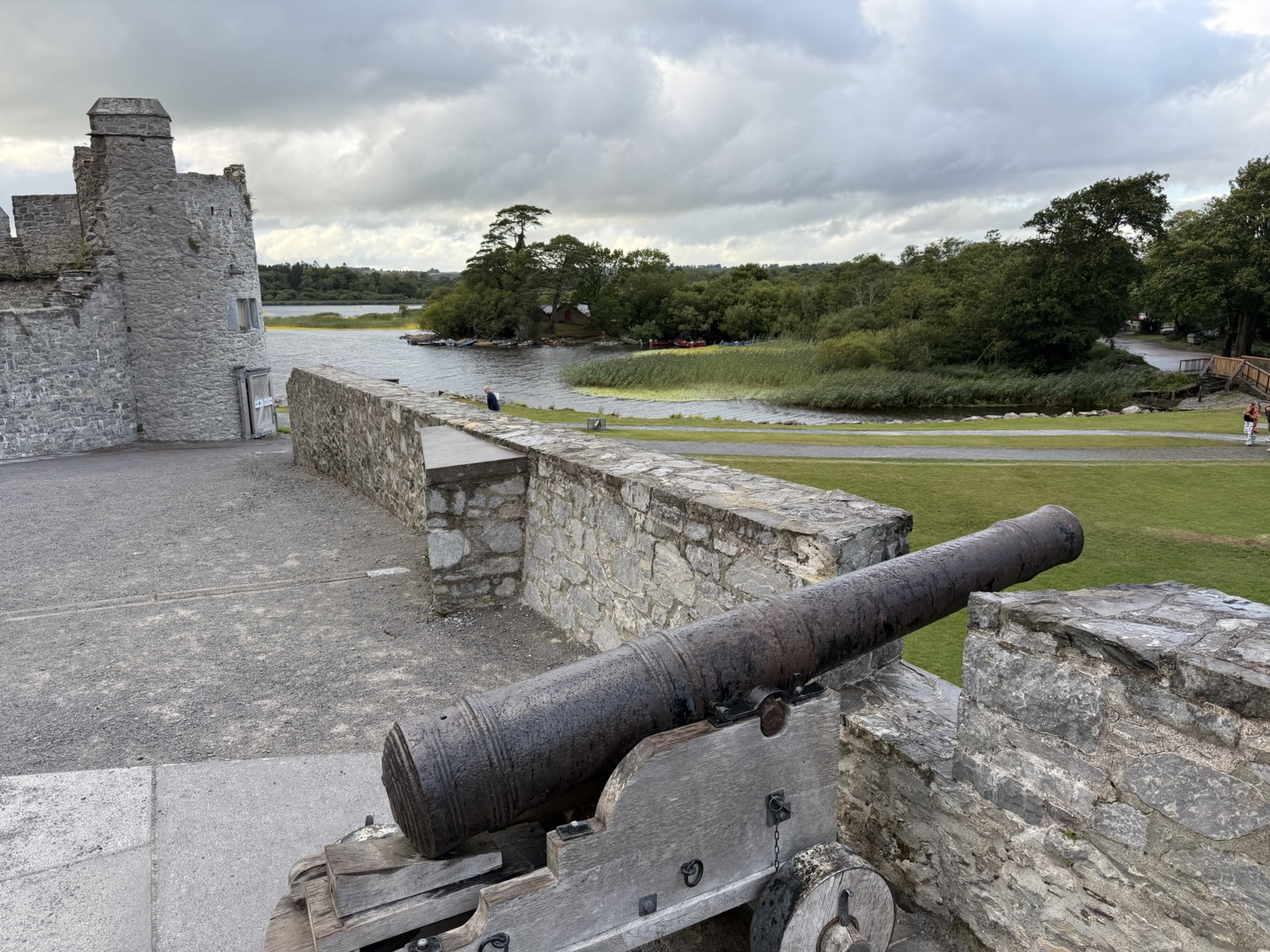
The yellow flowers on the lake were so pretty!
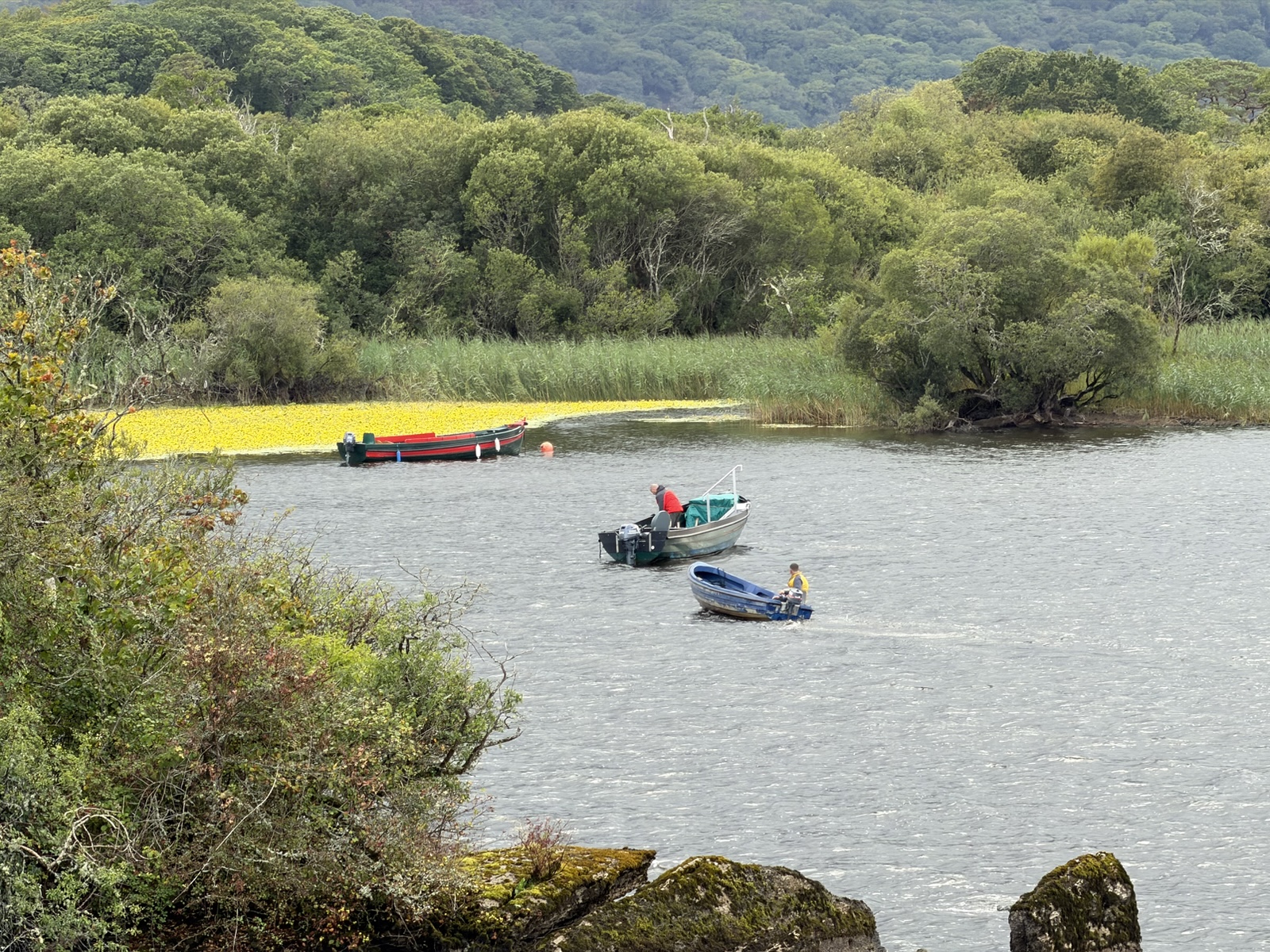
(It turns out that these are "fringed water lilies", and are an aggressive invasive species that they're trying to figure out how to get rid of).
Linette walked up to this doorway and said she felt so tall! (People were an average of 4 inches shorter back when this castle was built).
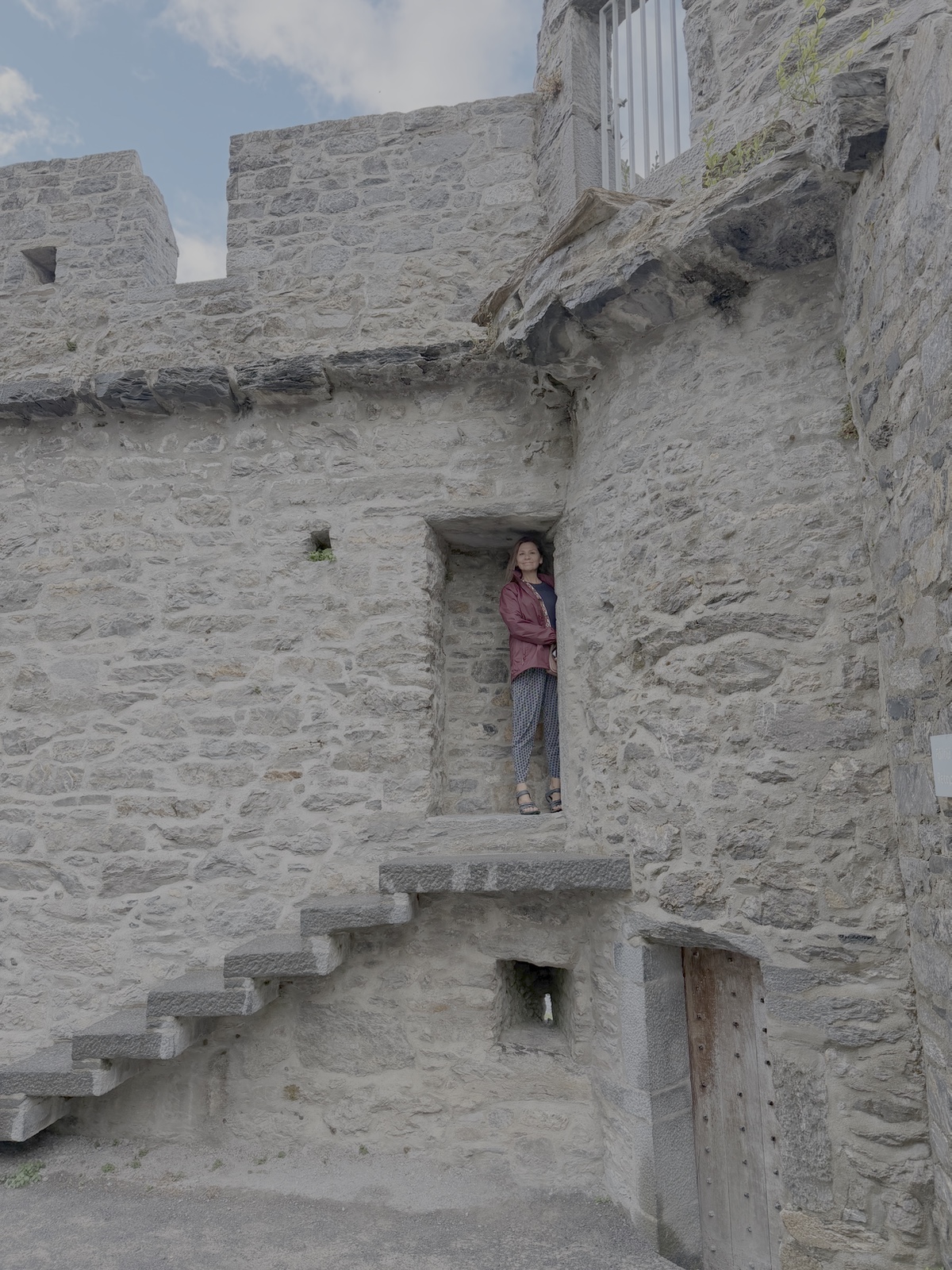
Though the castle was closed when we got there, it was still fun to wander around the parts that were still accessible.
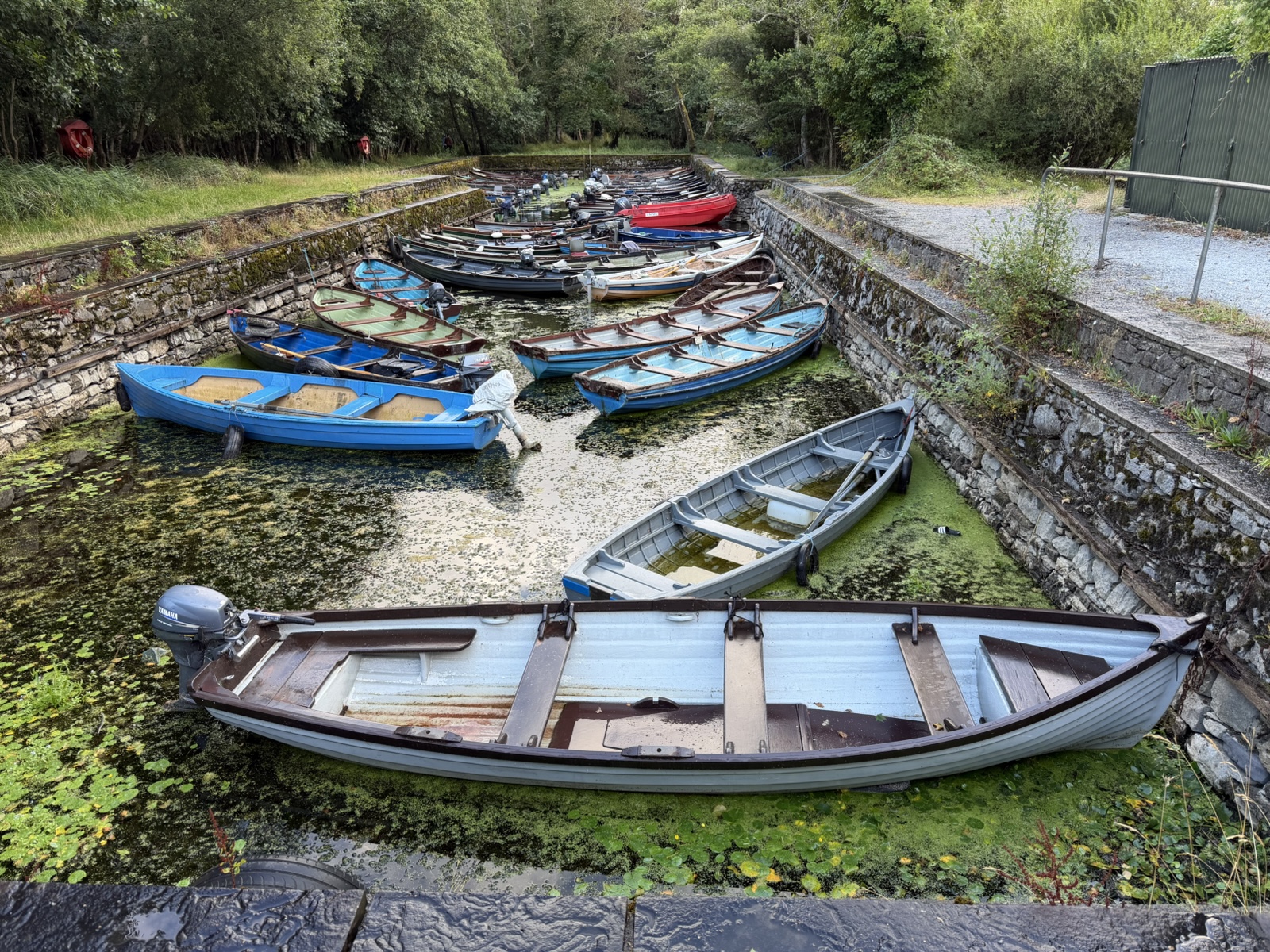
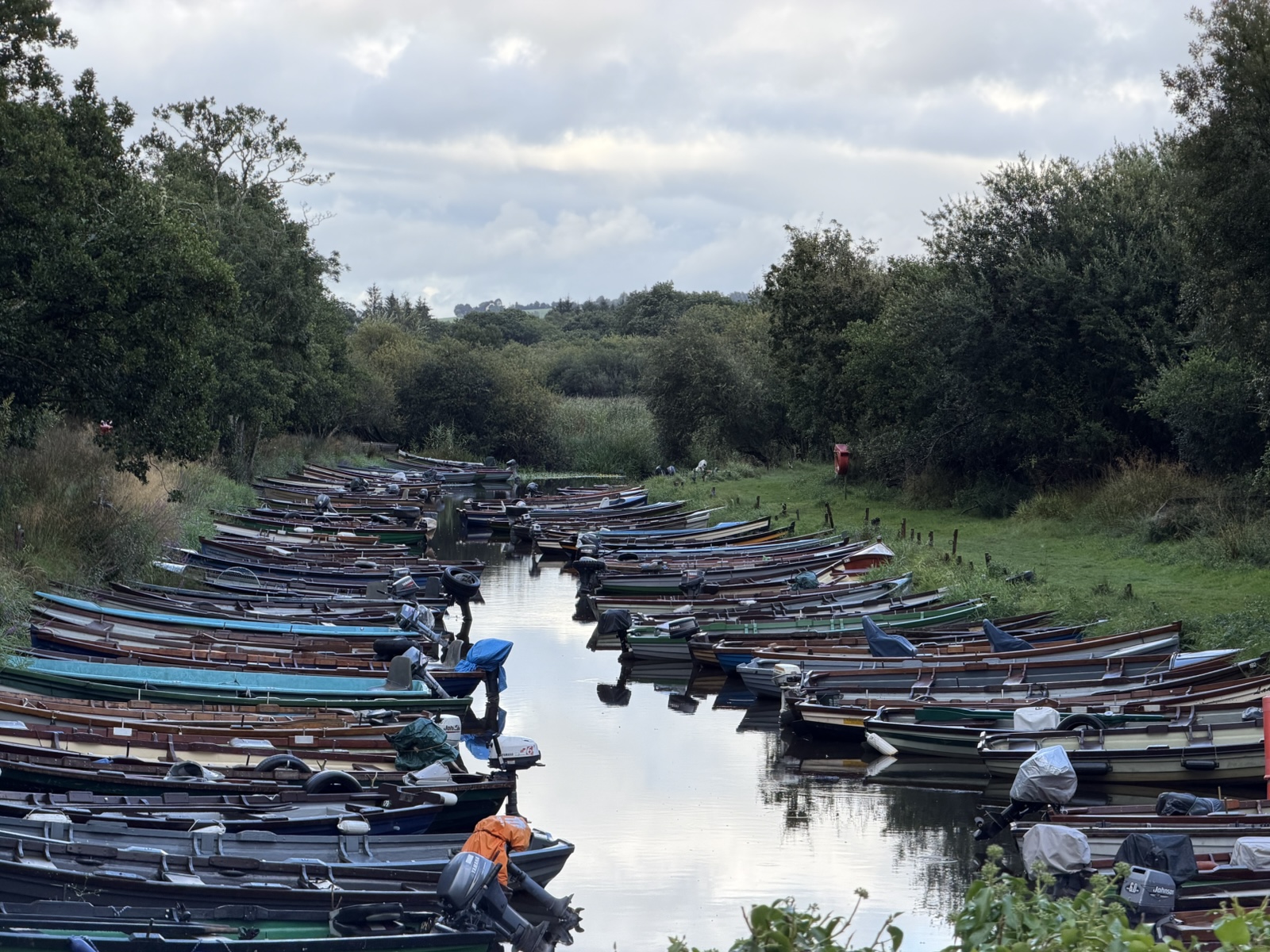
There were lots of little boats around there. I couldn't tell if they were used by locals or tourists.
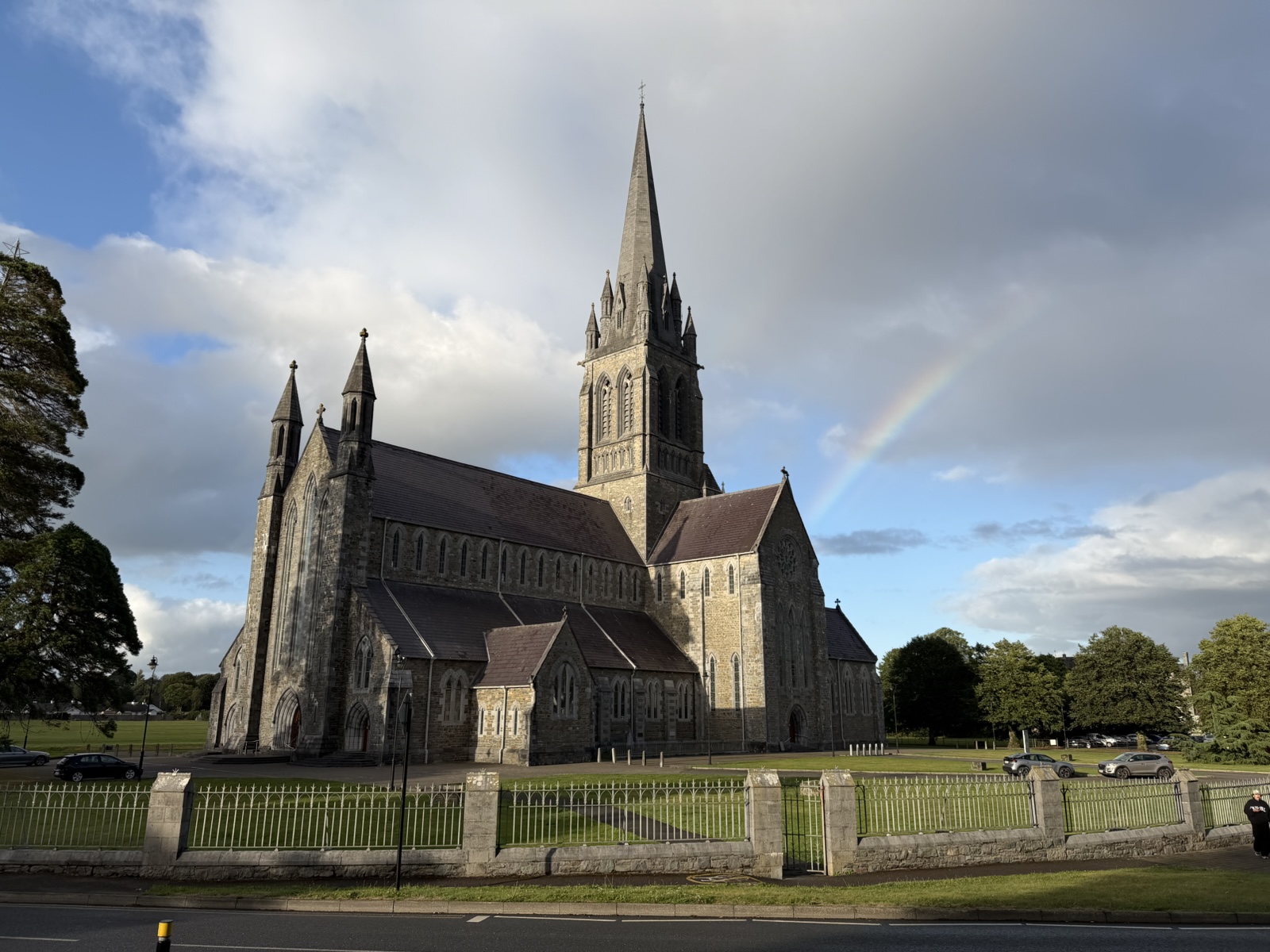
On the way back to our house, we stopped at St. Mary's Cathedral for a moment. It was closed, but it was pretty when a rainbow appeared over it.
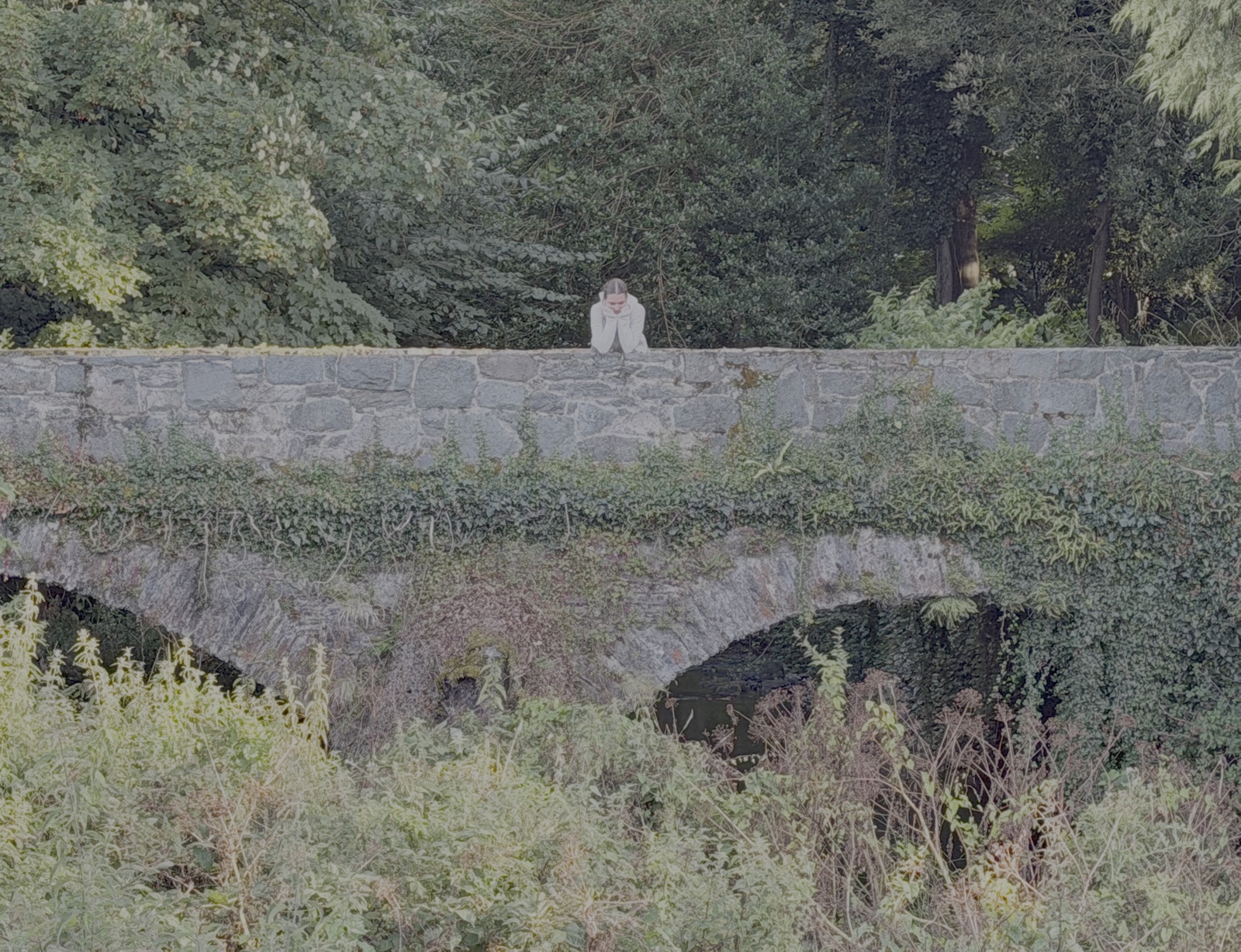
Here is Katelyn on a nearby bridge.
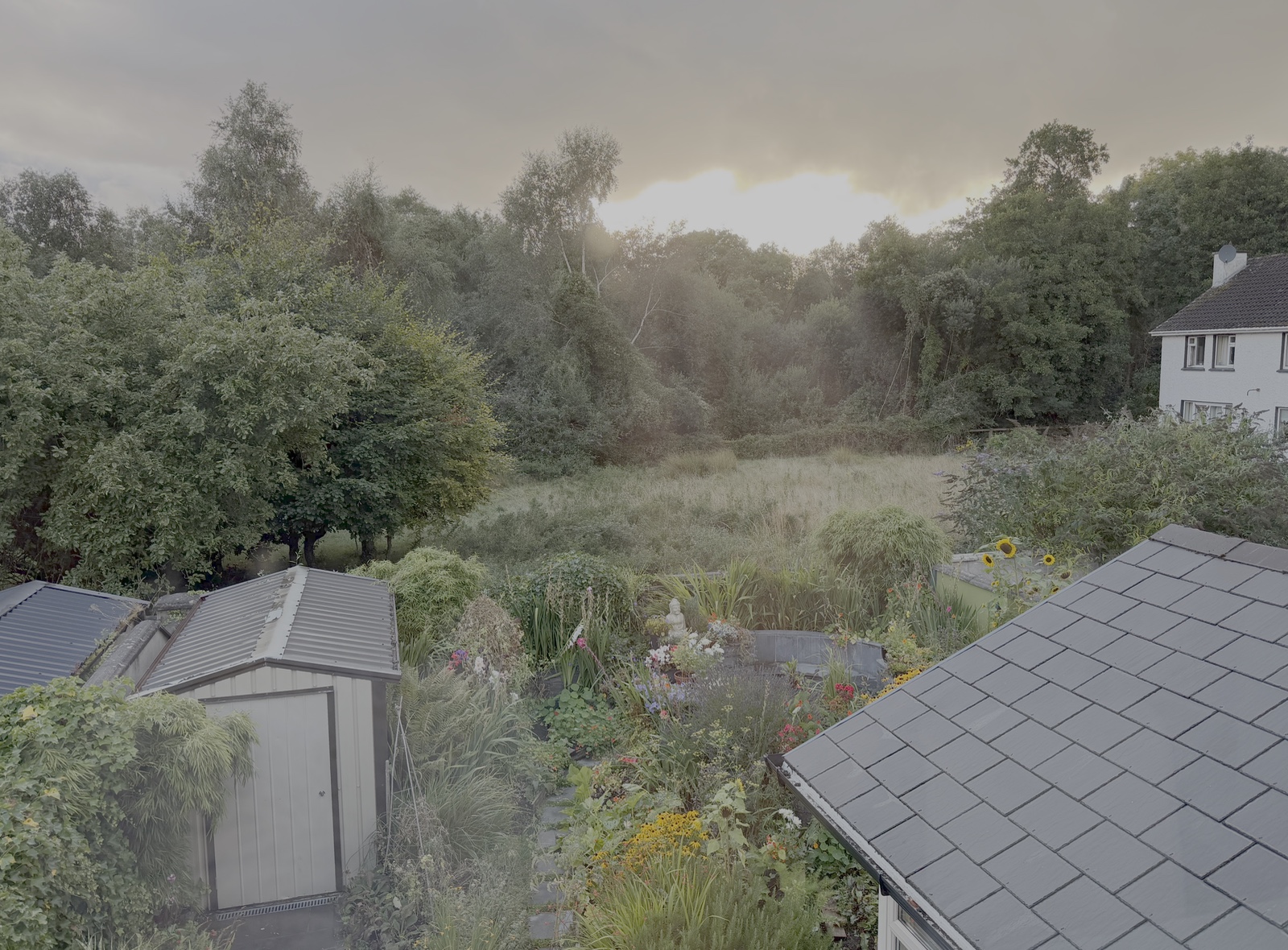
From our upstairs window, we could see that the garden had a path to a little statue and bench at the far end of the garden. I hadn't seen that from inside.
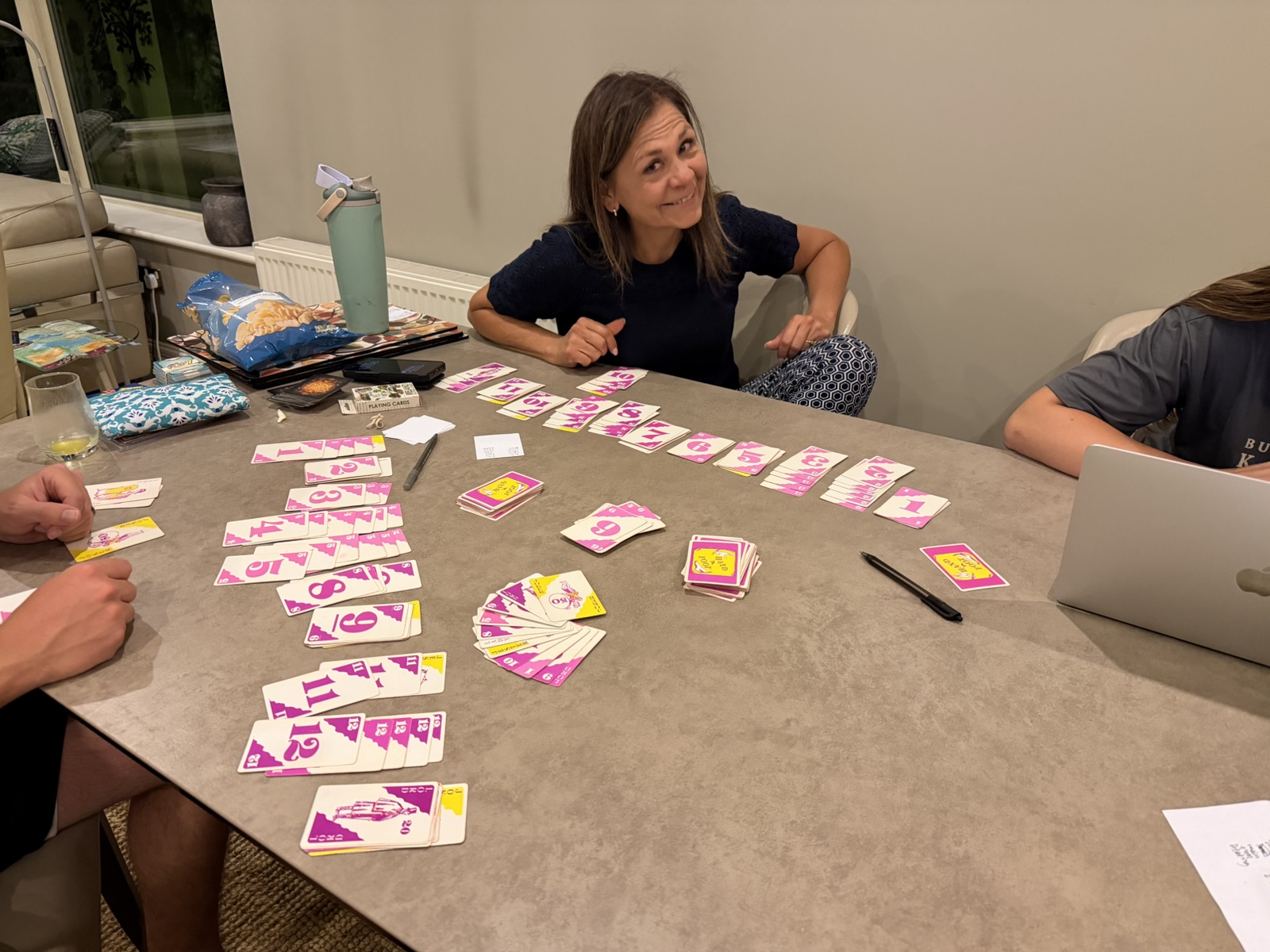
We played a few rounds of "Hand and Foot", and in one game, Jared and Katelyn cleaned our clocks, and in another, we returned the favor.
In the next episode, we visit the iconic Cliffs of Moher and make our way to Northern Ireland.