
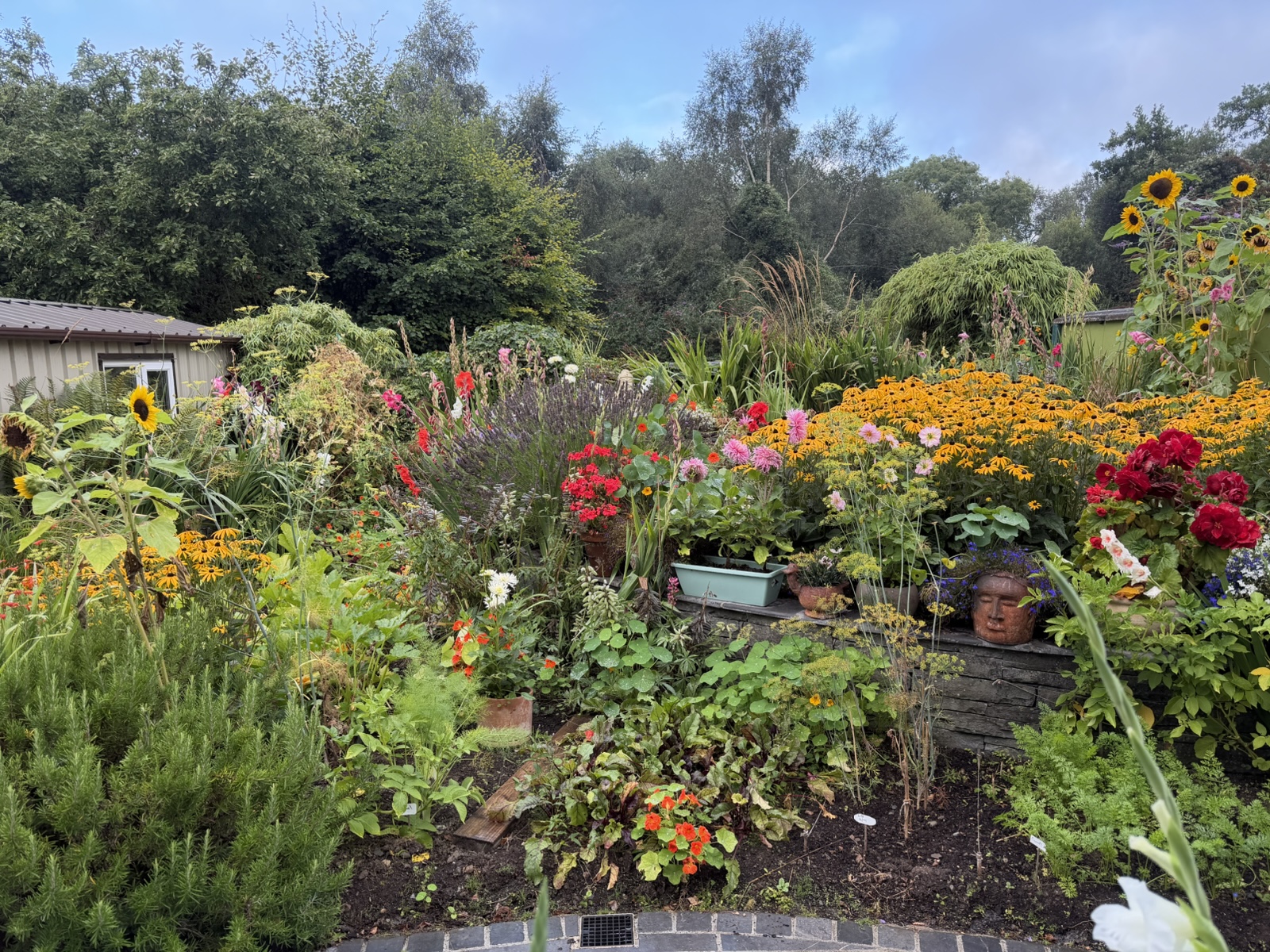
Monday, August 17, 2026, the day began much as the day before, with an amazing view of the garden out the back window, and a bike ride through Killarney National park.
Then we started out towards the famous Ring of Kerry. We decided to go clockwise, which is the opposite of what the tour busses do, so that we could dodge some of the crowds by having opposite timing. (Plus, it gave us more exciting chances to play chicken with a tour bus on tiny Irish roads).
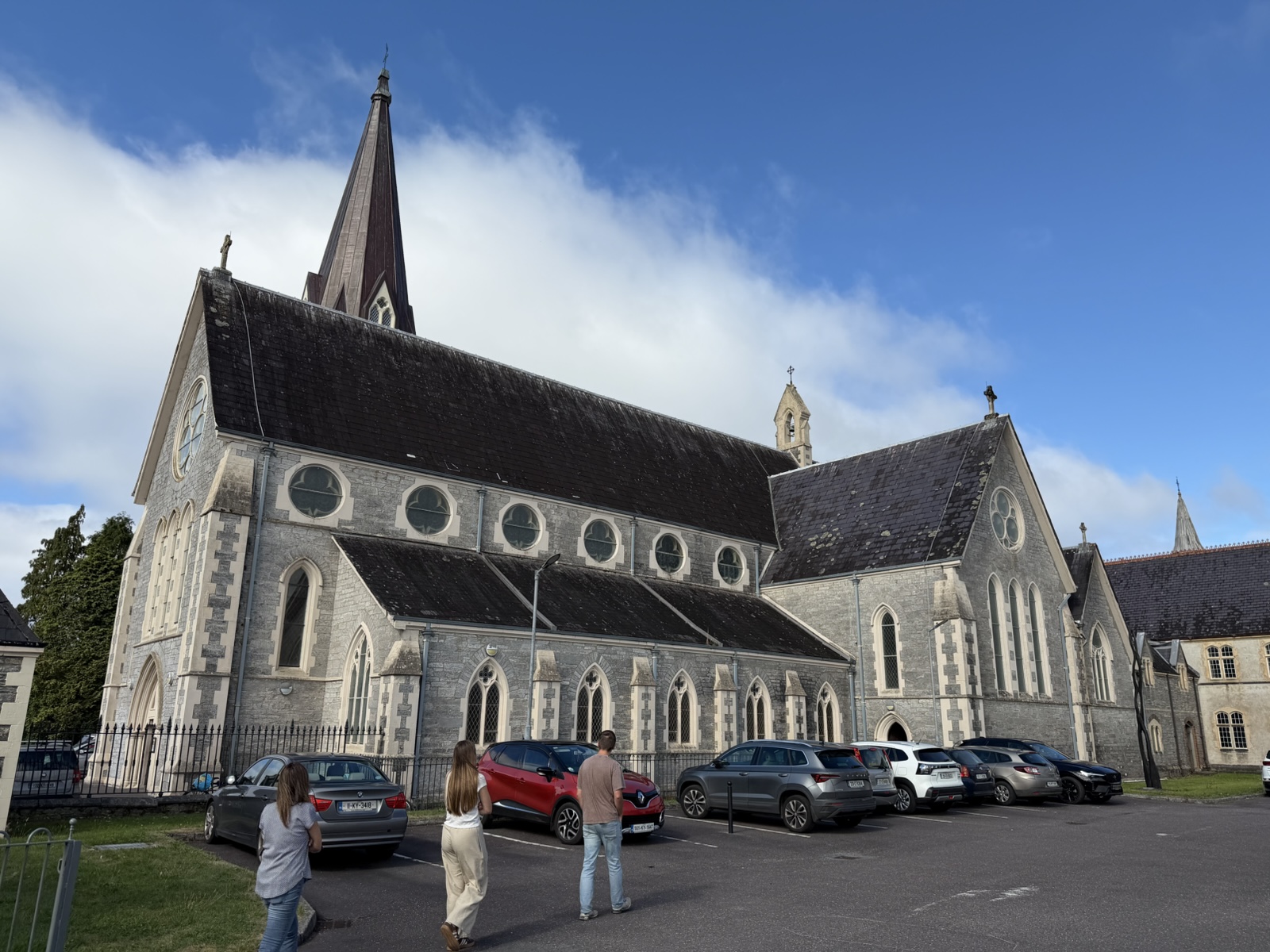
Our first stop was in the town of Kenmare (pronounced "ken-MEHR", which I was pronouncing wrong until I looked it up just now). We stopped briefly at the Holy Cross Church, which was built in 1864.
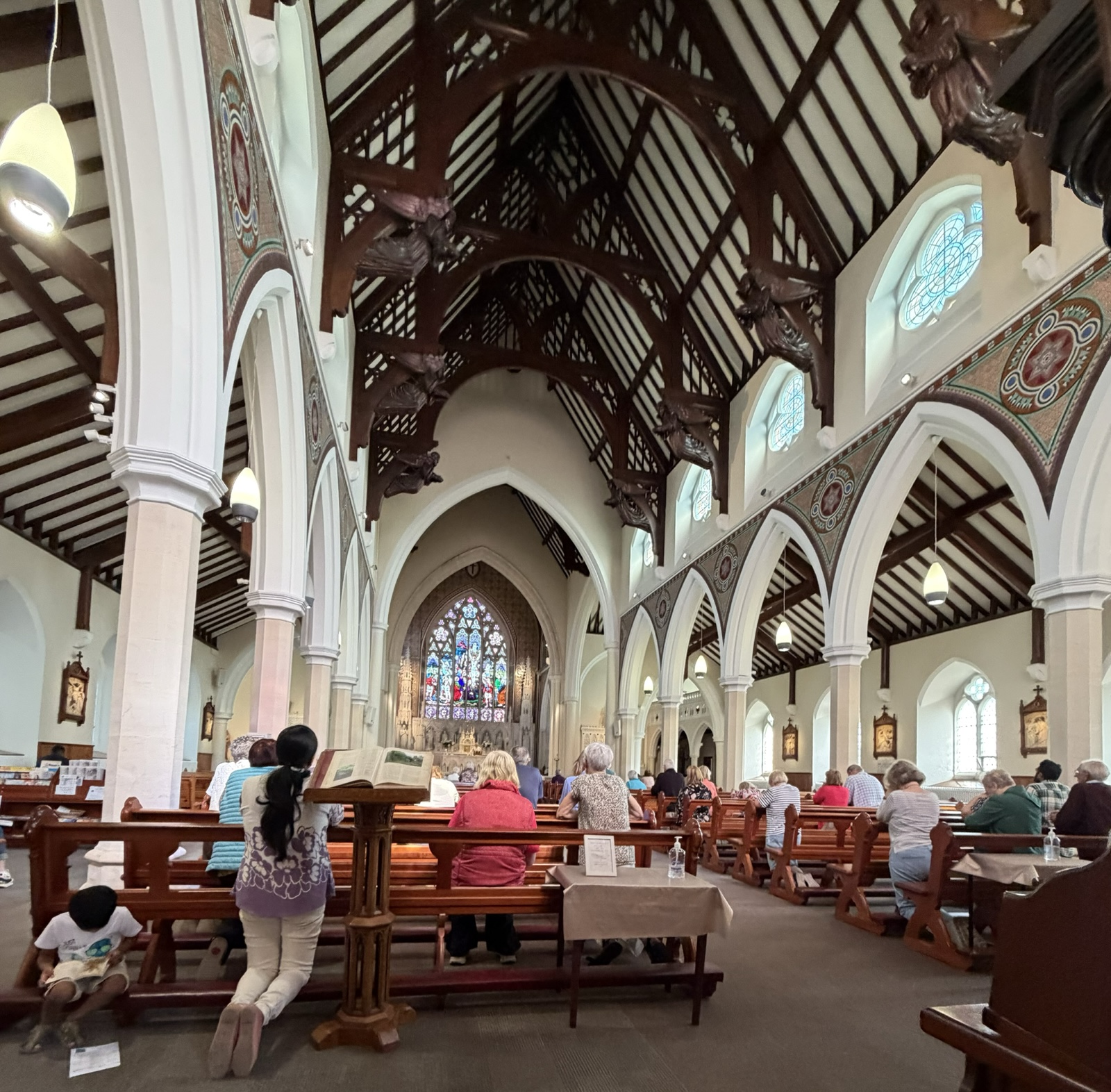
We took a little peek inside and saw that a service was going on.
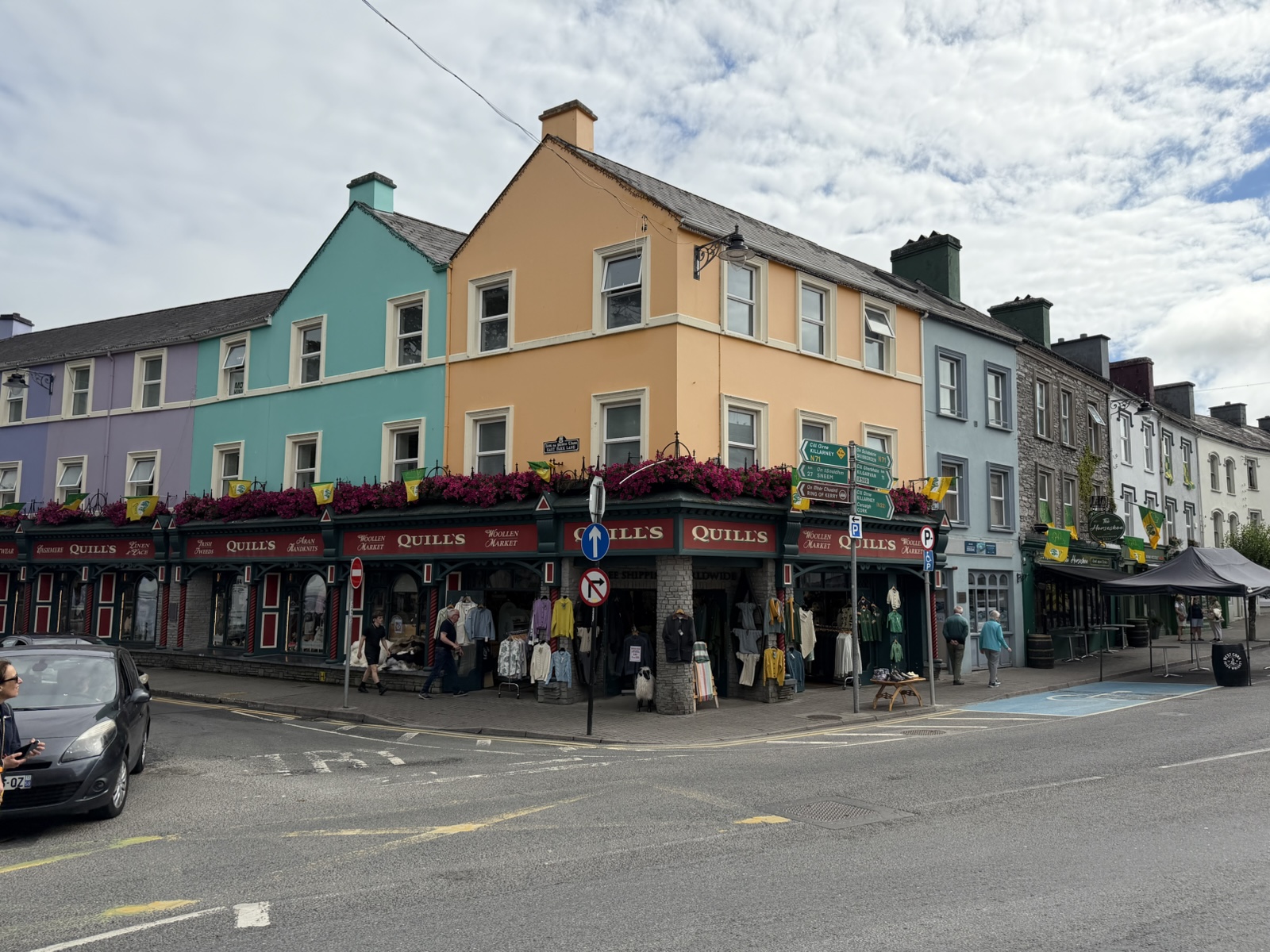
The houses in Kenmare were colorful.
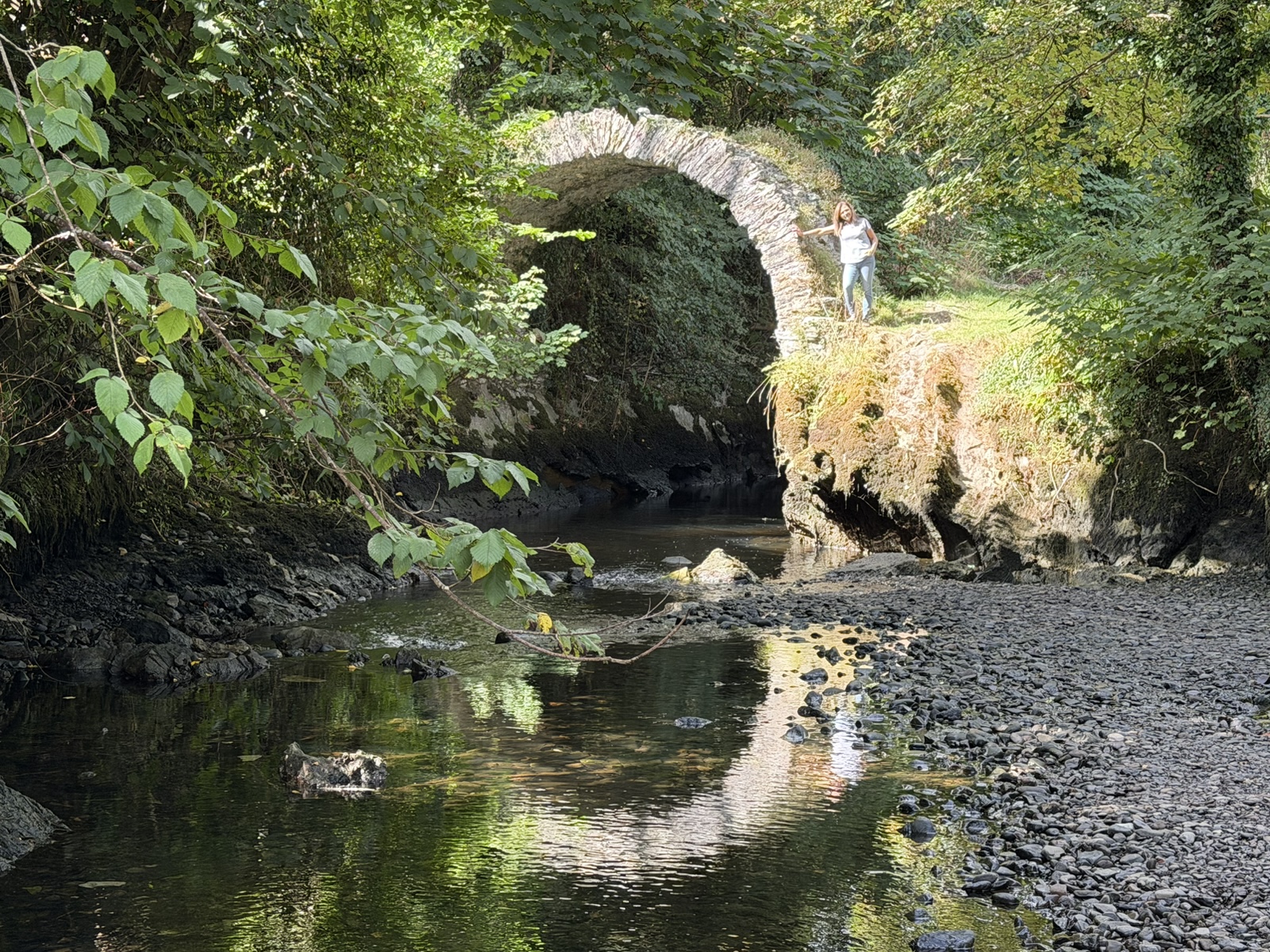
We walked over to Cromwell's Bridge, which is no longer in use, but still spans Finnihy River. It was built around 1690, and used to allow packhorses to walk over it before there were more modern bridges.
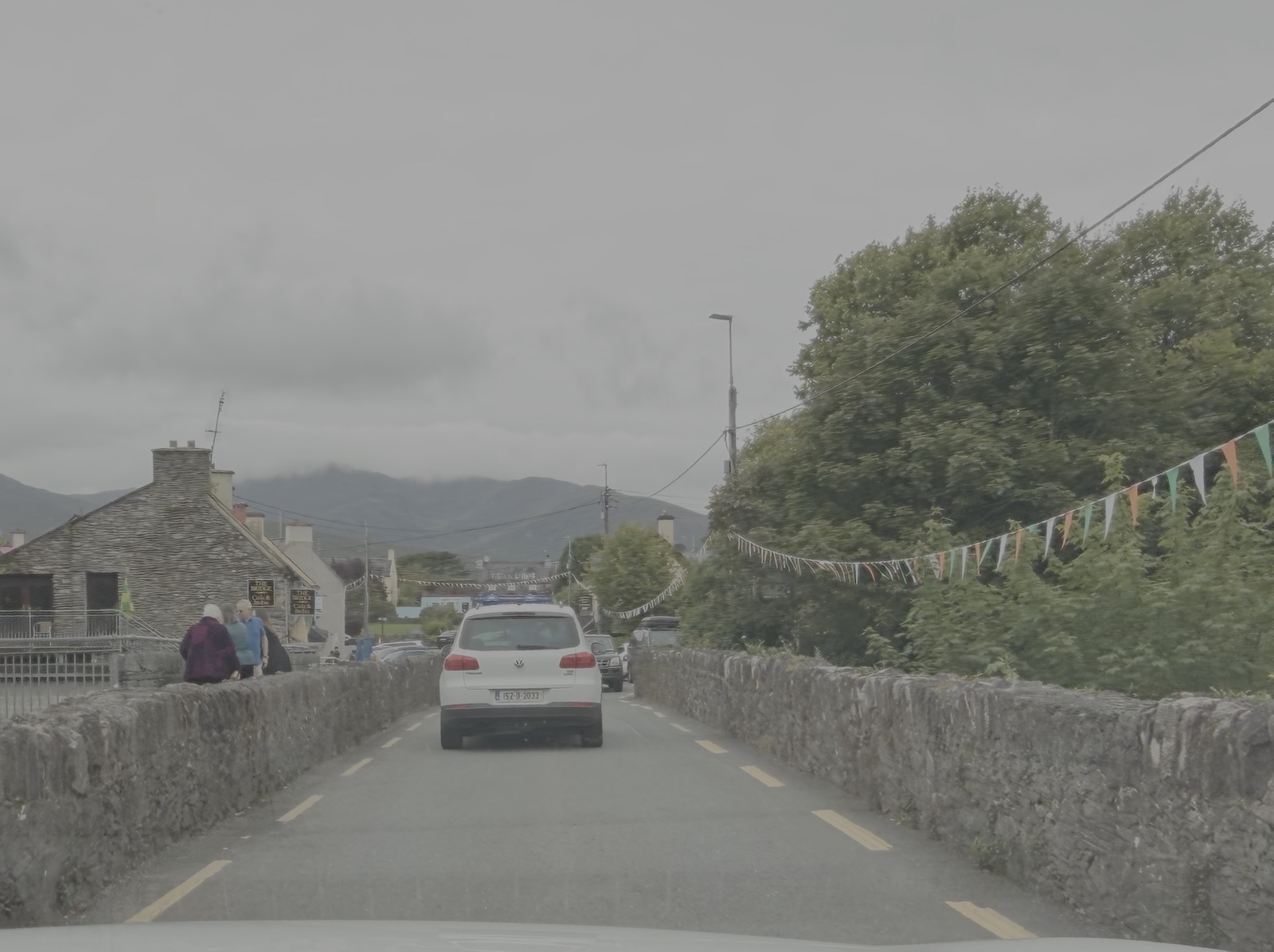
The roads in Ireland continued to be so tiny! When crossing this one-lane bridge, you have to see if anyone is coming the other way before you cross, or else one of you is going to need to back up.
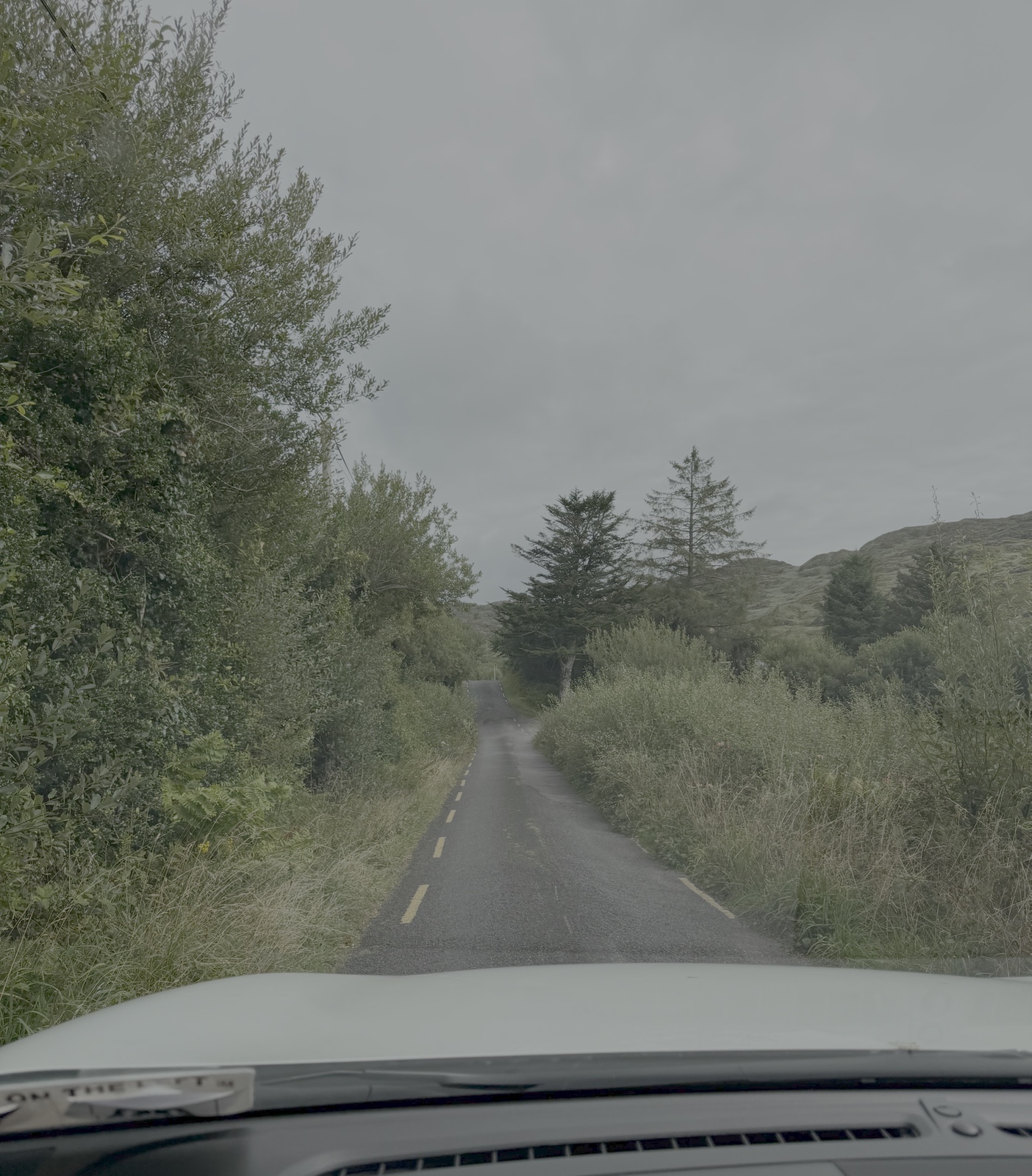
And here's another typical country road. You can go pretty fast on these, but you have to always be prepared for someone to come around the corner going just as fast the other way.
Here is a 20-second video showing what it's like to drive on a couple of the country roads that day.
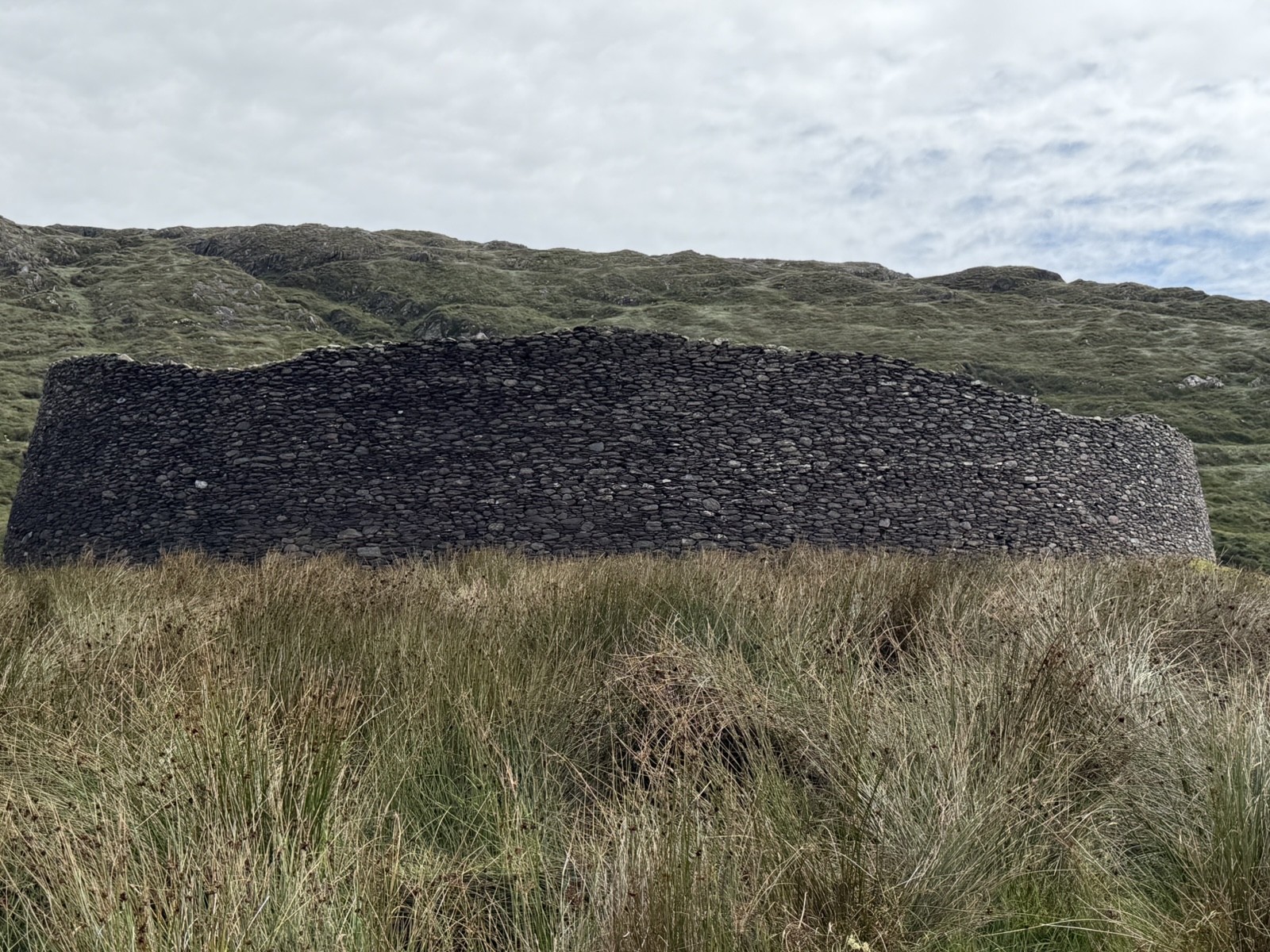
Our next stop just off the Ring of Kerry was Staigue Stone Fort, which is an early medieval "ringfort" (cathair).
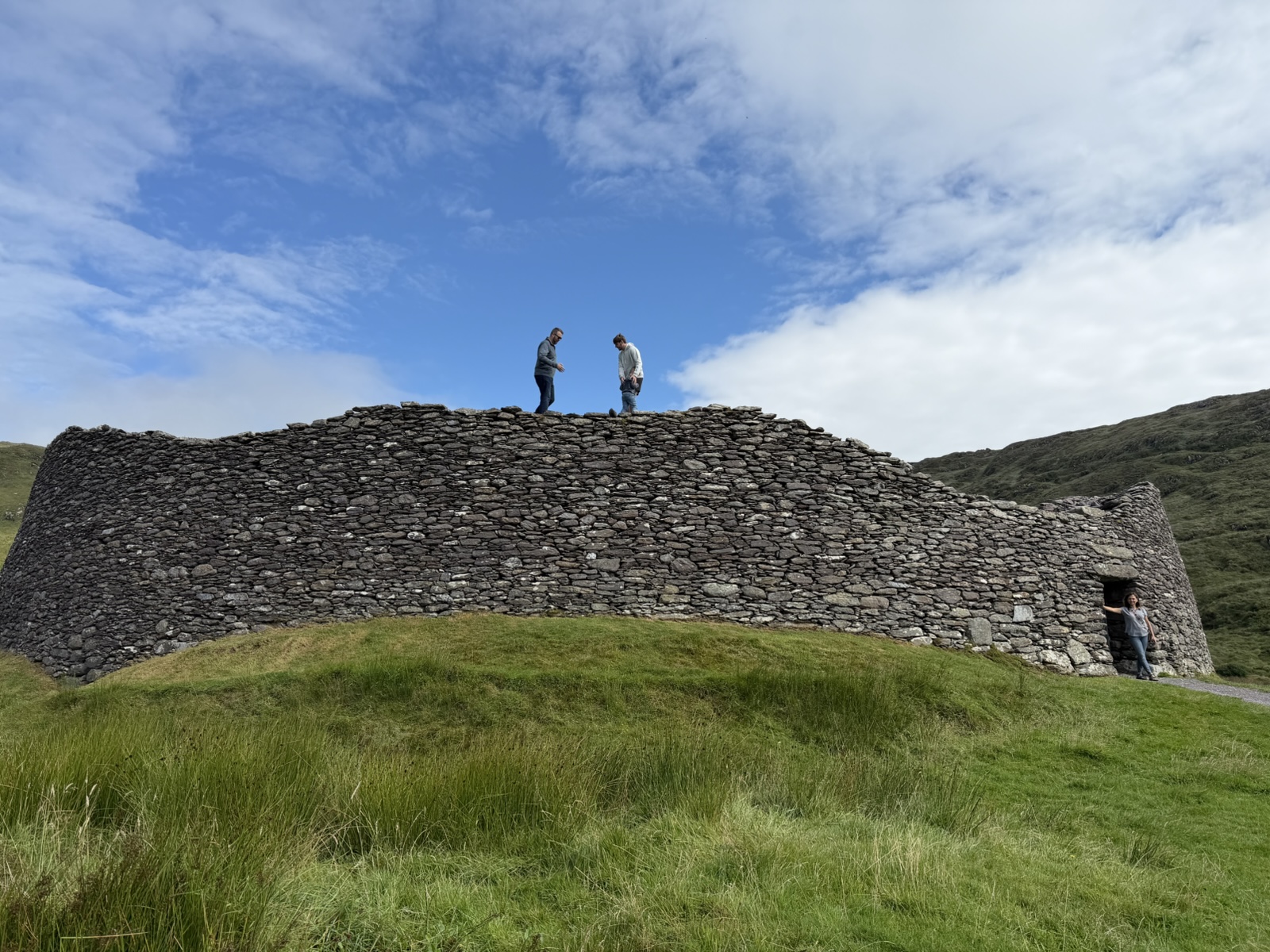
It was built entirely without mortar, just by stacking stones, so we had to watch for ones that wobbled here and there. It is 18 feet (5.5m) high in places and 13 feet (4m) thick at the base, enclosing an area 90 feet (27m) in diameter. There are lots of stairs going up and down on the interior, but none on the outside, providing some measure of defense against animals and attackers.
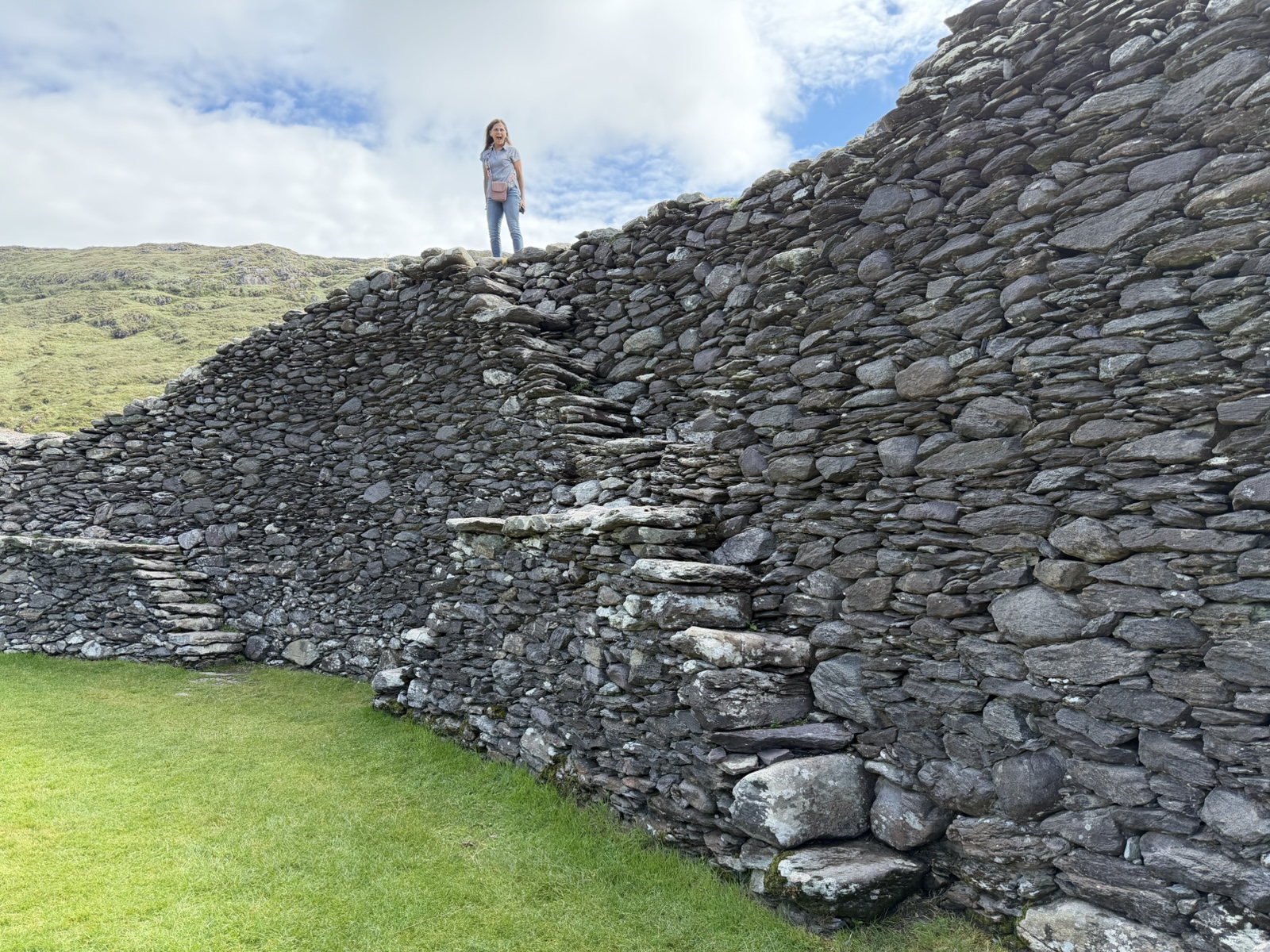
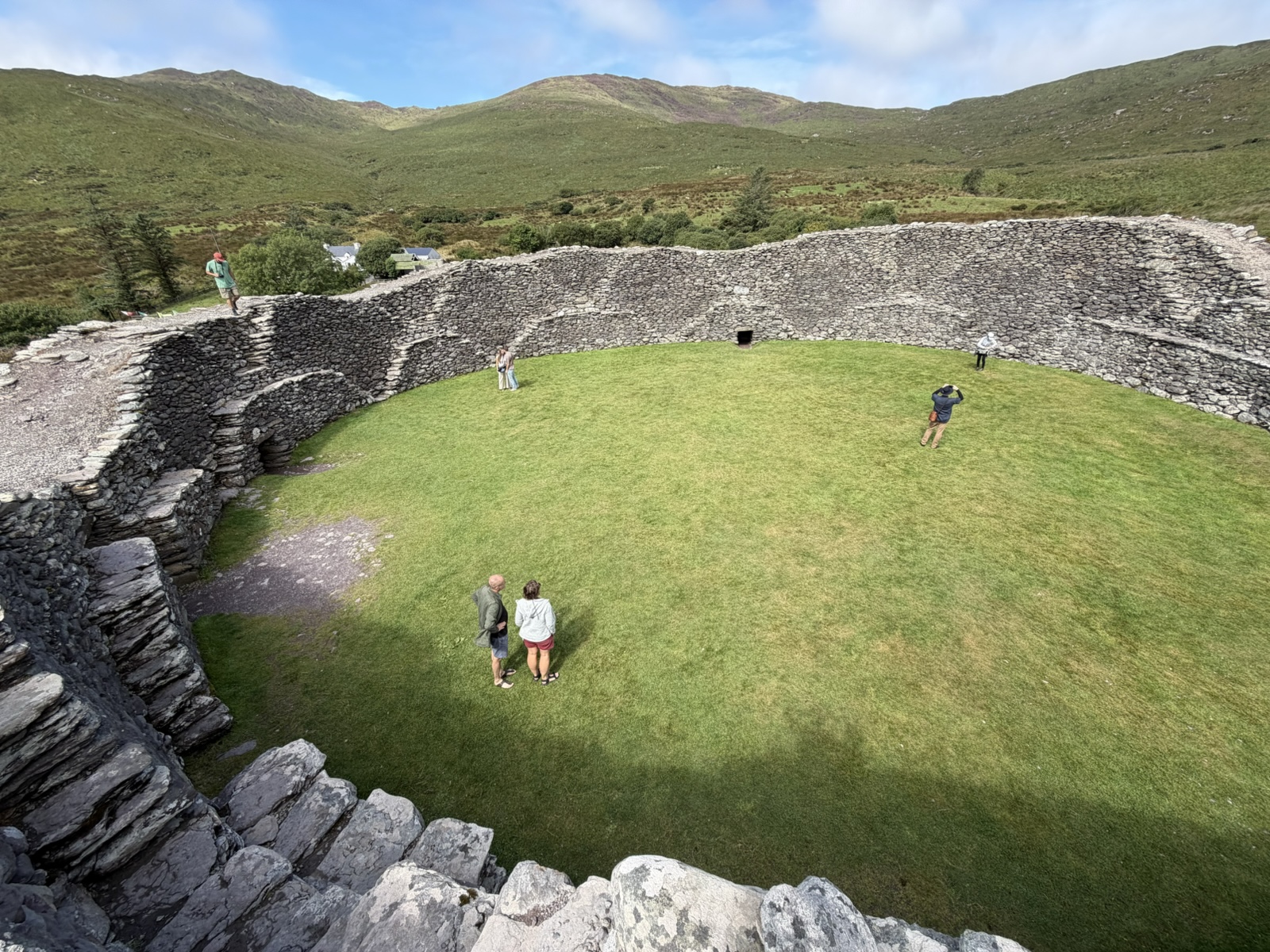
There were a couple of chambers built into the wall that may have been for sleeping, storage or refuge during an attack. The roofs are "corbelled", meaning that the stones are stacked horizontally closer and closer together until they meet. This is in contrast to Roman arches, that spread the weight outward more powerfully, allowing for much larger spaces in things like cathedrals and bridges.
In this case, they used one big stone across the top to do the trick.
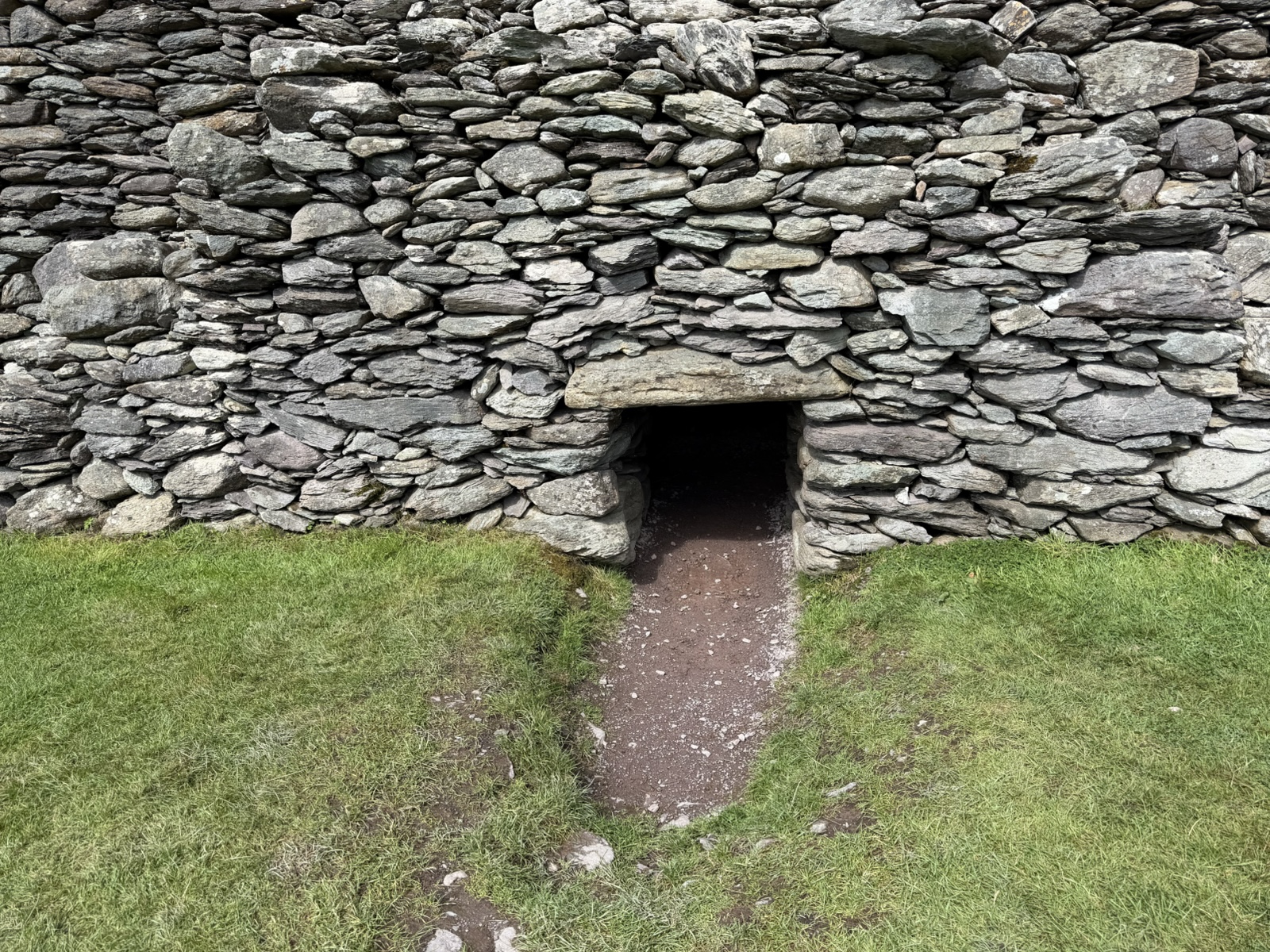
It was a pretty cool place, and it is wild to think that it has been here since 300 to 500 A.D.—over 1500 years!
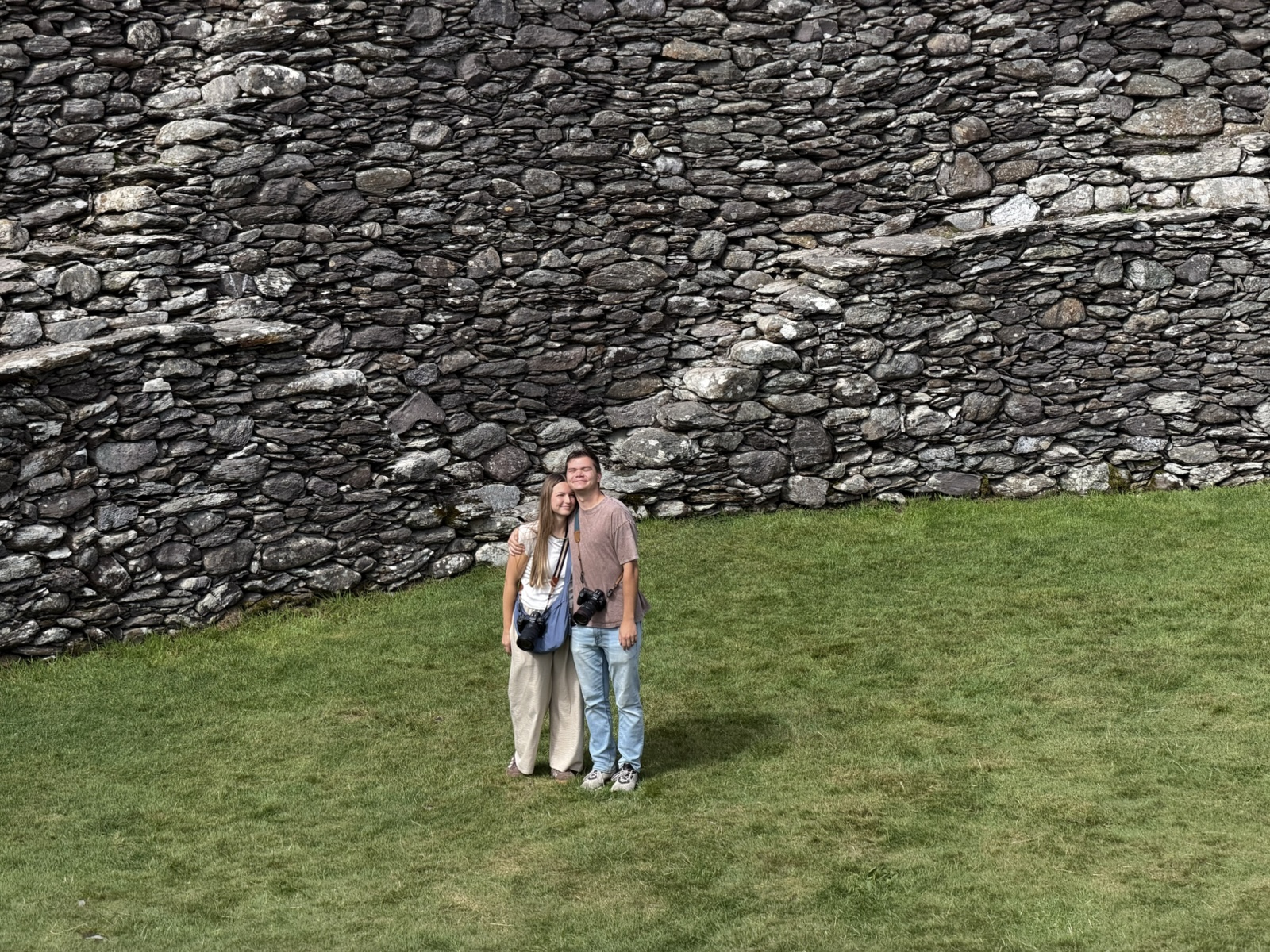
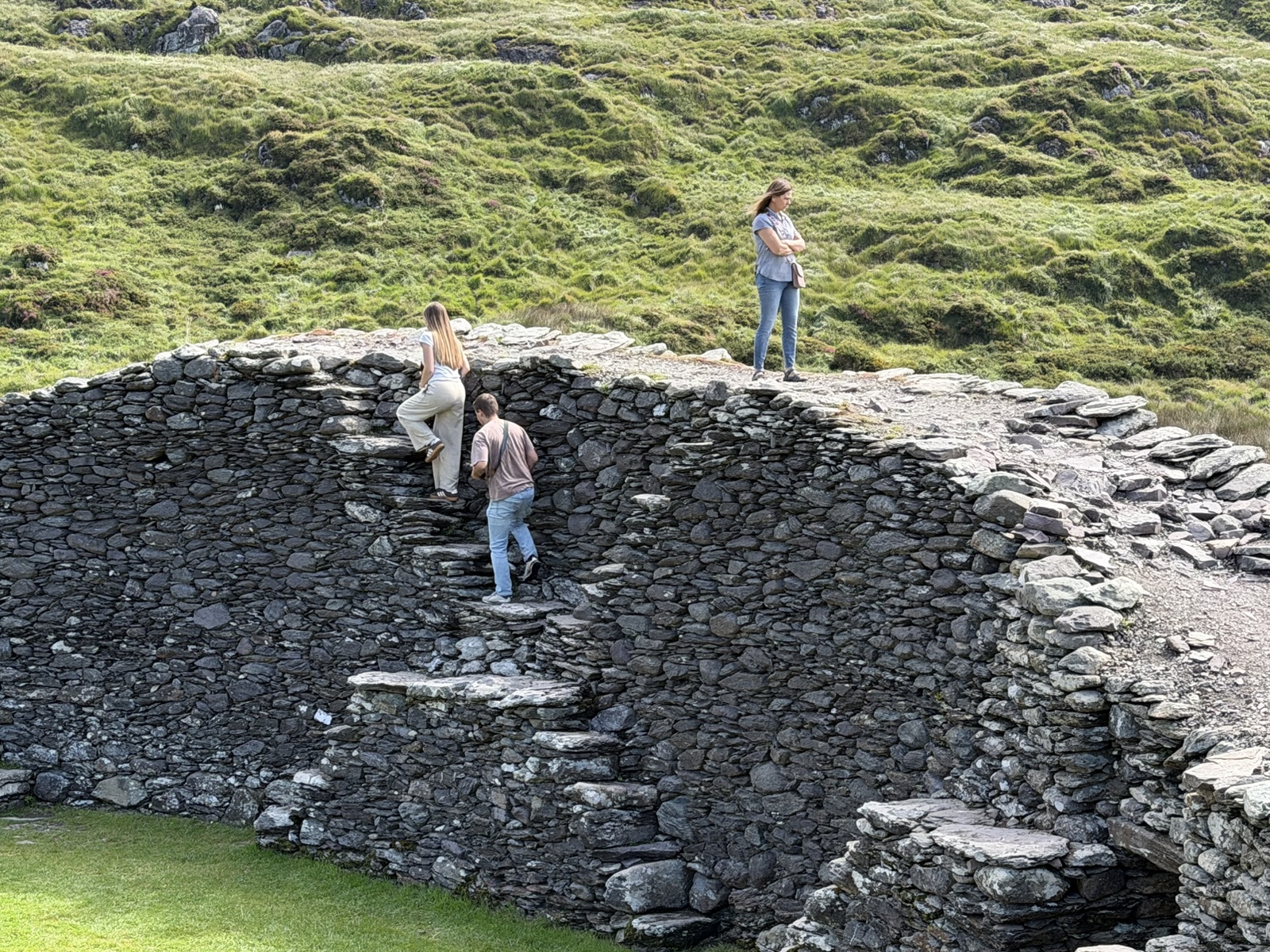
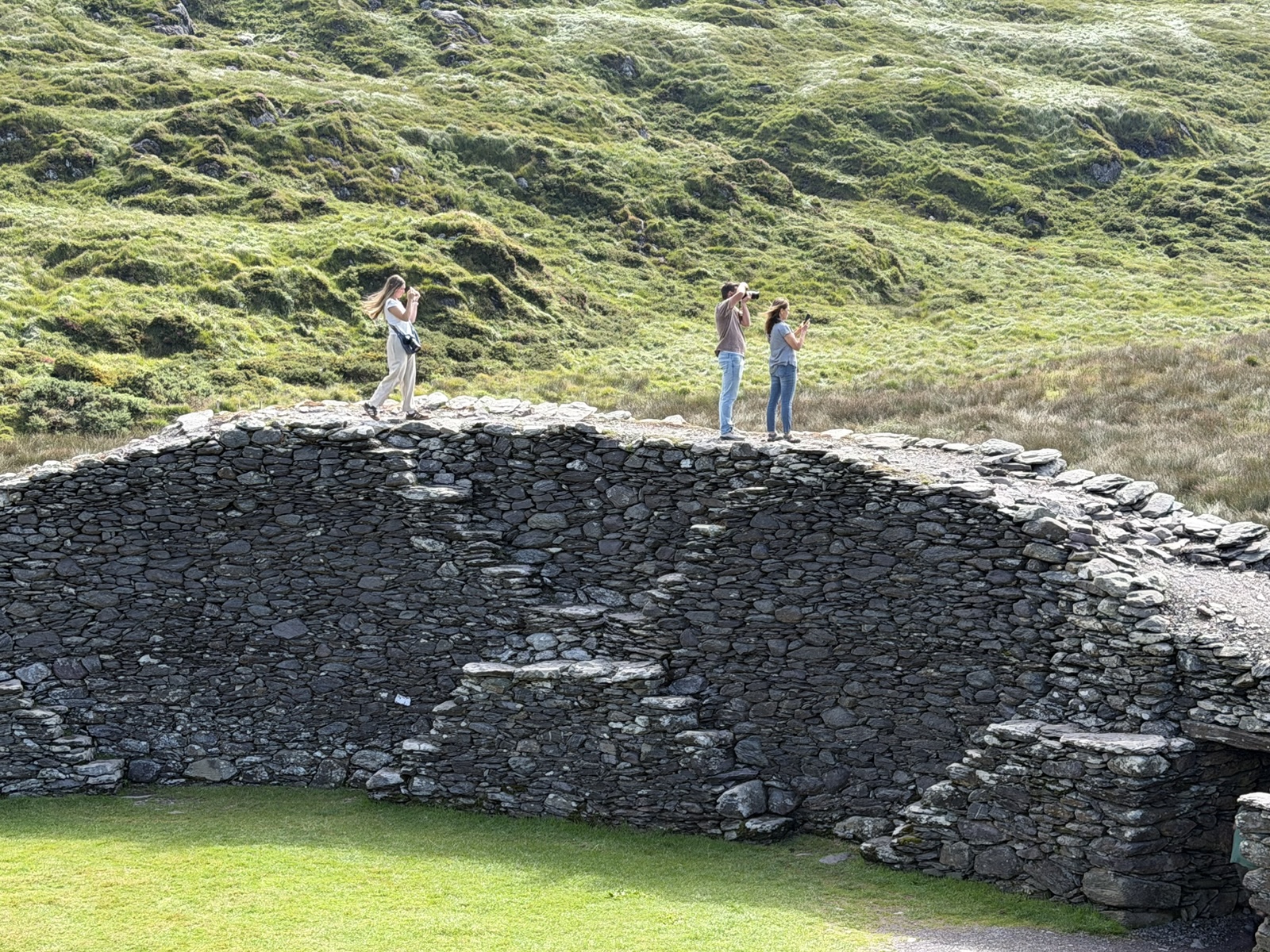
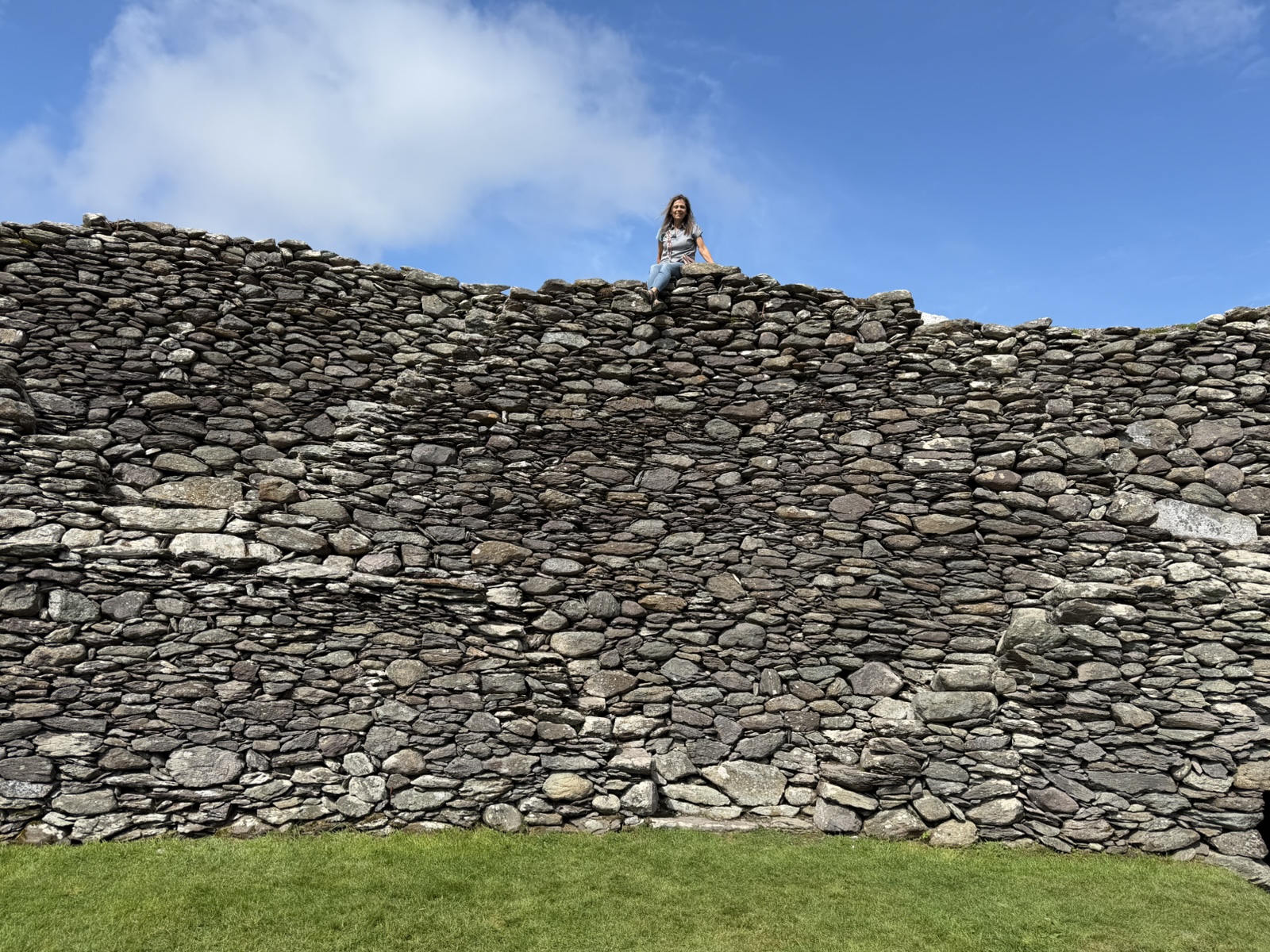
Here is Linette dangling her feet off the wall. You can barely see the stairs going up in both directions from the bottom and then turning and going up to her.
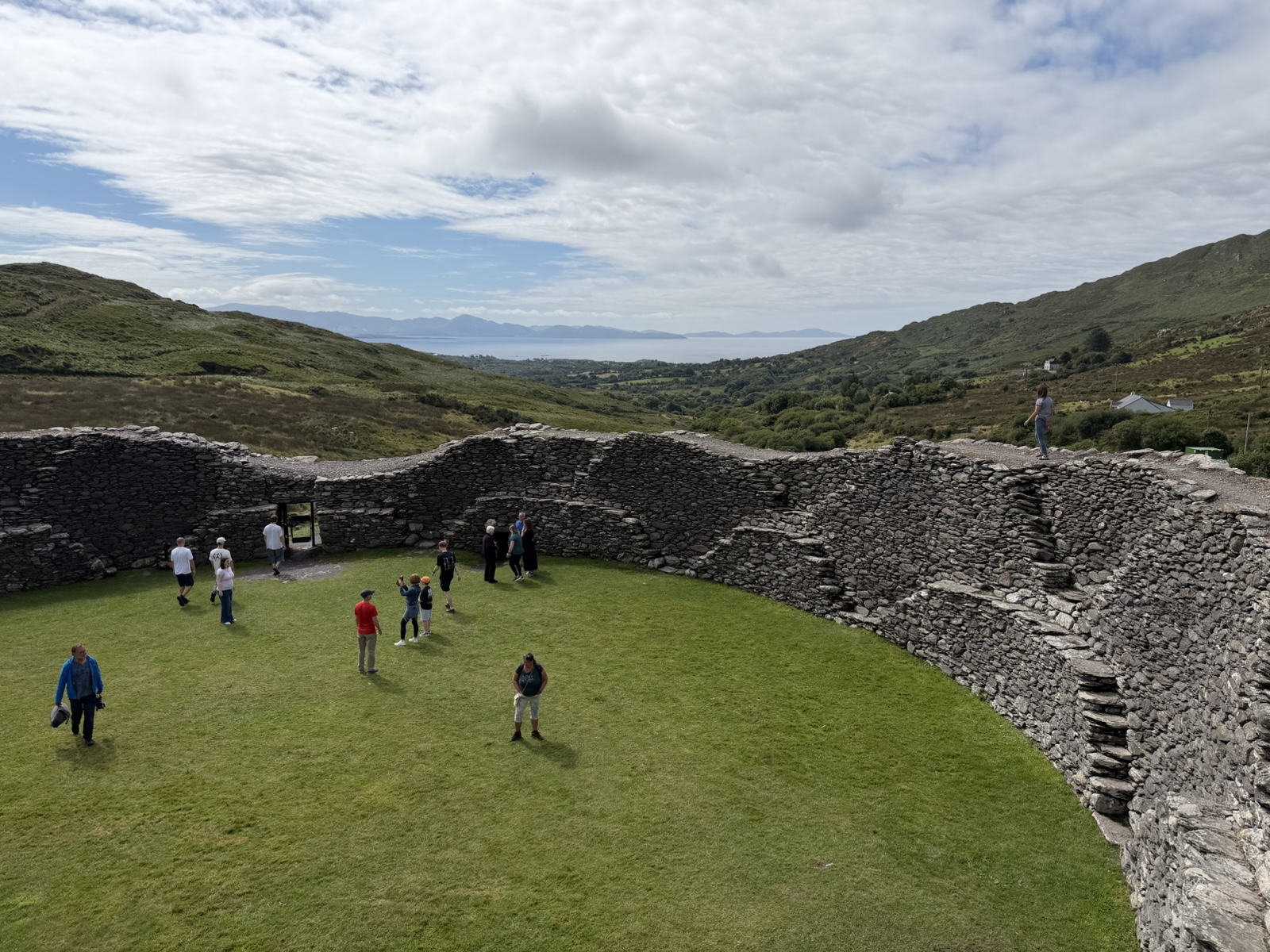
It is hard to capture the whole thing in a picture, so here is a 1-minute video showing a panorama of the stone fort, plus, as a bonus, you can see how sheep take car of itchy bums.
That was a pretty cool place, and I'm glad we braved the little roads to visit it.
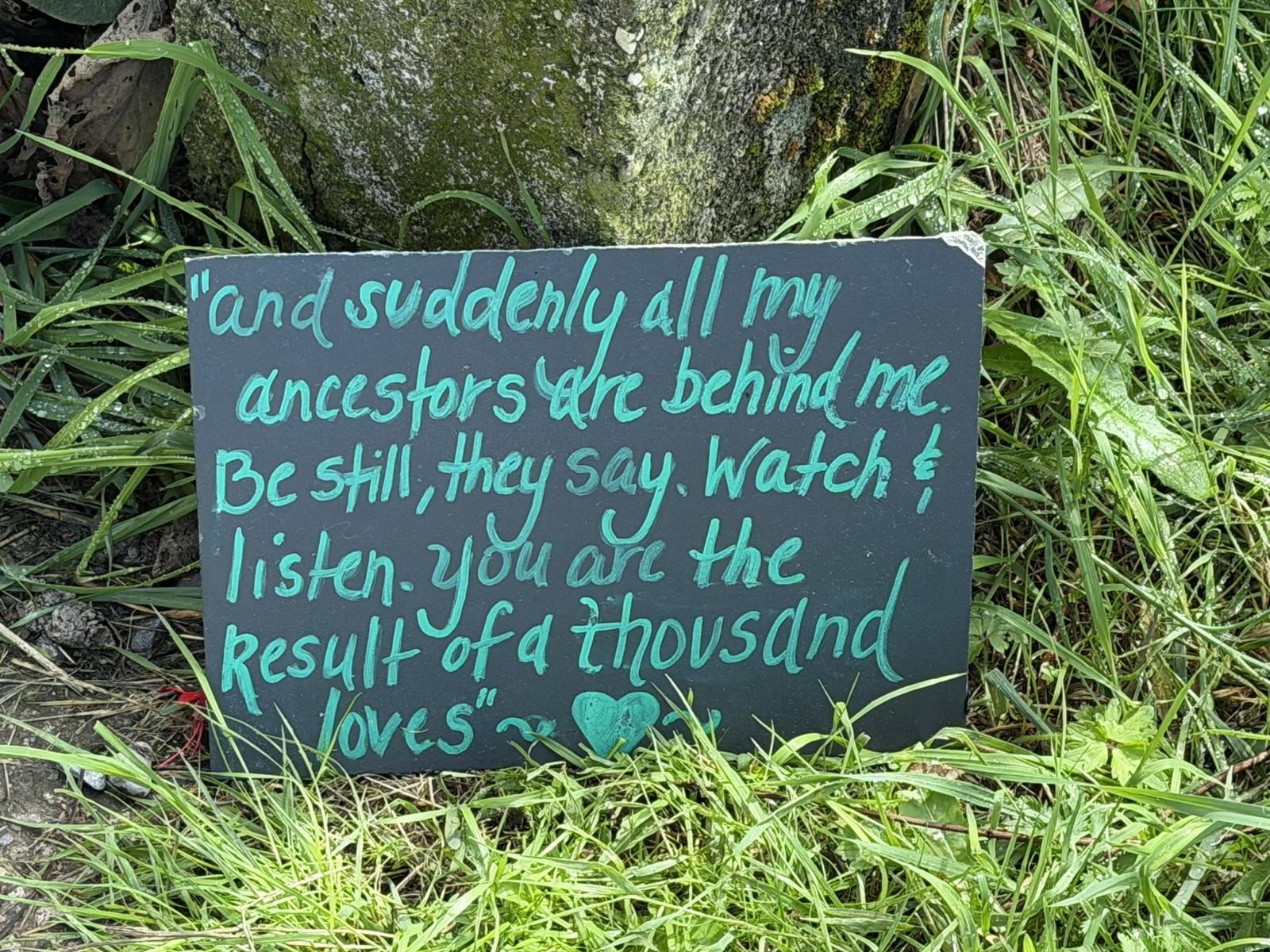
There was a funny quote outside the fort that hinted at many generations of ancestors that brought us all to this point.
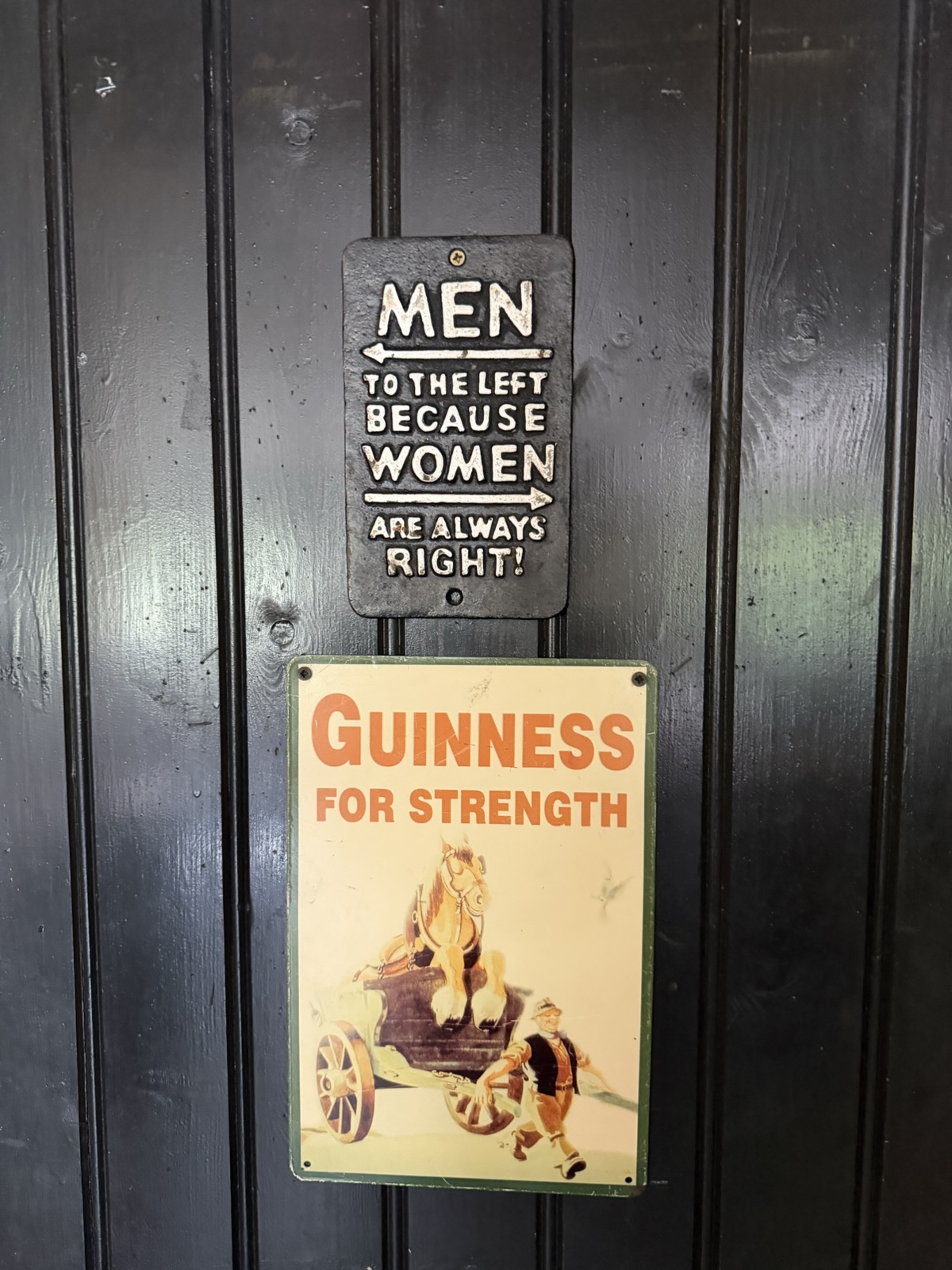
We stopped for lunch at a pub called The Blind Piper in Caherdaniel, and the food was surprisingly good. The bathroom had a funny sign that reminded me of my brother Bob's similar joke.
Next we stopped at a famous house at Derrynane, but didn't pay to go inside. Instead, we hiked through the nearby woods to another stone ringfort.
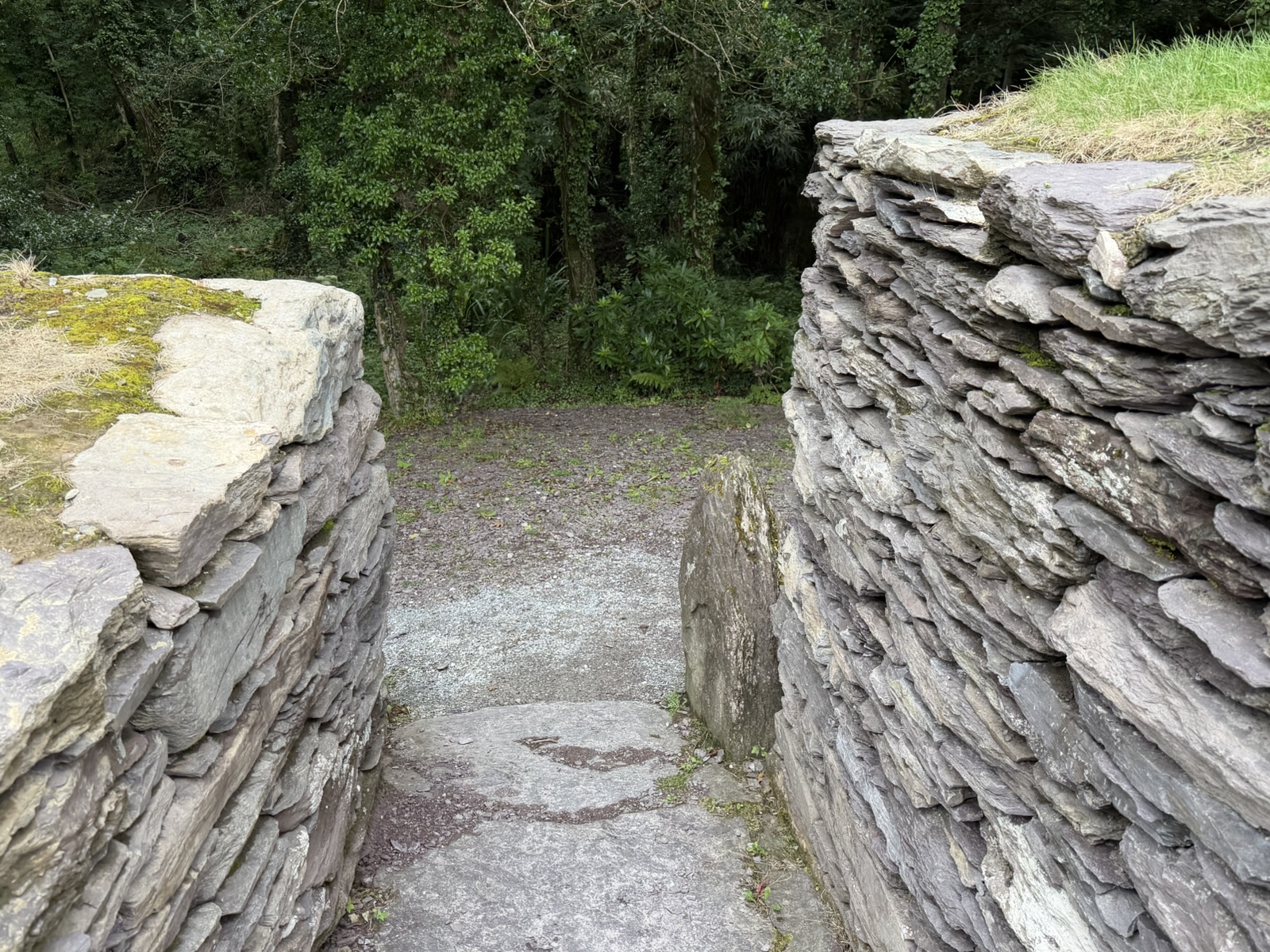
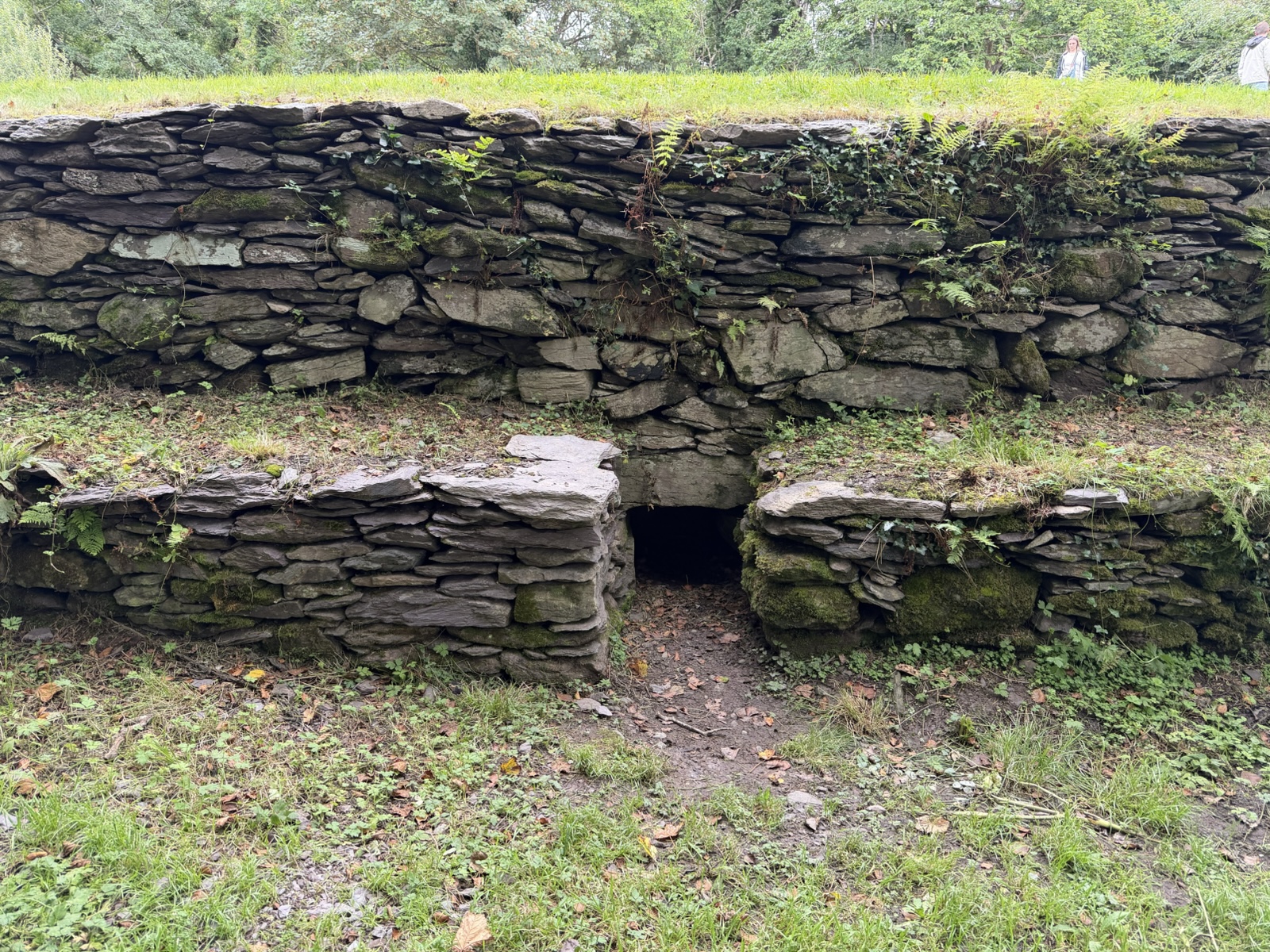
This one wasn't as pristine, but was charming in its own way in how the forest has grown over it. It was built between 600 and 900 A.D., and is called "Caherdaniel Fort" (Cathair=stone ring fort; Daniel=a guy named Daniel, or Donal or Dónaill in Irish).
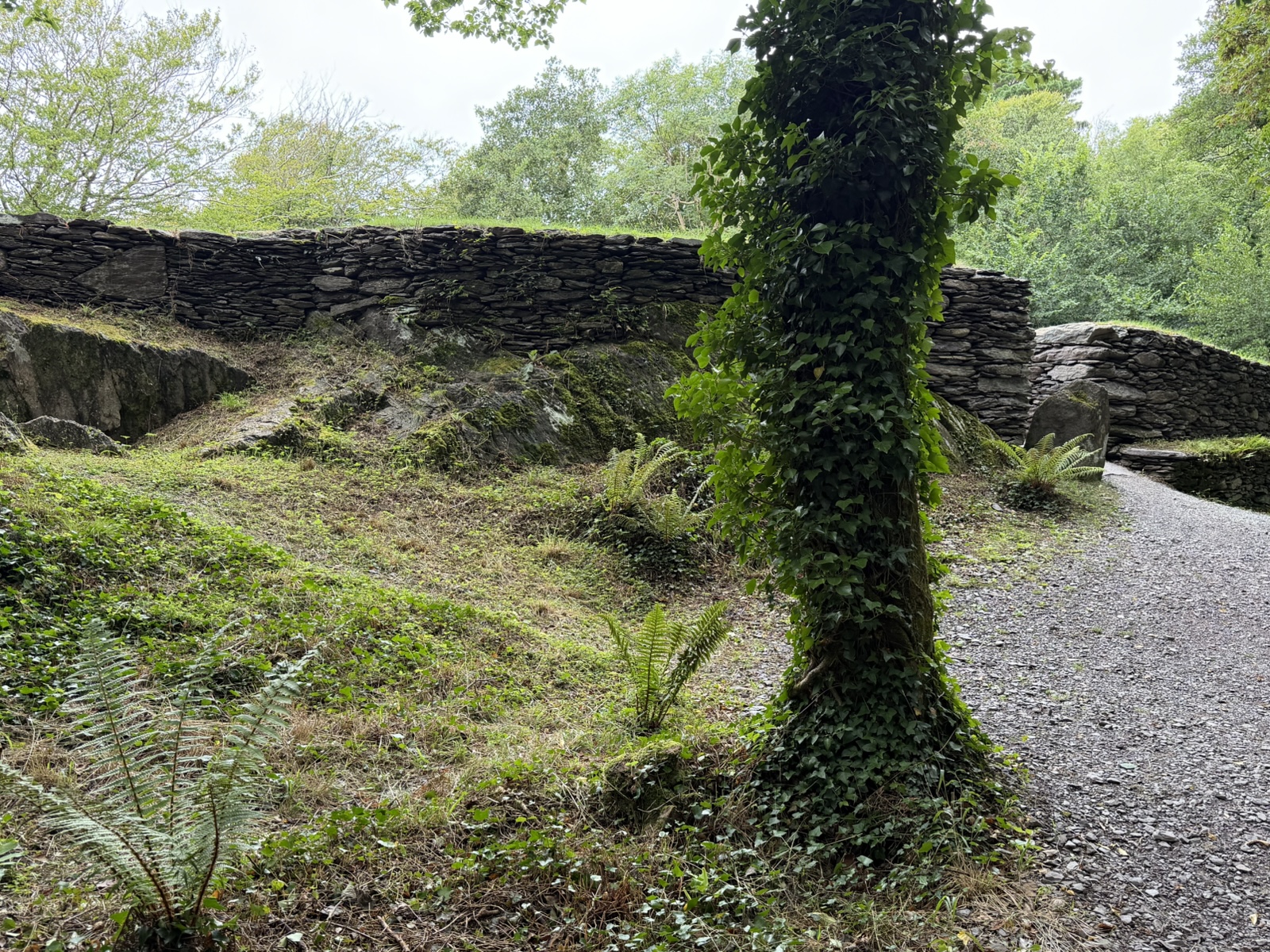
It was probably much higher a thousand years ago, but when people are building stuff and there's an abandoned structure nearby, they often grab handy stones and repurpose them in building other structures. The weather can also take a toll on the structure over the course of over a thousand years.
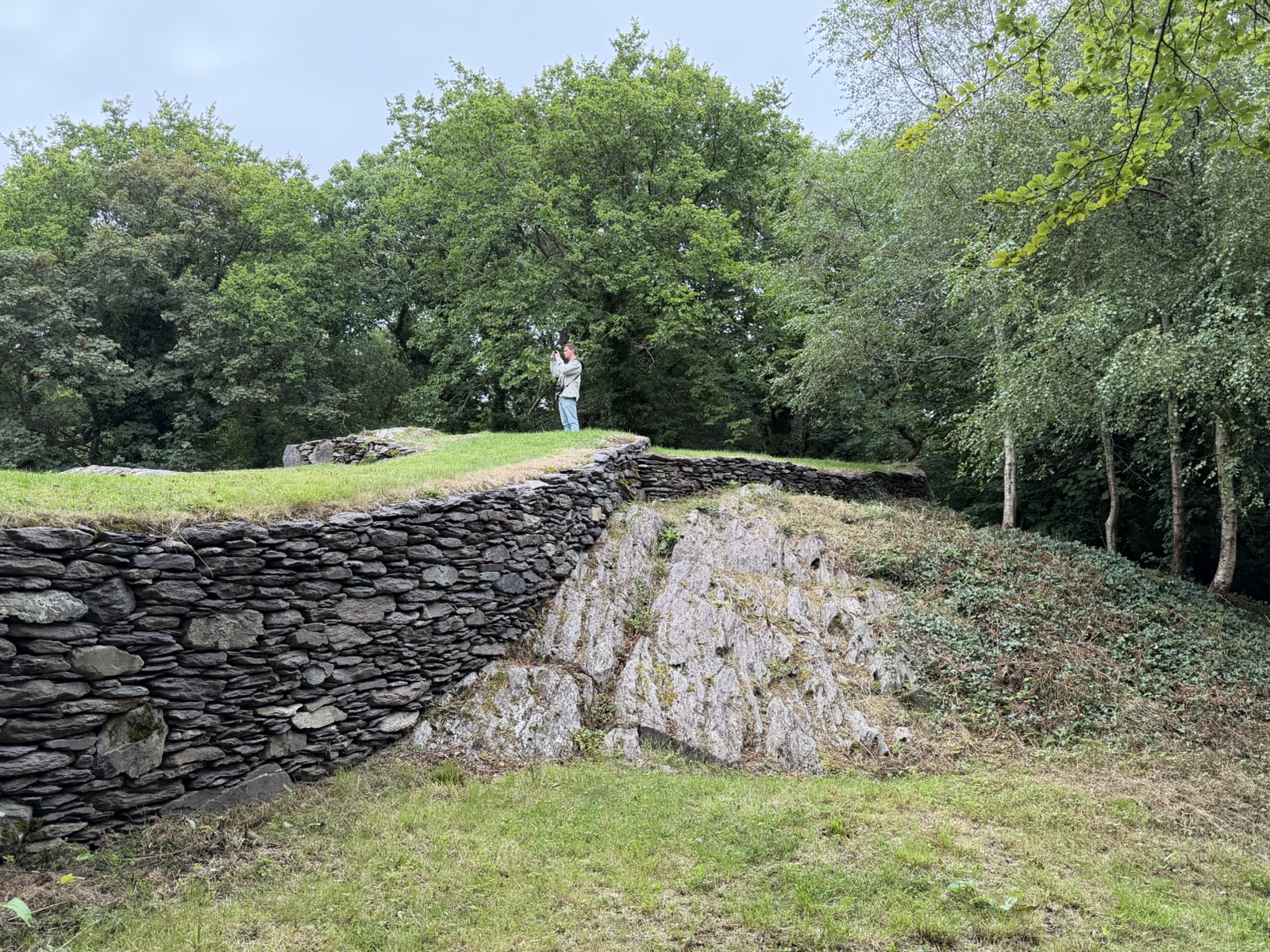
There were some 60,000 ringforts in the early middle ages (500-900 A.D.), and they weren't really meant to be an impenetrable castle. Instead, they were mostly like a secure, gated homestead that kept people from being able to drive off their livestock at night. They were often within sight of other ringforts, so that if anyone attacked, they could warn each other in time to prepare, or help each other out.
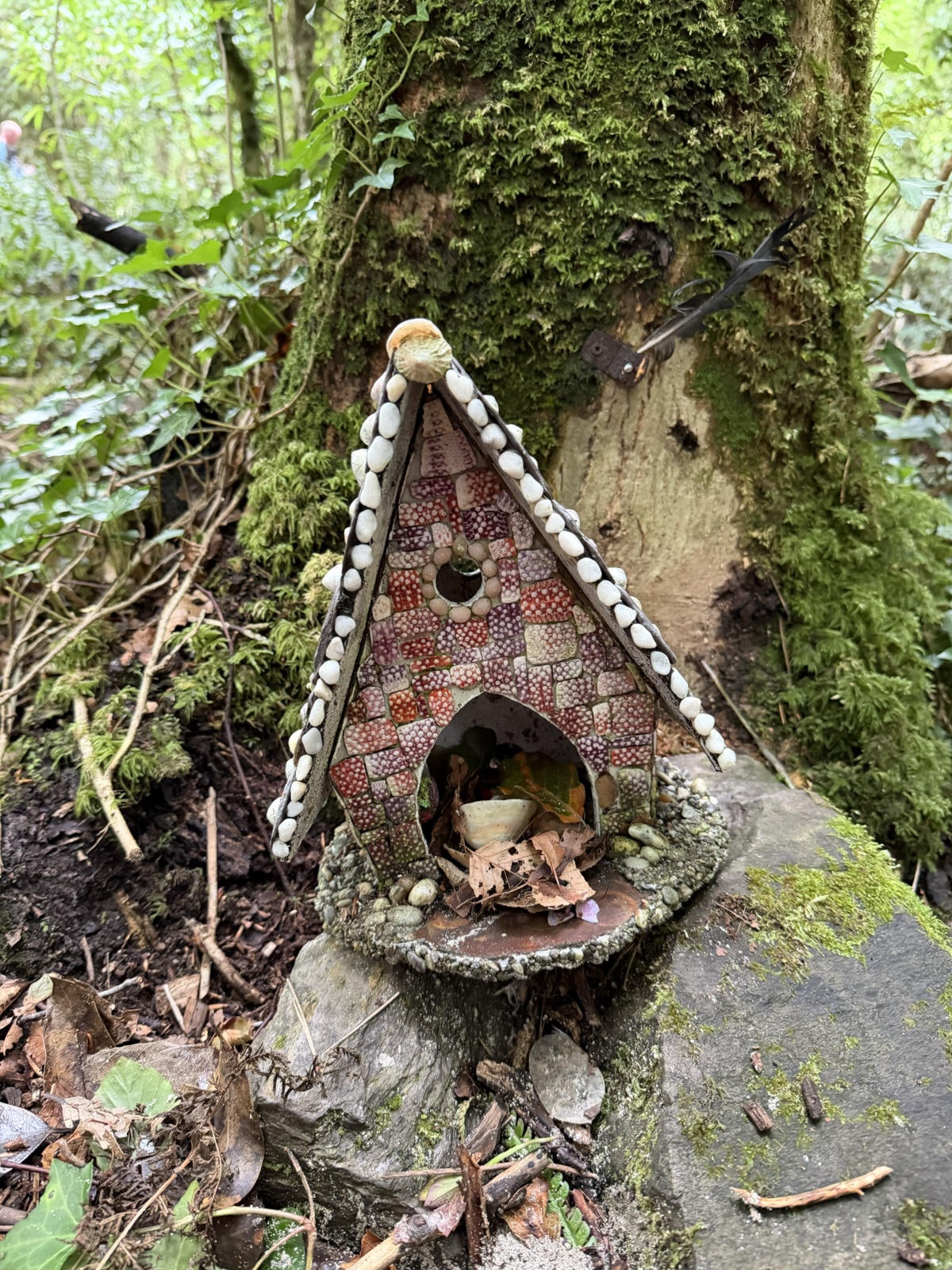
There were also cute little fairy things on the Fairy Trail.
We walked through the woods and along the path back to the car.
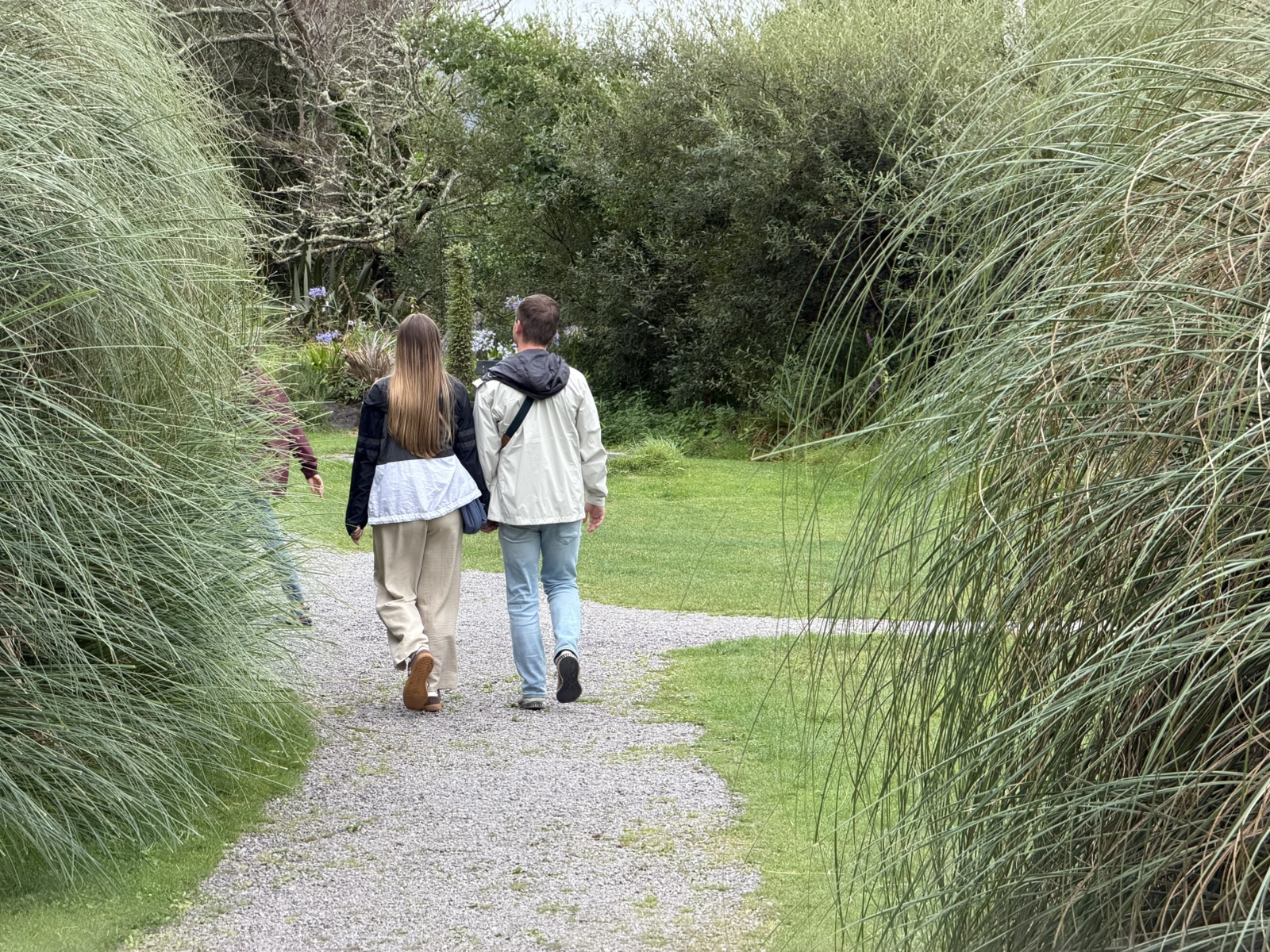
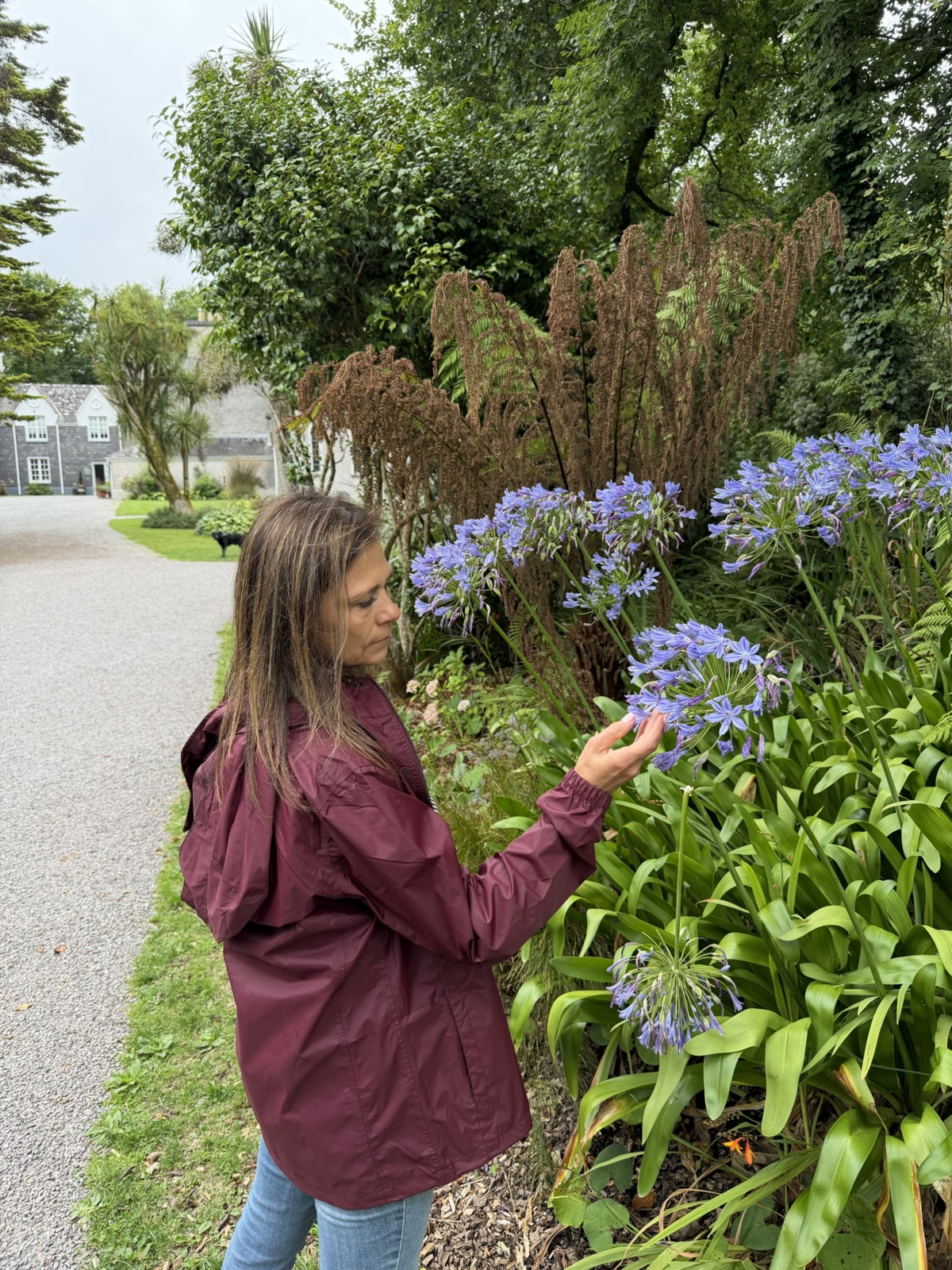
We drove to a nearby beach to see Derrynane Abbey, which you can only walk to at low tide. The place I parked didn't seem like a valid parking spot, and I was very tired, so I volunteered to stay with the car and take a nap while the others went to see the abbey.
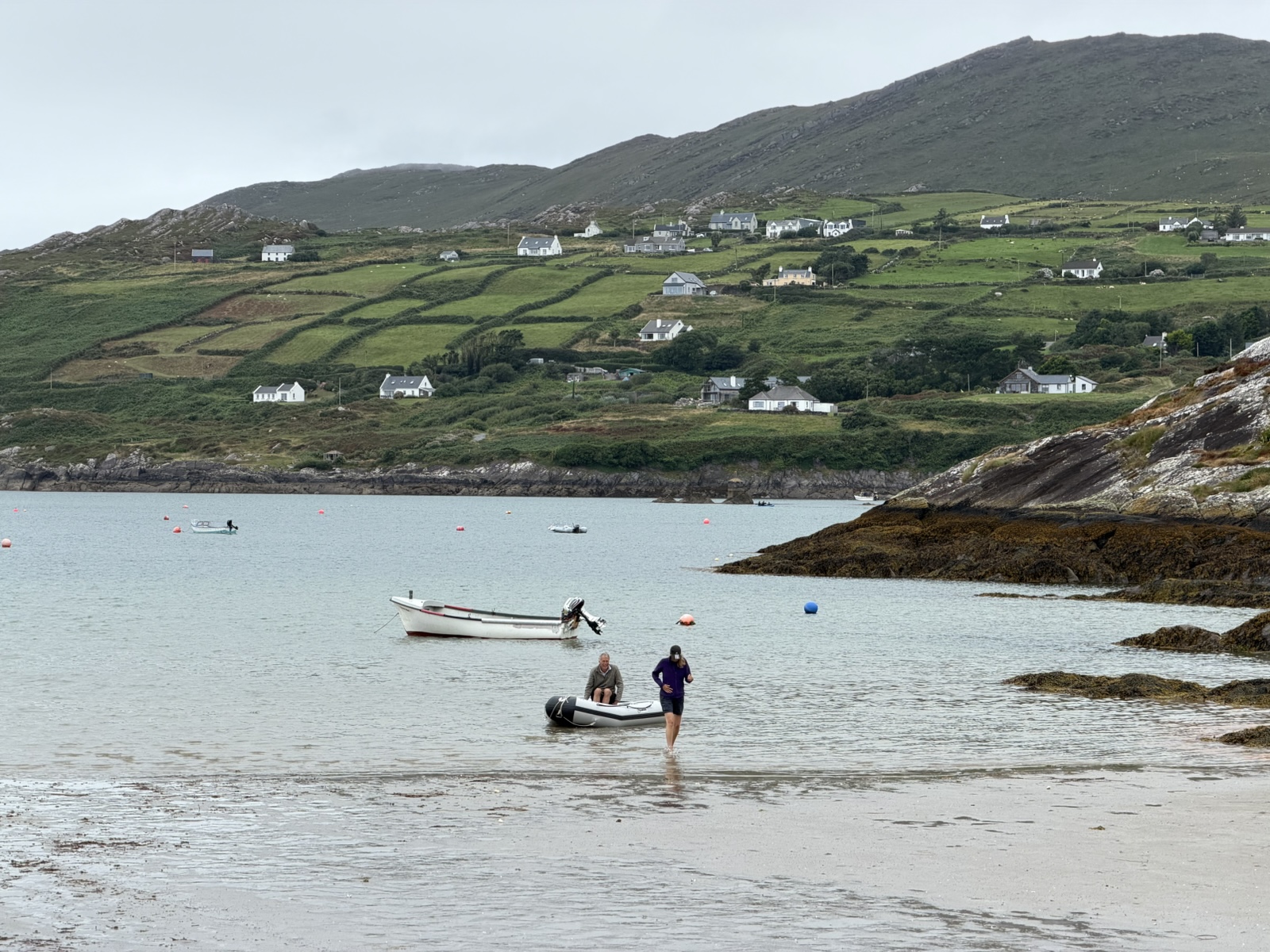
Derrynane Abbey (officially Ahamore Abbey) originally consisted of some timber structures in the 6th century. The stone buildings seen here were constructed from the 10th through 13th centuries.
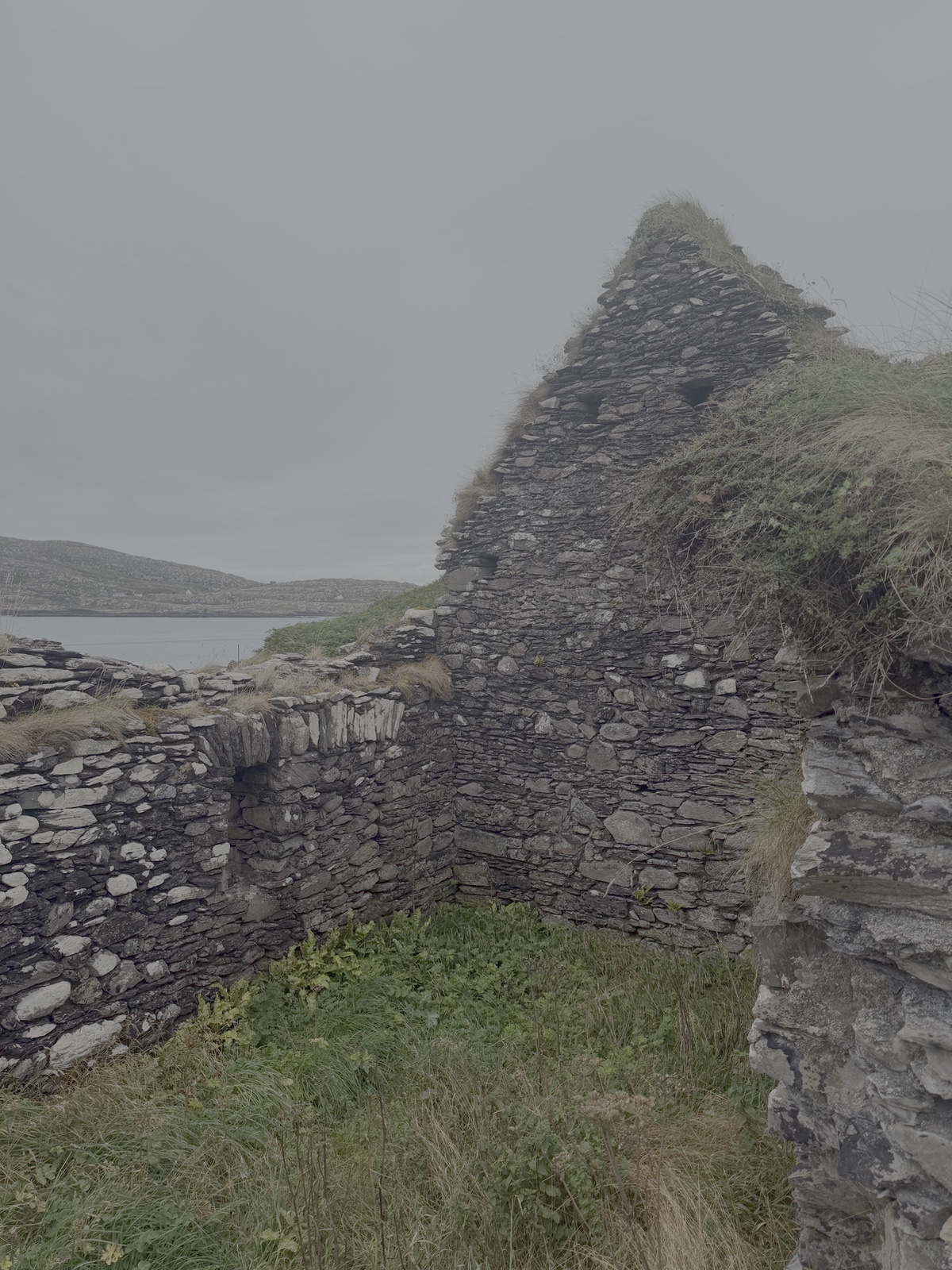
Following the English Reformation and the Dissolution of Monasteries under King Henry VIII in the 16th century, formal life for monks at the abbey ended, though the church remained structurally sound for centuries. Eventually it fell into ruin and the island became the primary burial ground for the area, and people continue to be buried there to this day.
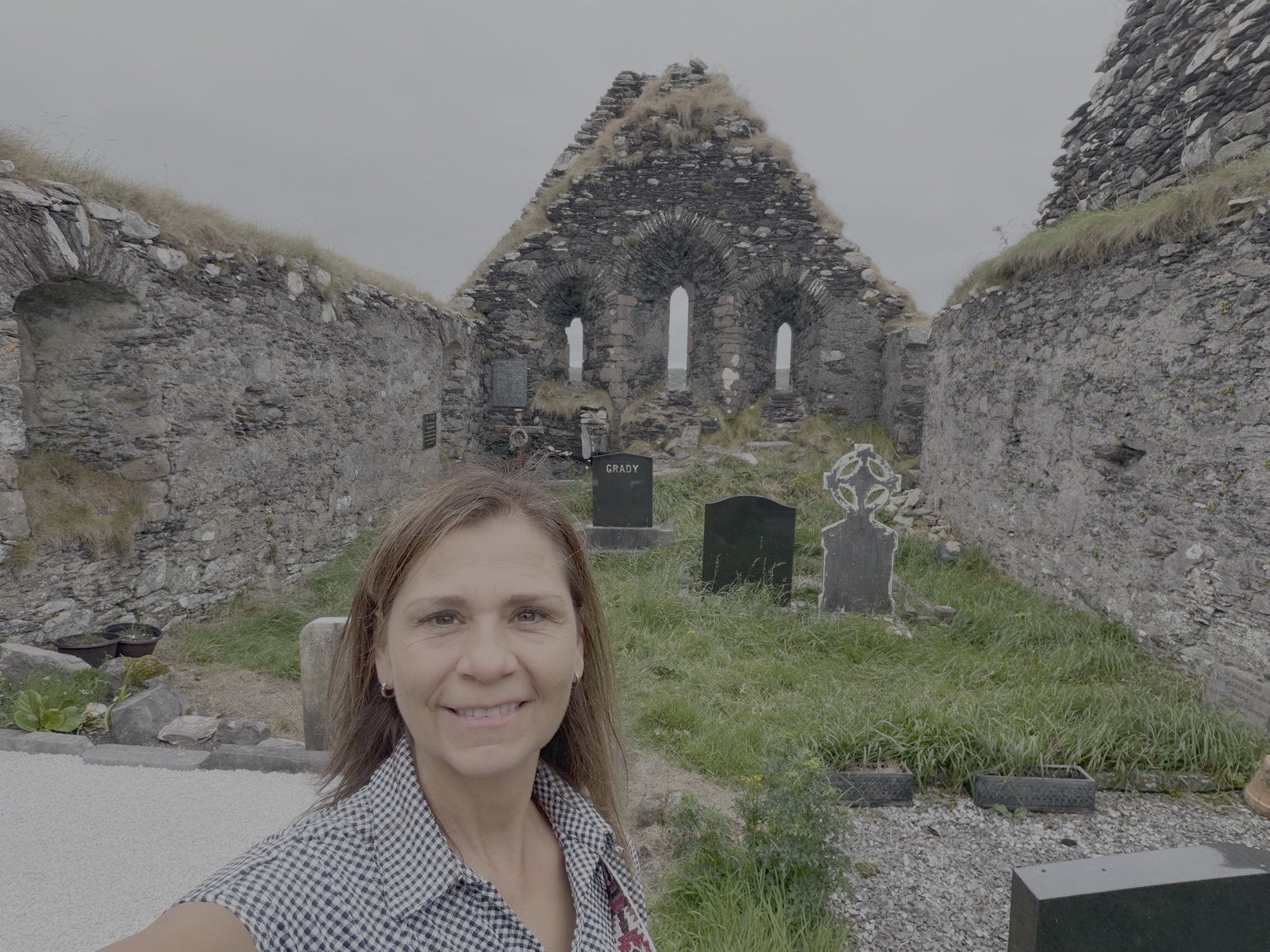
As we drove away from there, there kept being ruins here and there. When a building is too expensive to fix up, it is often abandoned.
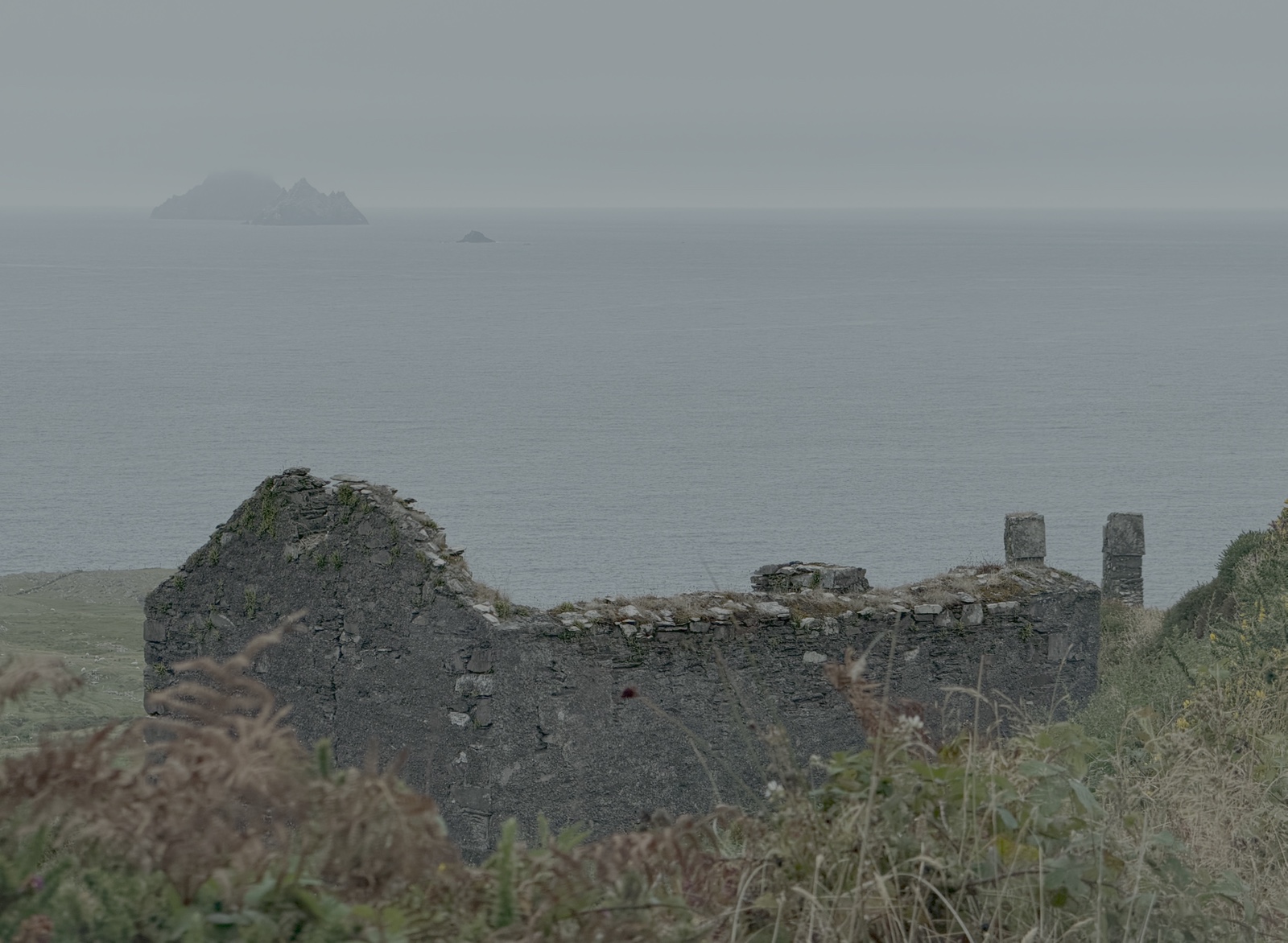
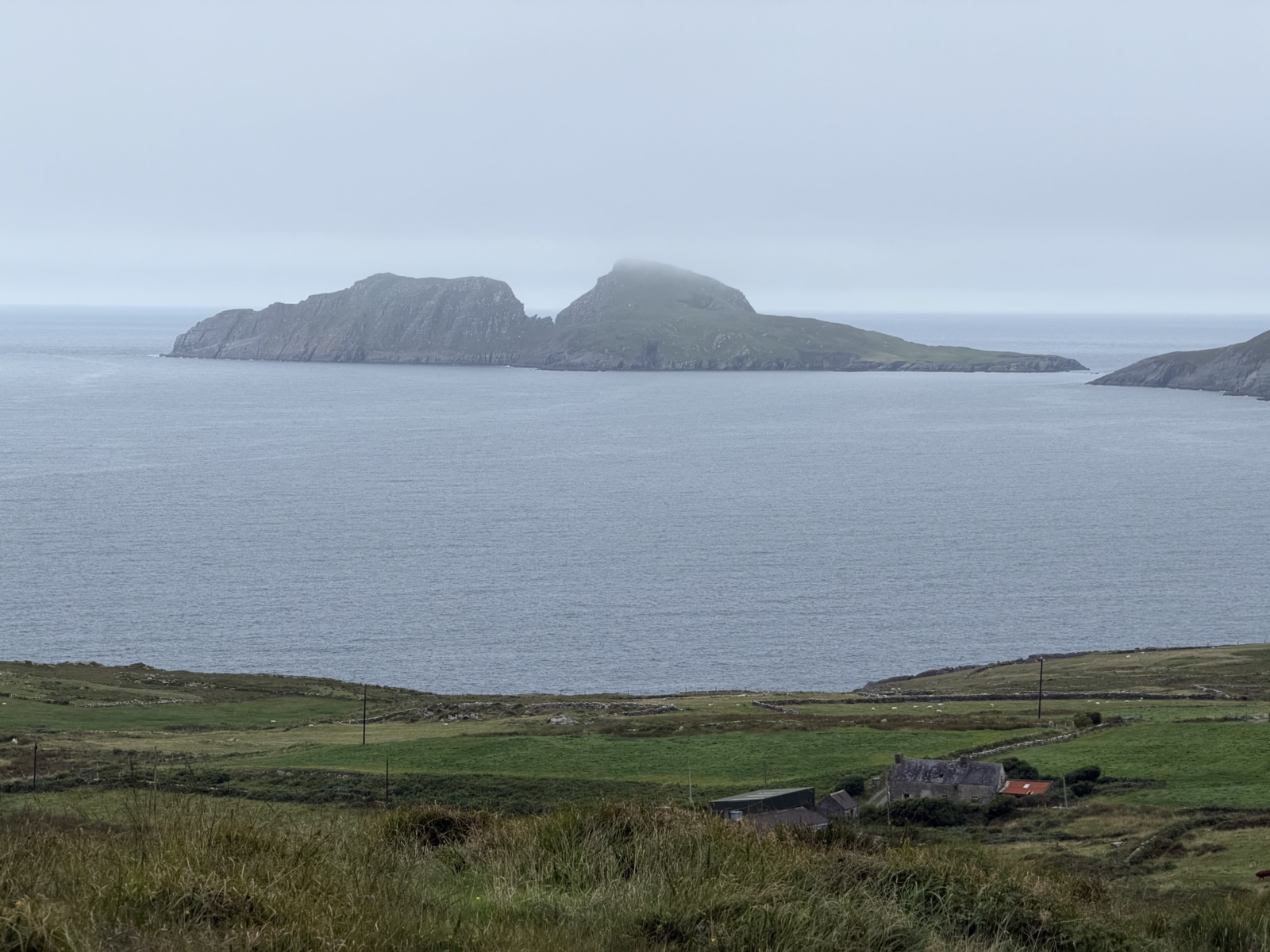
The sad thing was that Puffin Island was right in that area, but all the puffins left a couple weeks before and would be out at sea until spring. It would have been really fun to see them.
I believe that is Puffin Island out in the bay.
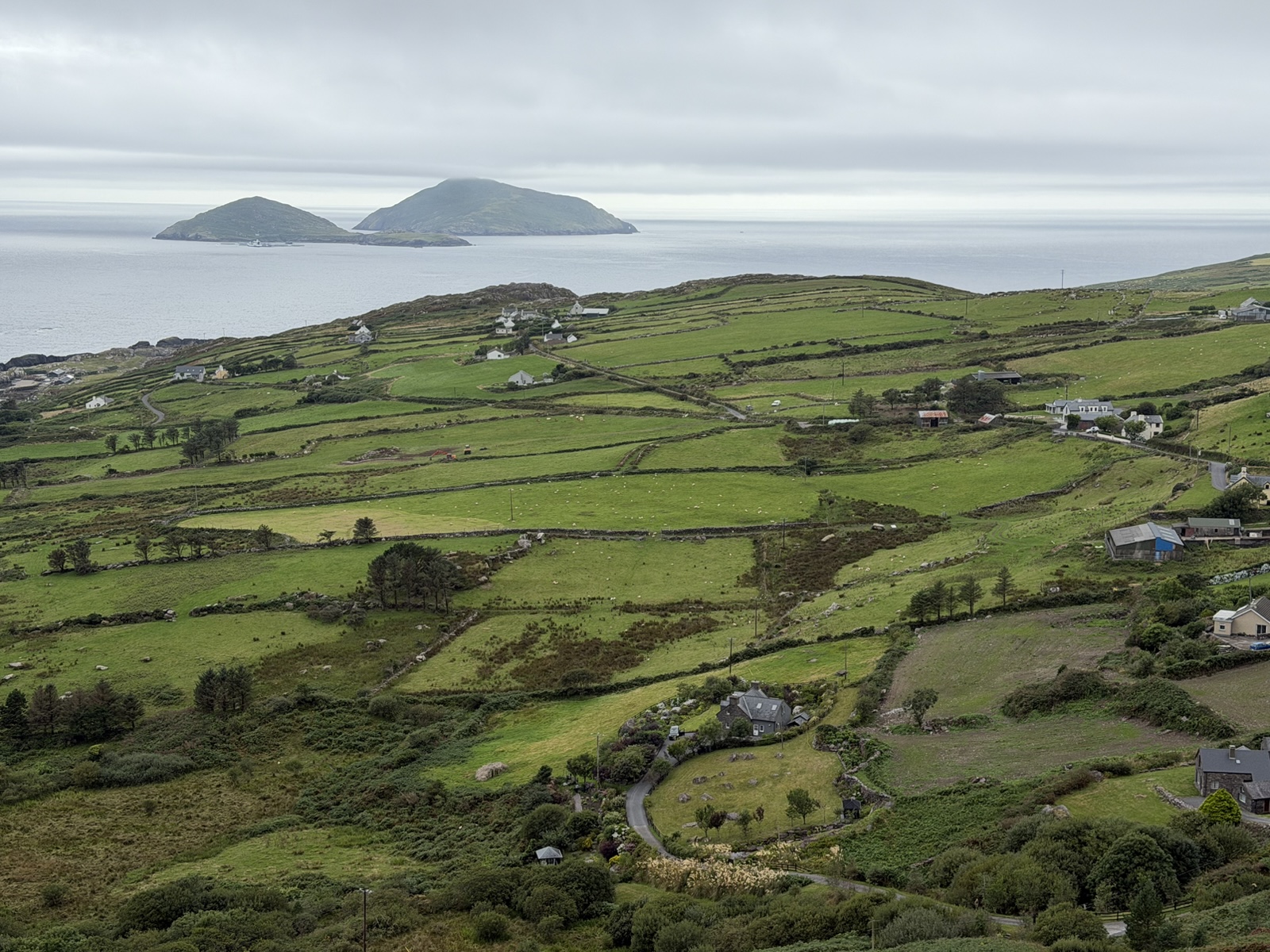
The farms glow green so much that I joked that the country was Photoshopped.
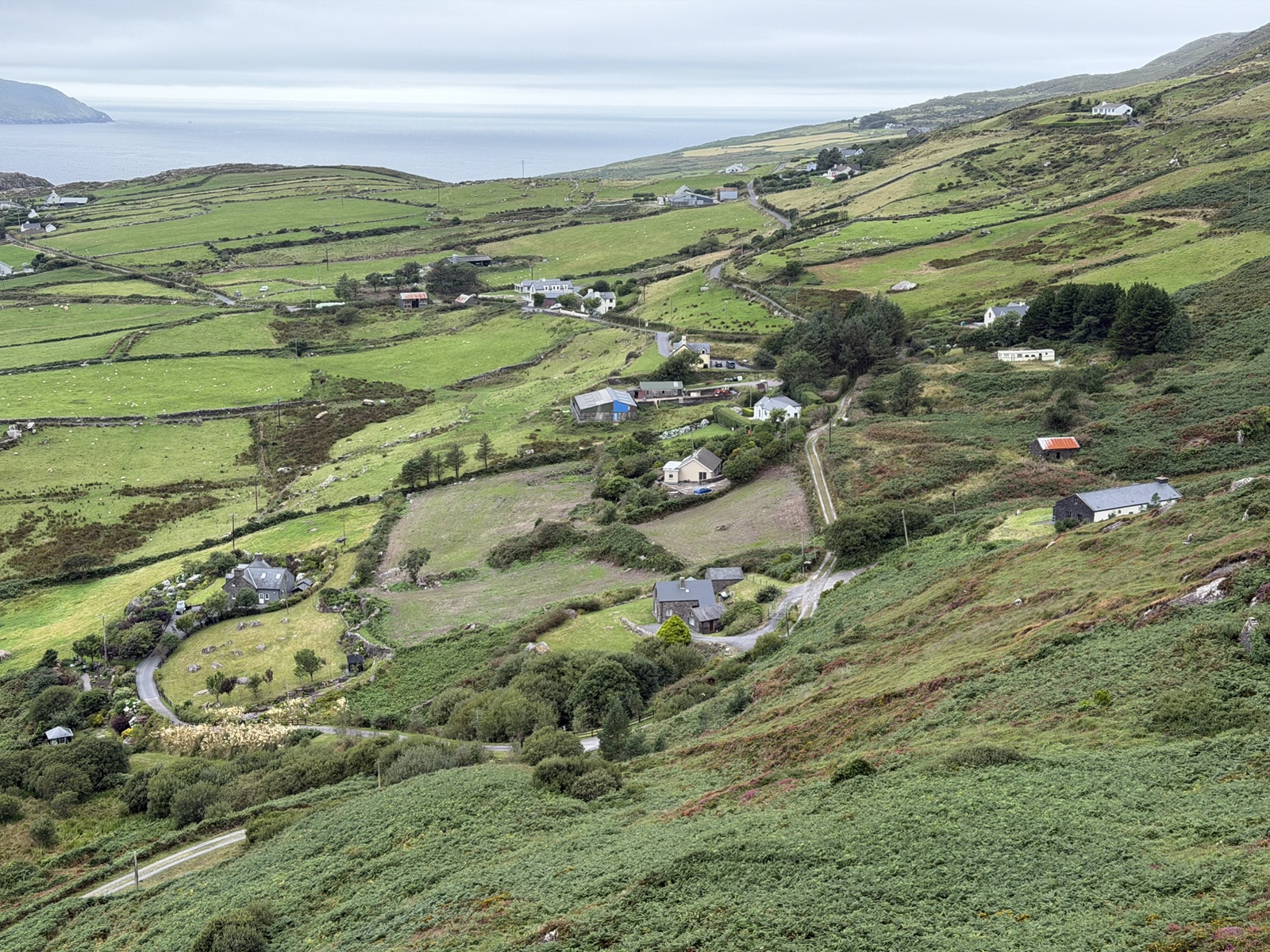
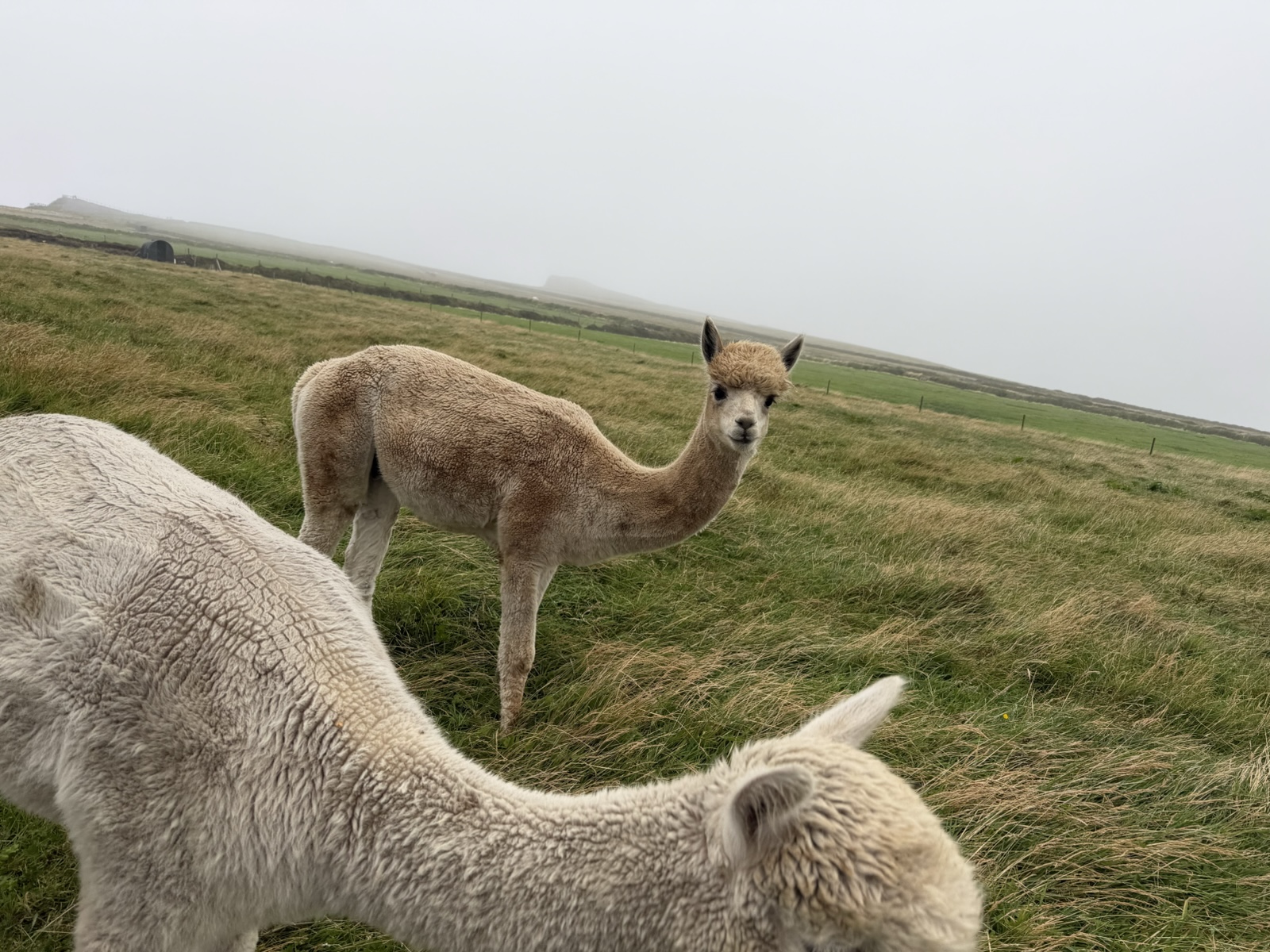
Finally, we went to the Cliffs of Kerry. There were alpacas near the fence as we walked in.
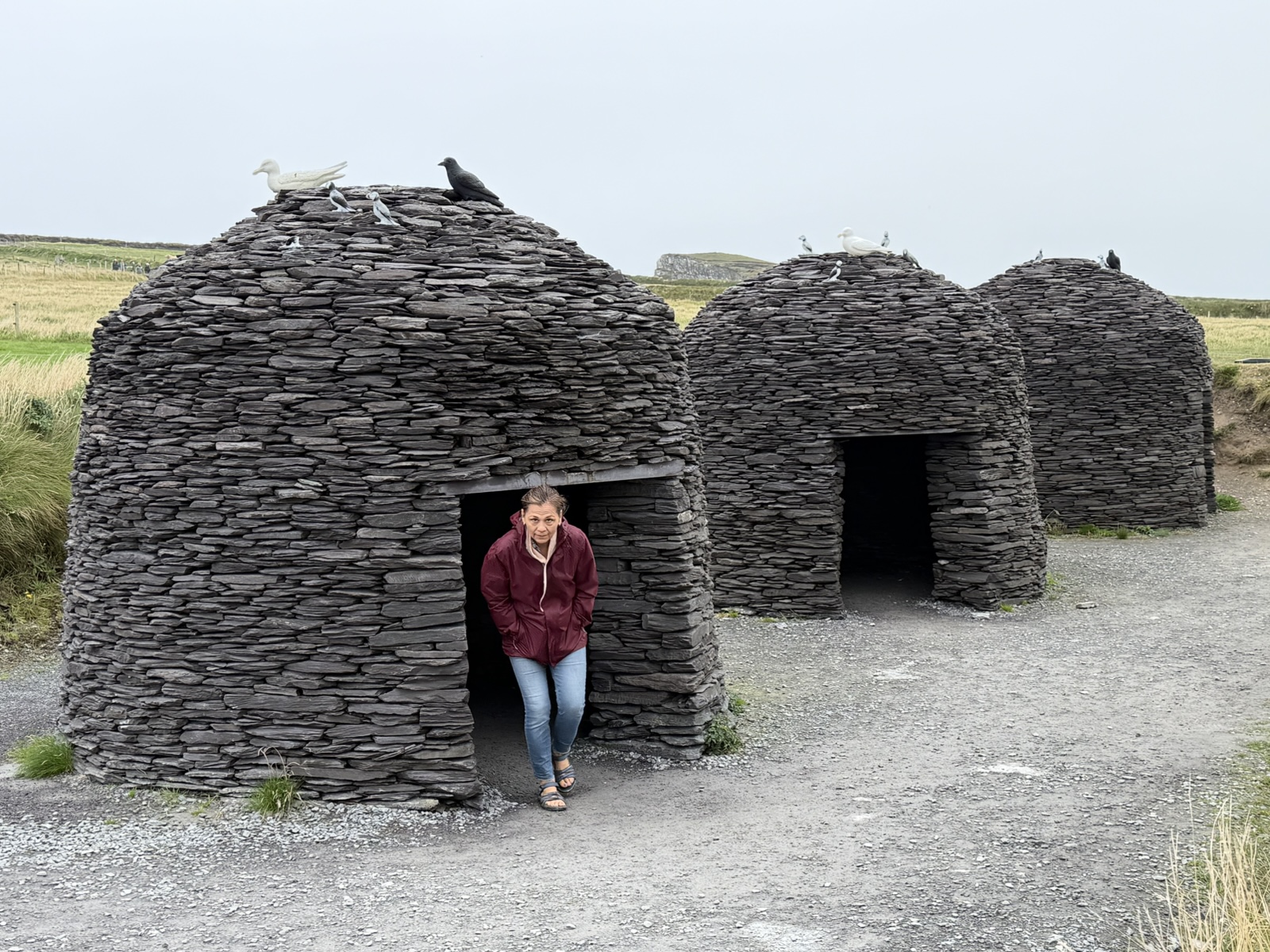
There were replicas of the "Beehive Huts" (Clochans) found at Skellig Michael, an island not far from here (where Luke Skywalker sat around and moped for a few decades instead of facing his problems and getting to work).
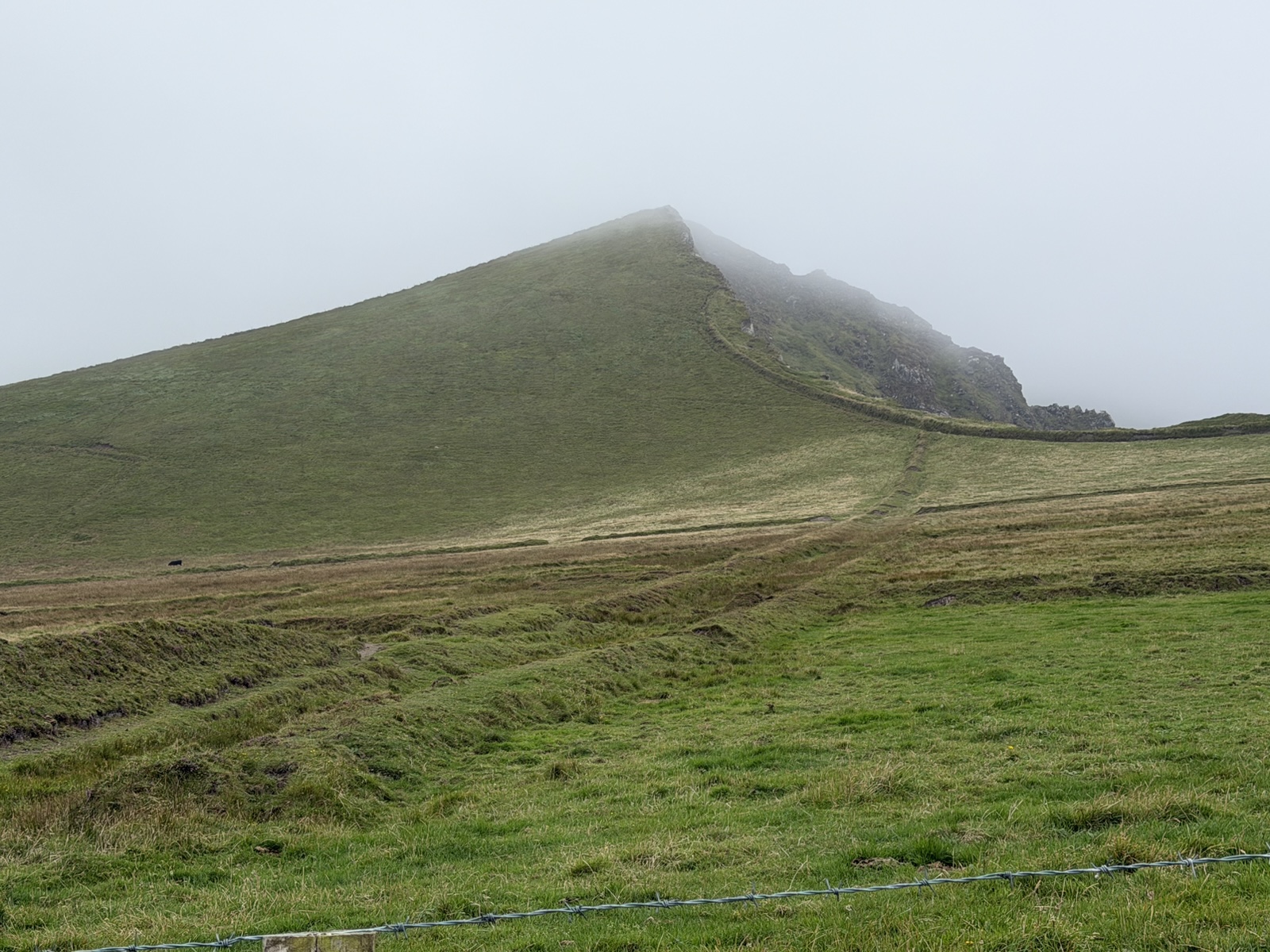
We caught our first glimpse of the beginnings of the cliff as we walked up the path.
Then we reached the viewing area and the Cliffs of Kerry were incredible.
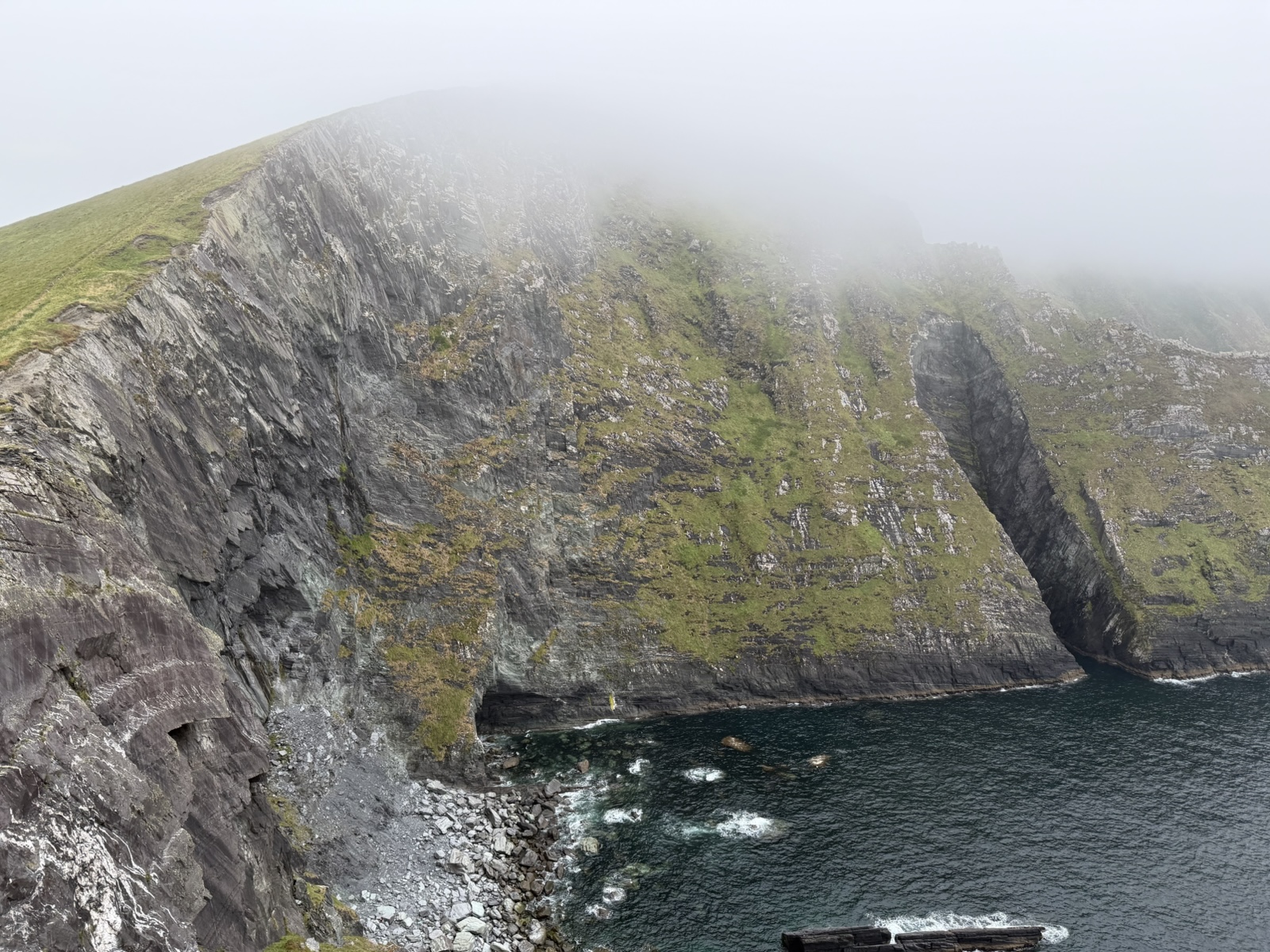
It was cold, windy and a bit rainy, but the view was great, and the fog added a bit of mystique to the pictures.
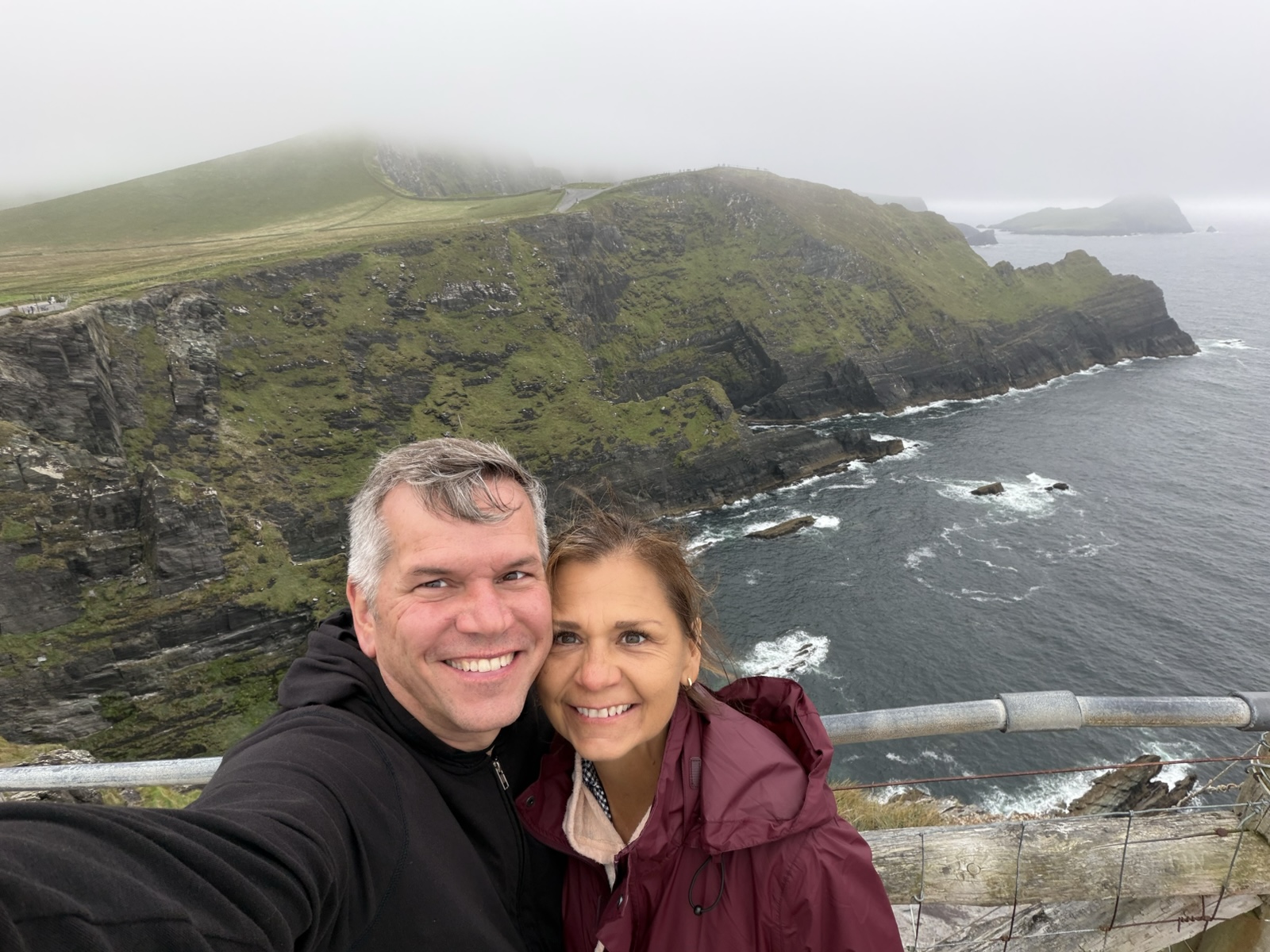
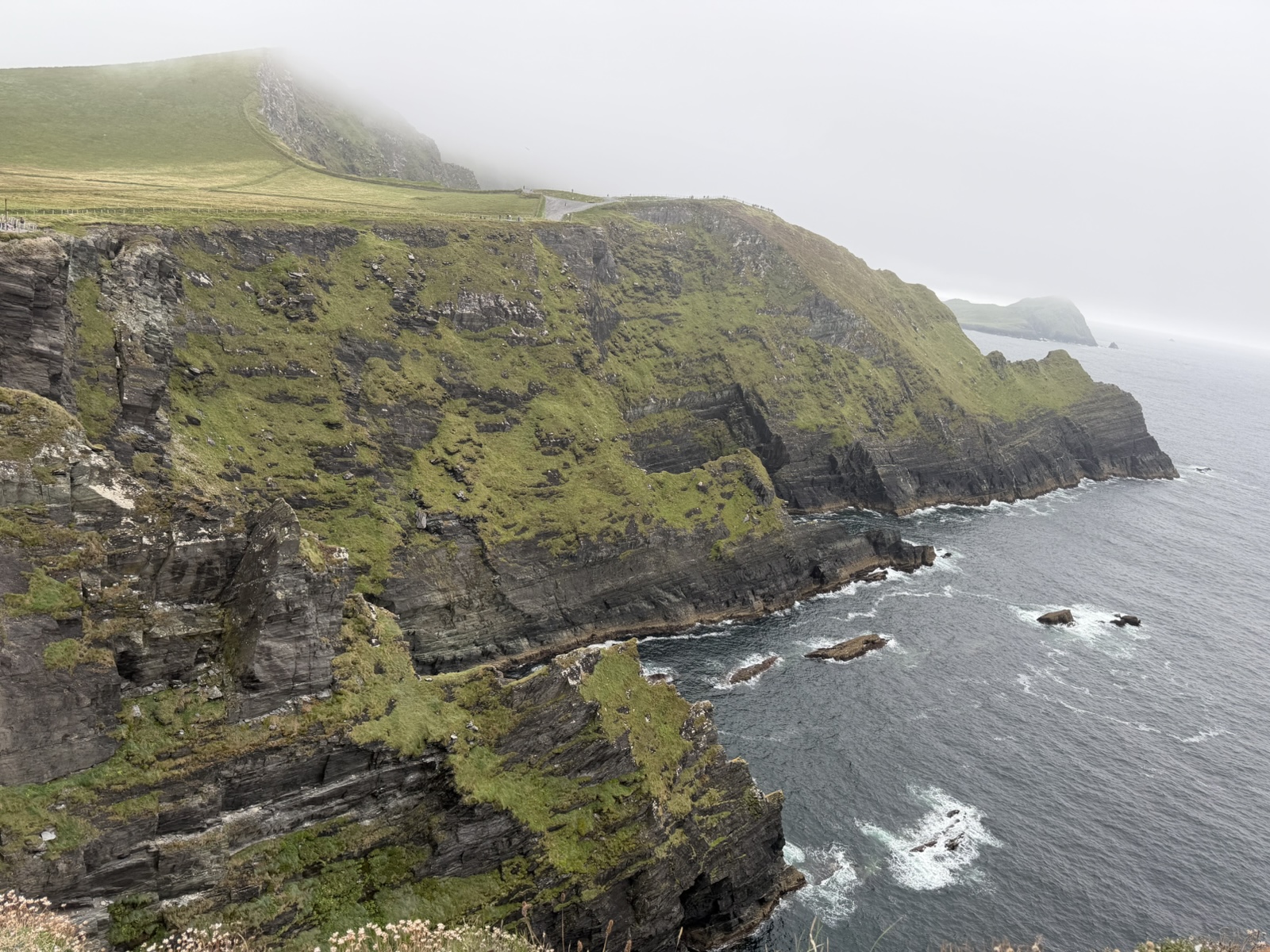
The cliffs were green in one direction and rocky in the other.
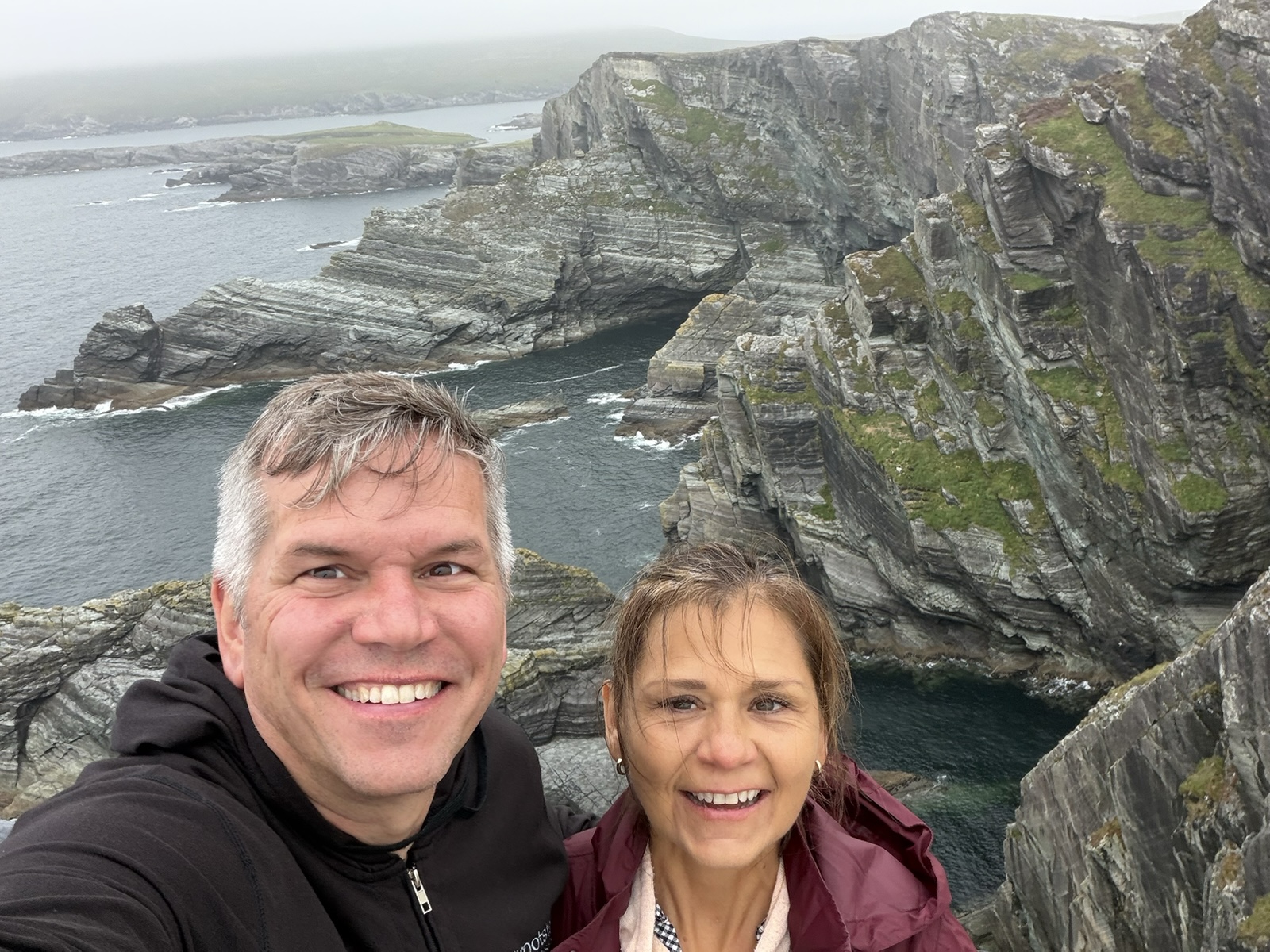
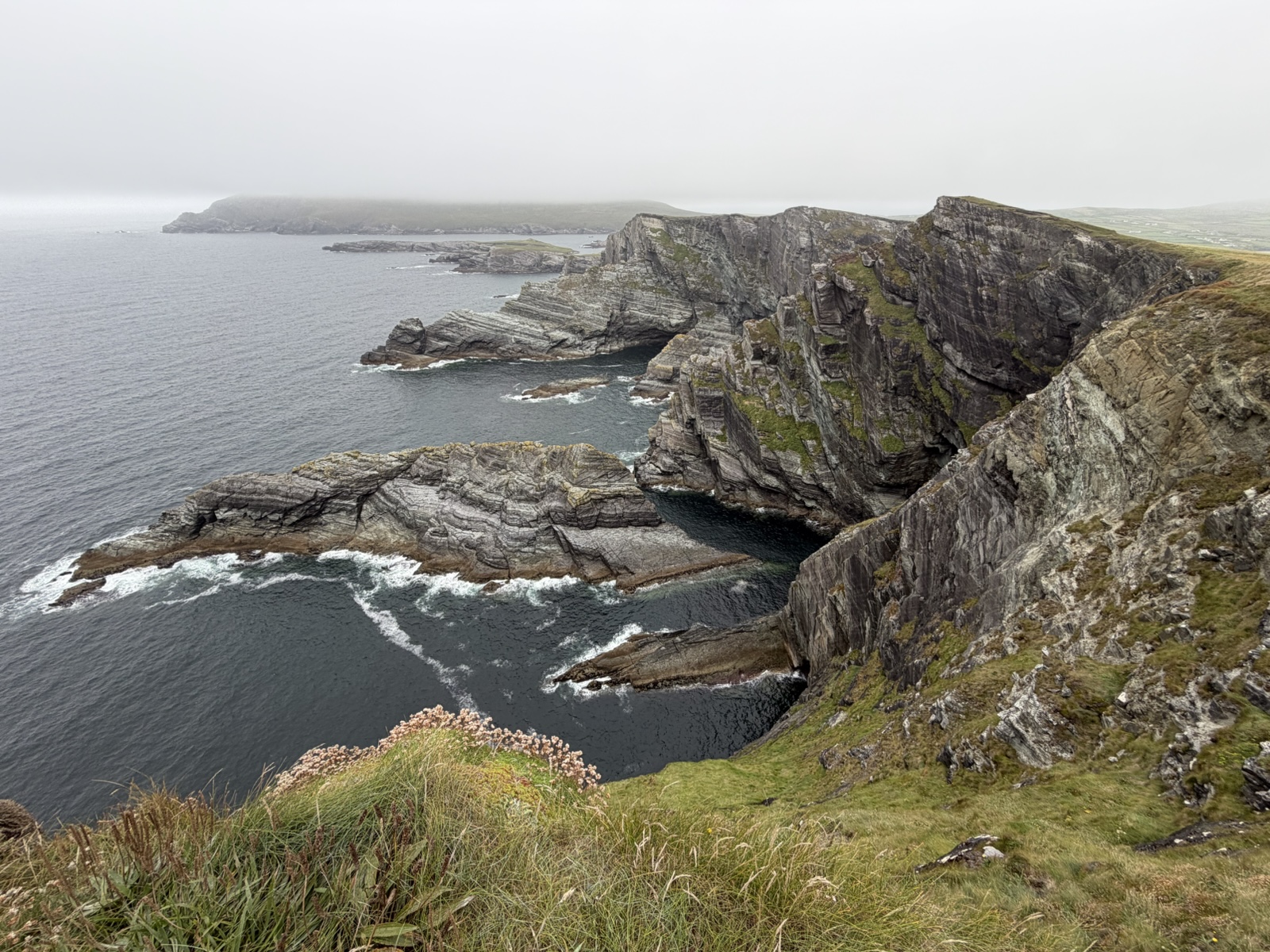
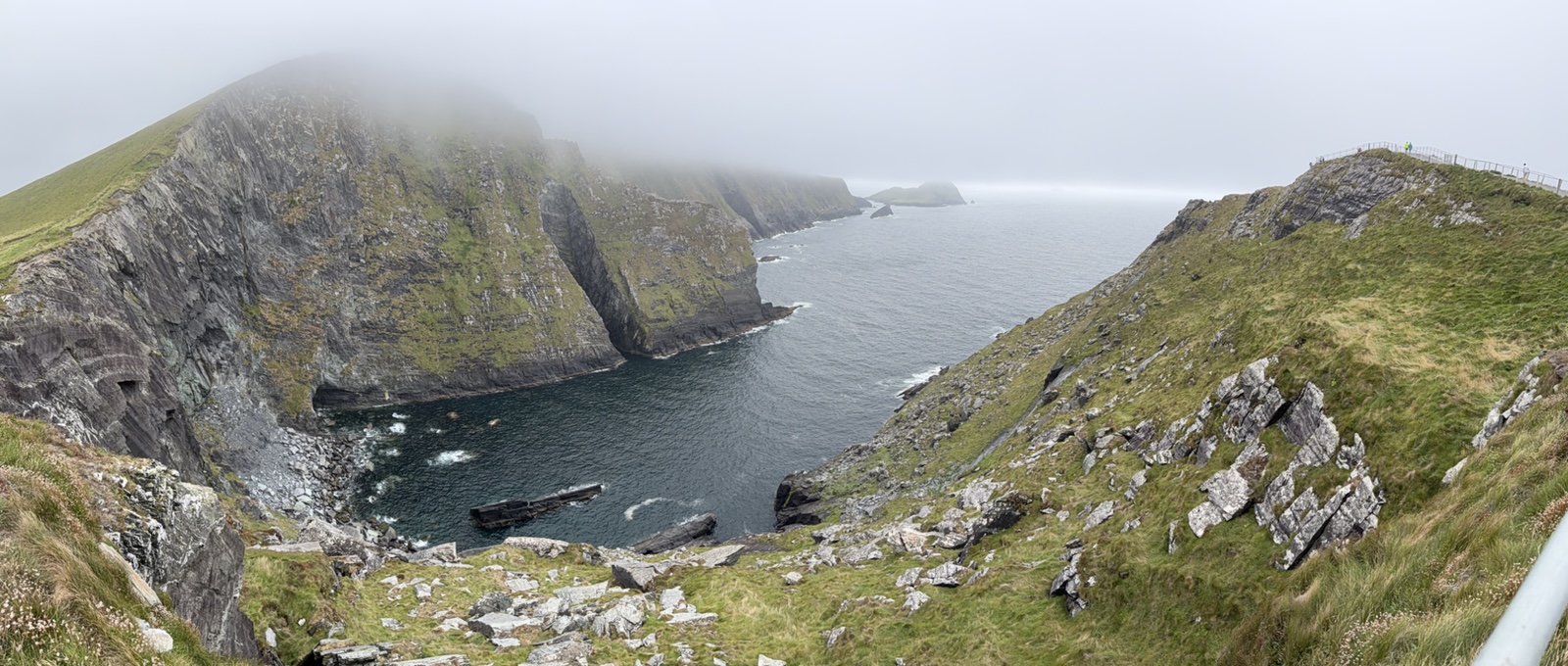
It is hard to get a sense of the grandeur, because if you zoom out, things look too small, and if you zoom in, you only see a small part of it. The following 1-minute video gives you a better sense of the scale.
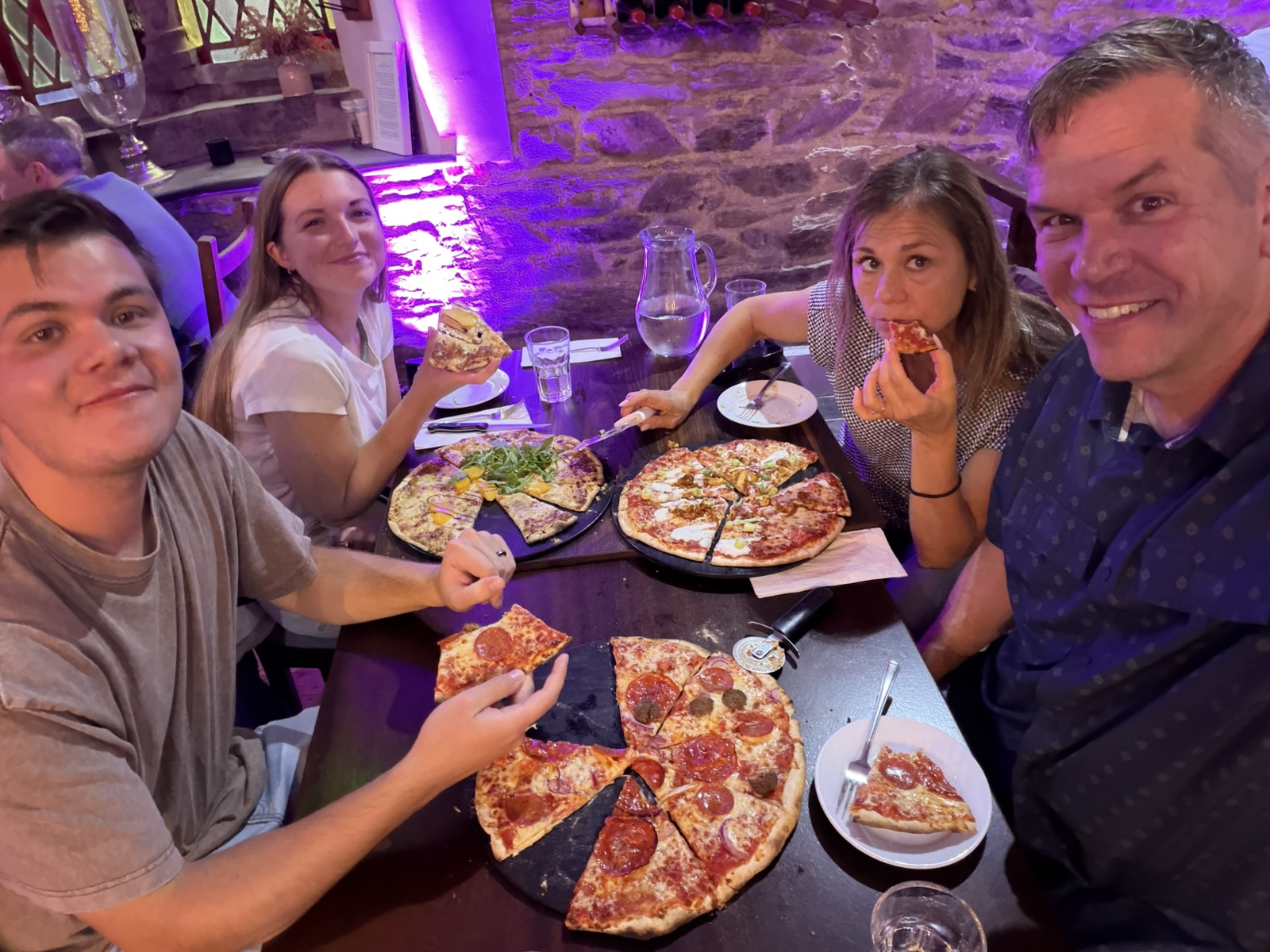
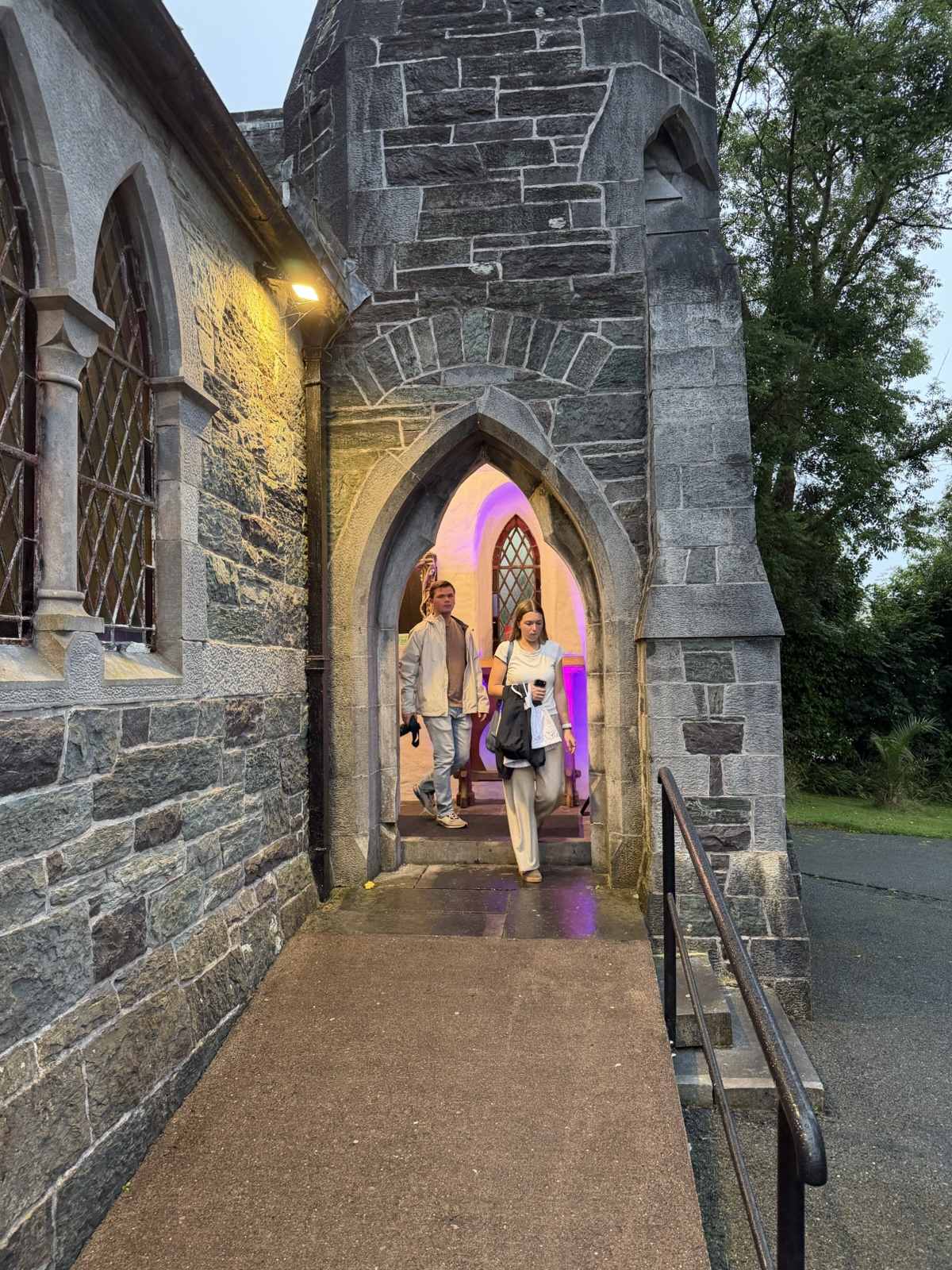
Our final stop was at a church that was purchased and converted into a pizza place!
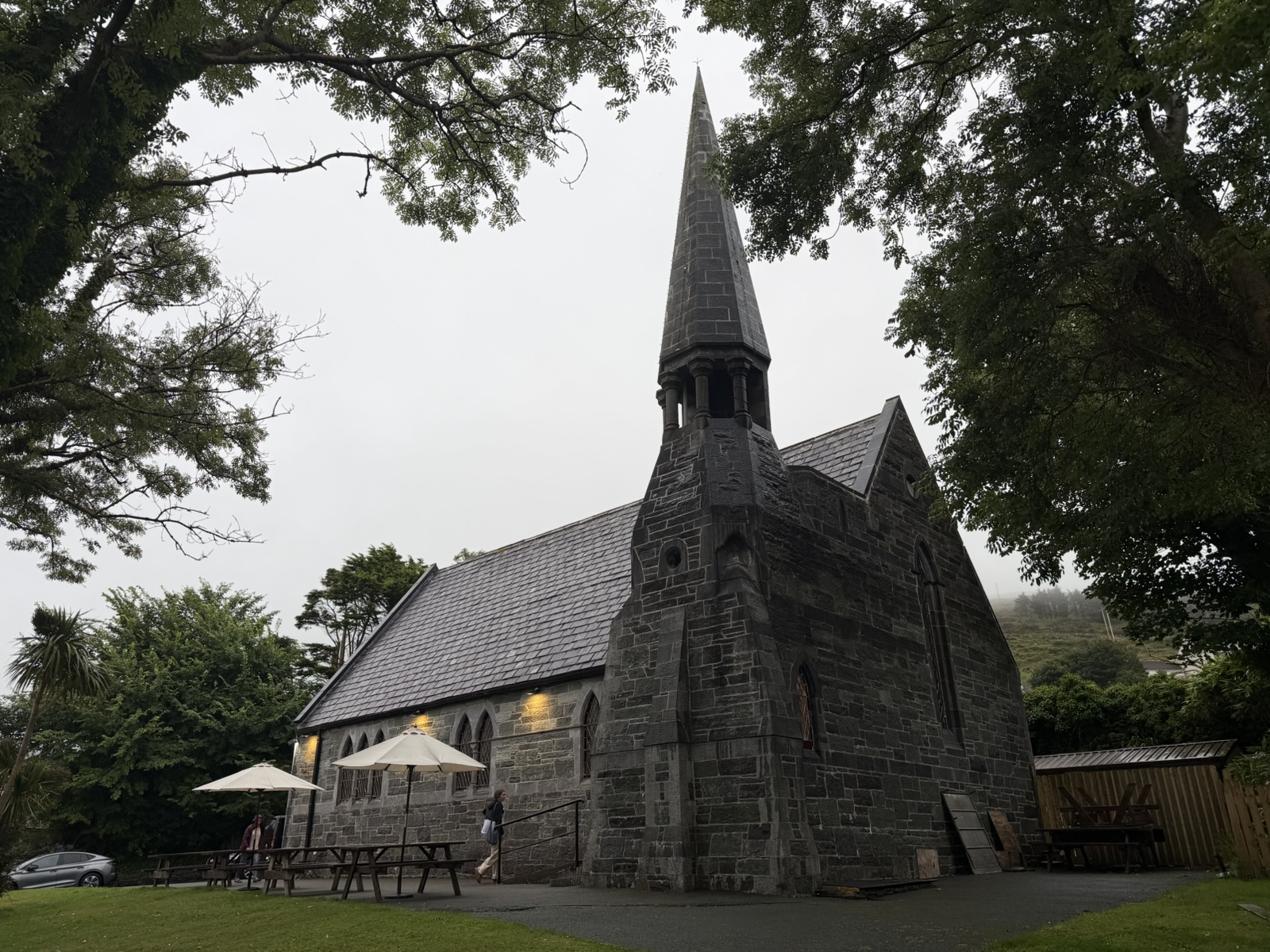
The Oratory Pizza and Wine Bar had a pretty cool atmosphere inside.
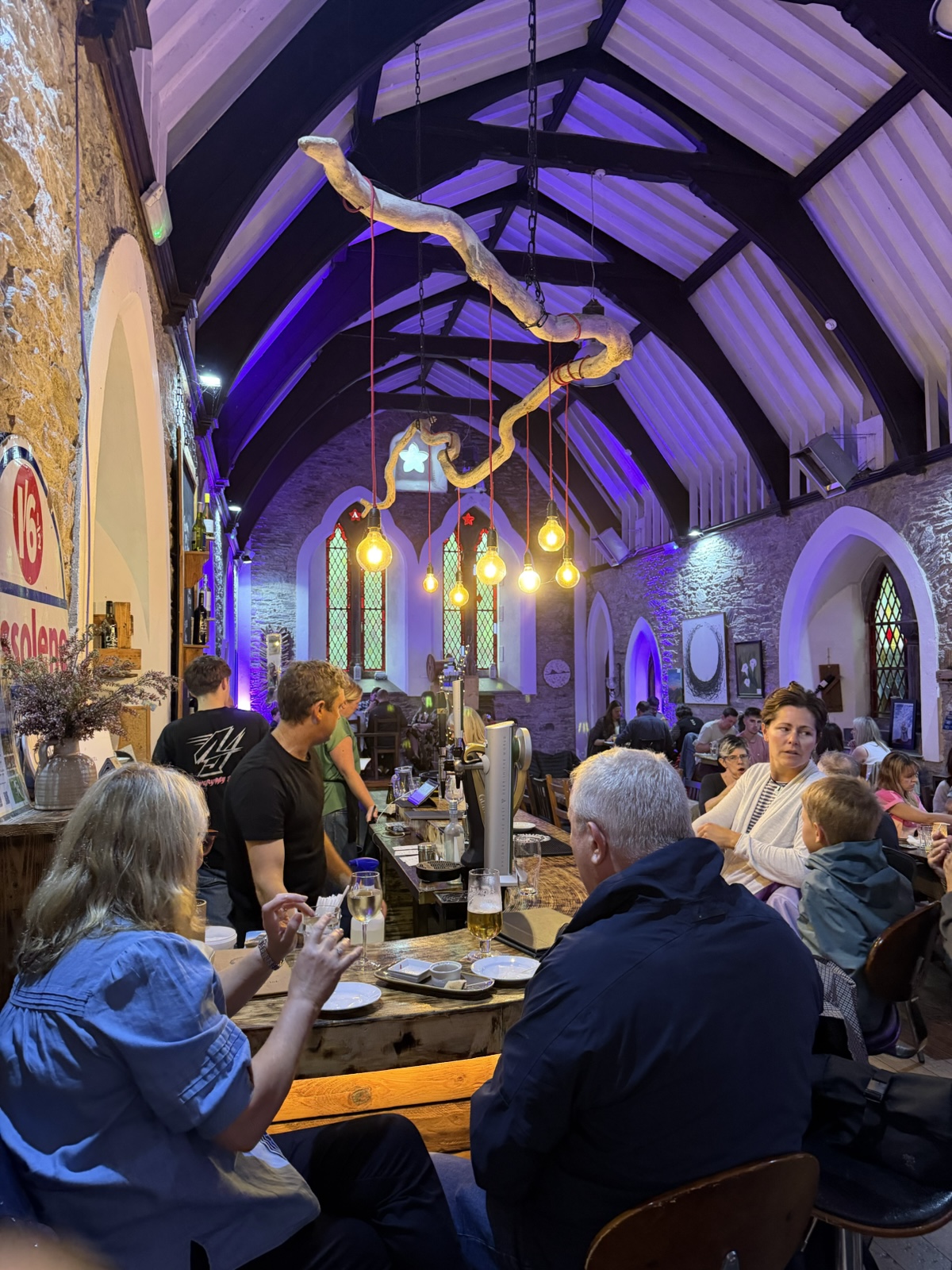
And pizza was great at the end of a day like this.
Once again, we had a couple more things on our list of potential things to see that we dropped in favor of enjoying our time along the way, and it was a great day.
In the next episode, we explore the area around Killarney National Park, and then spend a day biking Dunloe Gap.